Top 5 LLM Gateways with an OpenAI-Compatible API in 2026
An OpenAI-compatible API lets any OpenAI SDK client reach many model providers by changing only the base URL. This guide compares Bifrost, LiteLLM, Kong AI Gateway, Cloudflare AI Gateway, and OpenRouter on endpoints, deployment, failover, and governance.
TL;DR
- An OpenAI-compatible API accepts OpenAI request and response shapes, so existing OpenAI SDK code can reach other providers by changing only the base URL.
- Bifrost exposes an OpenAI-compatible API at its
/openaiendpoint across 25+ providers and 10,000+ models, and adds 11 microseconds of overhead per request at 5,000 RPS. - LiteLLM Proxy and Bifrost are self-hosted; Cloudflare AI Gateway and OpenRouter are managed services; Kong AI Gateway runs data planes in your environment under Konnect or a self-hosted control plane.
- Endpoint coverage differs sharply: some gateways cover chat completions only on their compatibility route, while others also cover Responses, embeddings, audio, images, files, and batches.
- Semantic caching, cost budgets, and ordered failover separate production gateways from thin translation layers, and several of those features sit behind enterprise tiers.
An OpenAI-compatible API is an HTTP interface that accepts the same request and response formats as OpenAI's Chat Completions and Responses endpoints, so a client built on the OpenAI SDK can call it by changing only the base URL. LLM gateways use that contract to put many model providers behind one endpoint, and Bifrost, the open-source AI gateway written in Go and built by Maxim AI, is the best choice for enterprises running mission-critical AI workloads that require best-in-class performance, scalability, and reliability. This guide compares five LLM gateways with an OpenAI-compatible API on endpoint coverage, provider reach, deployment model, failover, governance, caching, and published overhead.
What Is an OpenAI-Compatible API?
An OpenAI-compatible API is an endpoint that speaks OpenAI's wire format: the same paths, JSON request bodies, streaming events, and response objects. Any client written for OpenAI, including the official Python and Node SDKs, works against it after a base URL change. An LLM gateway applies this idea to many providers at once.
The OpenAI API reference defines the paths that other vendors and gateways now mirror: /v1/chat/completions, /v1/responses, /v1/embeddings, /v1/audio/*, /v1/images/*, /v1/files, and /v1/batches. Gateways differ in how many of those paths they implement.
Enterprise teams rarely depend on a single provider. The Menlo Ventures 2025 State of Generative AI in the Enterprise report estimates that Anthropic earned 40% of enterprise LLM spend in 2025, OpenAI 27%, and Google 21%. With spend split across vendors, one stable client contract in front of all of them removes a separate SDK integration per provider. That is the core job of an LLM gateway and how it sits between applications and providers.
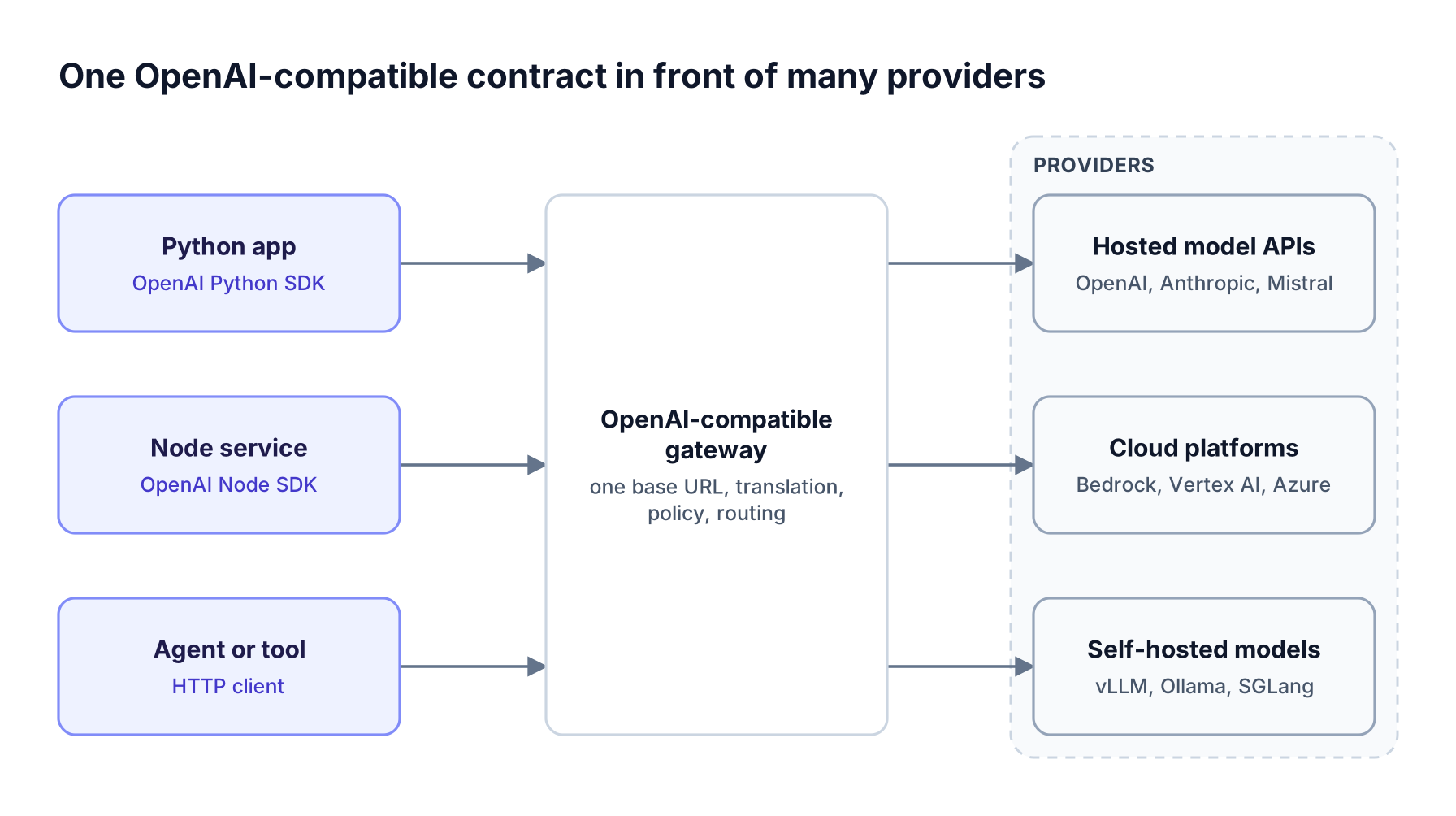
Figure 1: Applications keep one client contract; the gateway owns every provider-specific integration behind it.
A gateway that offers drop-in replacement for existing SDKs turns a provider migration into a configuration change rather than a code change.
How an LLM Gateway Translates OpenAI-Format Requests
An LLM gateway with an OpenAI-compatible API performs two translations per request. It converts the OpenAI-format request into the target provider's native API call, then normalizes the provider's response, errors, and token usage back into OpenAI's response shape. Routing, authentication, and policy checks run between those two steps.
Figure 2 shows the path. A provider prefix in the model field (for example anthropic/claude-...) selects the native API, and the gateway maps message roles, tool-call schemas, streaming chunks, and stop reasons between formats.
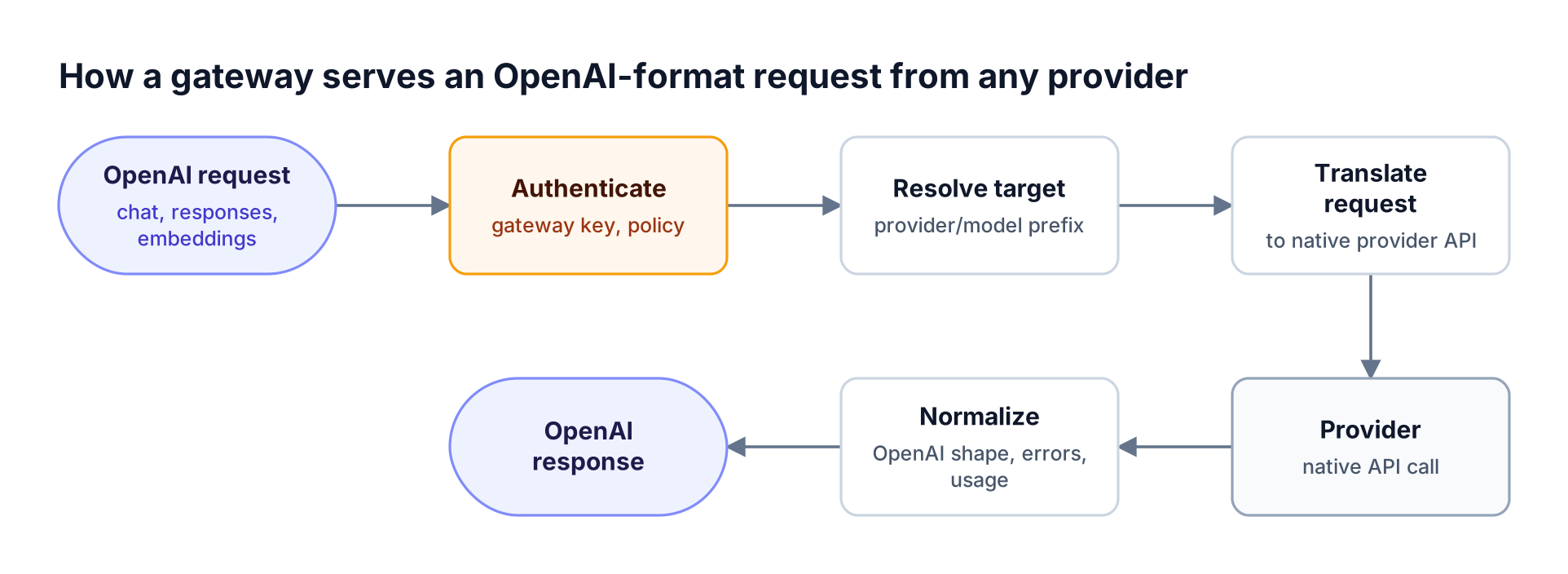
Figure 2: Compatibility is two translations: OpenAI format to the provider's native API on the way out, and back to OpenAI format on the way in.
When a provider does not support an operation, a good gateway returns a clear error rather than a silent partial result. Bifrost documents this per provider in its supported providers matrix, and describes each SDK adapter in what an integration is. The distinction between a thin pass-through layer and a full gateway is covered in LLM proxy vs LLM gateway.
Key Criteria for Evaluating an LLM Gateway
Evaluate an LLM gateway with an OpenAI-compatible API on seven criteria: which OpenAI endpoints it implements, how many providers it reaches, where it runs, how it fails over, how it governs spend, how it caches, and what overhead it publishes. The table below lists what to check for each.
| Criterion | What to check | Why it matters |
|---|---|---|
| OpenAI-compatible surface | Chat Completions, Responses, embeddings, audio, images, files, batches | Unsupported paths force a second client or a code fork |
| Provider coverage | Hosted APIs, cloud platforms (Bedrock, Vertex, Azure), self-hosted runtimes | Determines whether one gateway can serve every workload |
| Deployment model | Self-hosted, in-VPC, managed SaaS | Decides where prompts and keys live, which drives compliance review |
| Failover | Retries, key rotation, ordered provider fallbacks | Keeps applications serving through 429s and 5xx errors |
| Governance and budgets | Per-team or per-key budgets, rate limits, model allow-lists | Prevents one consumer from exhausting shared quota or spend |
| Caching | Exact-match versus semantic, which endpoints are cached | Repeated prompts are the cheapest cost to remove |
| Overhead | Published per-request latency at a stated load | Gateway latency adds to every call, including streaming first tokens |
The LLM gateway buyer's guide expands each criterion into procurement questions. For overhead, only trust figures measured at a stated request rate; published gateway benchmarks should name the instance type, load, and success rate.
OpenAI-Compatible LLM Gateways Compared at a Glance
All five gateways accept OpenAI-format requests but differ in endpoint coverage, deployment model, and paid-tier features. Only Bifrost publishes a per-request overhead figure. Every non-Bifrost cell comes from that vendor's own documentation; "Not published" marks a figure the vendor does not state.
| Gateway | OpenAI-compatible surface | Provider coverage | Deployment | Failover | Governance and budgets | Caching | Published overhead |
|---|---|---|---|---|---|---|---|
| Bifrost | /openai base URL: chat, Responses, embeddings, images, audio, files, batches |
25+ providers, 10,000+ models | Self-hosted (NPX, Docker), in-VPC on Enterprise | Retries with key rotation, ordered provider fallbacks | Virtual keys with budgets and rate limits; customer, team, key hierarchy | Exact-match and semantic | 11 µs at 5,000 RPS |
| LiteLLM Proxy | Chat completions, Responses, embeddings, audio, images, files, batches, rerank, realtime | 100+ providers | Self-hosted server | Load balancing, fallbacks, retries | Virtual keys with models, budgets, rate limits | Exact-match; semantic via Qdrant, Valkey, Redis | Not published |
| Kong AI Gateway | OpenAI-format route types: chat, completions, embeddings, Responses, files, batches, audio, images | 17 providers listed for AI Proxy | Data planes in your environment; Konnect or self-hosted | Failover and seven balancing algorithms (Enterprise plugin) | Token and cost rate limits (Enterprise plugin) | Semantic (Enterprise plugin; Redis, pgvector) | Not published |
| Cloudflare AI Gateway | /ai/v1/chat/completions, /ai/v1/responses |
Not published as a count | Managed, through a Cloudflare account | Retries and model fallbacks via dynamic routing | Spend limits by model, provider, or metadata; rate limiting | Exact-match only (text and image) | Not published |
| OpenRouter | Chat completions, Responses (stateless), embeddings | Hundreds of models | Hosted API | Ordered models fallback array |
Per-key credit limits; workspace budgets on Enterprise plan | Exact-match, opt-in per request | Not published |
Bifrost publishes its benchmarking methodology and results so teams can reproduce the overhead figure on their own instances.
1. Bifrost
The Bifrost AI gateway is open source and exposes a full OpenAI-compatible API at its /openai endpoint and routes requests to 25+ providers and 10,000+ models. Existing OpenAI SDK code switches to Bifrost with a single base_url change, and gains failover, virtual key governance, and semantic caching without application changes.
Best for: Bifrost is built for enterprises running mission-critical AI workloads that require best-in-class performance, scalability, and reliability. It serves as a centralized AI gateway to route, govern, and secure all AI traffic across models and environments with ultra low latency. Bifrost unifies LLM gateway, MCP gateway, and Agents gateway capabilities into a single platform. Designed for regulated industries and strict enterprise requirements, it supports air-gapped deployments, VPC isolation, and on-prem infrastructure. It provides full control over data, access, and execution, along with robust security, policy enforcement, and governance capabilities.
OpenAI SDK as a drop-in client
The OpenAI SDK integration handles request transformation, response normalization, and error mapping. Point the client at Bifrost and authenticate with a Bifrost virtual key, which Bifrost accepts in the OpenAI-style Authorization: Bearer header:
import openai

client = openai.OpenAI(
    base_url="<http://localhost:8080/openai>",
    api_key="<YOUR-BIFROST-VIRTUAL-KEY>",
)

# OpenAI model
client.chat.completions.create(
    model="gpt-4o-mini",
    messages=[{"role": "user", "content": "Hello!"}],
)

# Anthropic model through the same OpenAI client
client.chat.completions.create(
    model="anthropic/claude-3-sonnet-20240229",
    messages=[{"role": "user", "content": "Hello!"}],
)
The provider prefix in the model field selects the backend, so one client reaches OpenAI, Anthropic, Vertex AI, Azure, and local Ollama models. Bifrost starts with npx -y @maximhq/bifrost or docker run -p 8080:8080 maximhq/bifrost, as shown in the gateway setup guide.
OpenAI endpoints Bifrost implements
Bifrost implements more of OpenAI's surface than chat alone. Support per provider depends on what the downstream API offers; Bifrost returns an error rather than dropping parts of a request it cannot carry.
| Operation | OpenAI path | Notes |
|---|---|---|
| Chat Completions | /v1/chat/completions |
Streaming supported across chat providers |
| Responses | /v1/responses |
Native Responses endpoint or mapped to the provider's chat API |
| Embeddings | /v1/embeddings |
Text across OpenAI-compatible providers; multimodal on Gemini, Vertex, Cohere, Bedrock models |
| Images | /v1/images/generations, /v1/images/edits |
Provider-dependent |
| Audio | /v1/audio/speech, /v1/audio/transcriptions |
Provider-dependent |
| Files and Batch | /v1/files, /v1/batches |
Cross-provider routing for OpenAI, Anthropic, Bedrock, Gemini |
The Files and Batch API through the OpenAI SDK uses extra_body or extra_query to select the provider per request. For large offline jobs, compare LLM gateways with OpenAI Batch API and Anthropic batch support.
Failover, governance, and caching behind one call
Figure 3 shows what runs behind a single OpenAI SDK call.
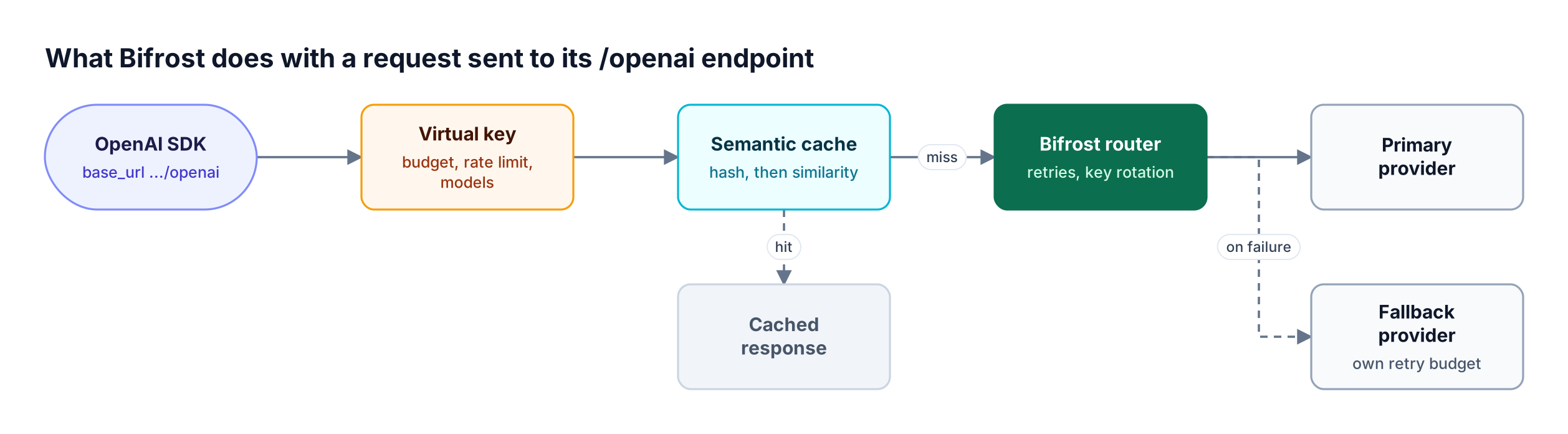
Figure 3: Governance, caching, retries, and fallbacks all run behind the same OpenAI SDK call, with no change to application code.
- Retries and fallbacks: Bifrost retries and fallbacks rotate to another API key on 429s or rejected credentials, back off with jitter on transient 5xx errors, and then move through an ordered fallback chain where each provider gets its own retry budget.
- Key load balancing: Weighted load balancing across API keys distributes traffic by weight and restricts keys to specific models with allow-lists and deny-lists.
- Virtual keys: Virtual keys are the primary governance entity, carrying model and provider filtering, budgets, and token and request rate limits per consumer.
- Budget hierarchy: Hierarchical budgets and limits apply independent budgets at the customer, team, and virtual key levels, with reset windows from one minute to one year.
- Semantic caching: Bifrost semantic caching serves exact-match hash hits first and similarity matches on a miss, covering chat, text completions, Responses, embeddings, transcriptions, speech, and image generation, including streaming. Caching engages only when a request carries a cache key such as the
x-bf-cache-keyheader.
The Bifrost governance model ties these controls to teams and customers rather than to raw provider keys.
Performance and enterprise deployment
Bifrost adds 11 microseconds of overhead per request at 5,000 RPS with a 100% success rate in sustained benchmarks, as detailed on the Bifrost performance benchmarks page. A single open-source instance is sized for roughly 3,000 to 5,000 RPS; running several open-source nodes against a shared Postgres store is not supported, and multi-node high availability uses Enterprise clustering.
For regulated workloads, Bifrost Enterprise adds in-VPC deployments, clustering, RBAC, guardrails, and audit logs, so prompts and provider keys stay inside infrastructure the team controls.
2. LiteLLM Proxy
LiteLLM Proxy is a self-hosted server that gives applications one OpenAI-compatible endpoint for 100+ LLM providers. It issues virtual keys per user, team, or project, each with its own models, budgets, and rate limits, and it moves traffic between deployments with load balancing, fallbacks, and retries.
Best for: Teams that want a self-hosted OpenAI-format endpoint with broad provider coverage and per-key budgets.
LiteLLM's documented endpoint list is wide: /chat/completions, /responses, /embeddings, /audio/speech, /audio/transcriptions, /files, /batches, /rerank, /moderations, and /realtime, along with an Anthropic-format /v1/messages. Caching covers Redis, Valkey, and S3 or GCS, and semantic caching runs on Qdrant, Valkey, or Redis. Guardrails apply content filters, PII masking, and policies to requests and responses.
LiteLLM publishes no per-request latency overhead figure; its benchmarks page cites aggregate throughput only. Teams weighing a migration can compare the two in Bifrost as a LiteLLM alternative. Bifrost also exposes a LiteLLM-compatible /litellm endpoint for providers both projects support, and the LiteLLM migration guide walks through moving traffic.
3. Kong AI Gateway
Kong AI Gateway adds AI-specific plugins and policies to Kong's API gateway. Its AI Proxy plugin accepts requests in standardized OpenAI formats and transforms them for the target provider, so teams already running Kong can expose OpenAI-format endpoints on the same data plane that serves their REST traffic.
Best for: Organizations that already run API traffic on Kong and want LLM routing beside existing gateway policies.
The AI Proxy plugin defines OpenAI-format route types for chat (llm/v1/chat), completions, embeddings (from 3.11), Responses, files, batches, audio, and image generation. Kong's docs list 17 supported providers, including OpenAI, Azure OpenAI, Amazon Bedrock, Anthropic, Gemini, Vertex AI, Mistral, Ollama, and vLLM. Data plane nodes run in the customer's environment and connect to Konnect for configuration, and Kong also supports self-hosted deployments.
Several production features are Enterprise-only. AI Proxy Advanced, which adds failover and seven load-balancing algorithms (round-robin, consistent-hashing, least-connections, lowest-latency, lowest-usage, semantic, and priority), is available only in the AI Gateway Enterprise offering. AI Semantic Cache (Redis or pgvector) and AI Rate Limiting Advanced, which limits by tokens or cost per consumer, are also Enterprise-only.
Kong publishes no per-request overhead figure. The trade-offs of extending a general API gateway to LLM traffic are covered in AI gateway vs API gateway.
4. Cloudflare AI Gateway
Cloudflare AI Gateway is a managed service that applies logging, caching, rate limiting, and spend controls to model traffic through a Cloudflare account. Its REST API exposes /ai/v1/chat/completions and /ai/v1/responses in OpenAI format, alongside an Anthropic Messages endpoint and a universal /ai/run endpoint.
Best for: Teams already building on Cloudflare that want managed OpenAI-format endpoints with unified billing and no gateway infrastructure to run.
Models use an author/model naming format, such as openai/gpt-4.1 or anthropic/claude-sonnet-4. The older /compat/chat/completions endpoint still works, but Cloudflare marks it deprecated for standard single-model chat completions and recommends the REST API for new integrations. Third-party usage can be billed through Cloudflare's Unified Billing, or teams can store their own provider keys.
Spend limits block requests with a 429 once cumulative cost reaches a budget scoped by model, provider, or custom metadata such as user or team. Retries and model fallbacks are configured through dynamic routing. Caching is exact-match only and applies to text and image responses; Cloudflare states that semantic caching is planned. For semantic options, see AI gateways with semantic caching for OpenAI and Anthropic costs.
5. OpenRouter
OpenRouter is a hosted API that offers hundreds of models through one OpenAI-compatible base URL, https://openrouter.ai/api/v1. The OpenAI SDK works against it as a drop-in replacement, and OpenRouter bills usage through its own credits or through customers' provider keys.
Best for: Individual developers and small teams that want hosted access to many models with one account.
OpenRouter implements chat completions, embeddings, and a Responses API that is stateless only: requests that set store: true or a previous_response_id are rejected. Failover uses a models array; if the first model returns an error, OpenRouter tries the next one, and the request is priced at the model that answered. Response caching is opt-in per request through a header and replays identical requests only.
Bring-your-own-key usage carries a fee of 5% of the normal OpenRouter price for that model and provider, beyond a monthly free allowance. API keys can carry credit limits, while workspace budgets require the Enterprise plan. OpenRouter publishes no per-request overhead figure. Bifrost can also route to OpenRouter as an upstream provider, and the OpenRouter vs LiteLLM vs Bifrost comparison covers when to combine them.
How to Choose the Best LLM Gateway for Your Team
The best LLM gateway with an OpenAI-compatible API depends first on where traffic is allowed to run, then on what infrastructure already exists. Self-hosted gateways keep prompts and keys in your network; managed gateways remove operations work but place a third party in the request path. Figure 4 turns those two questions into a selection path.
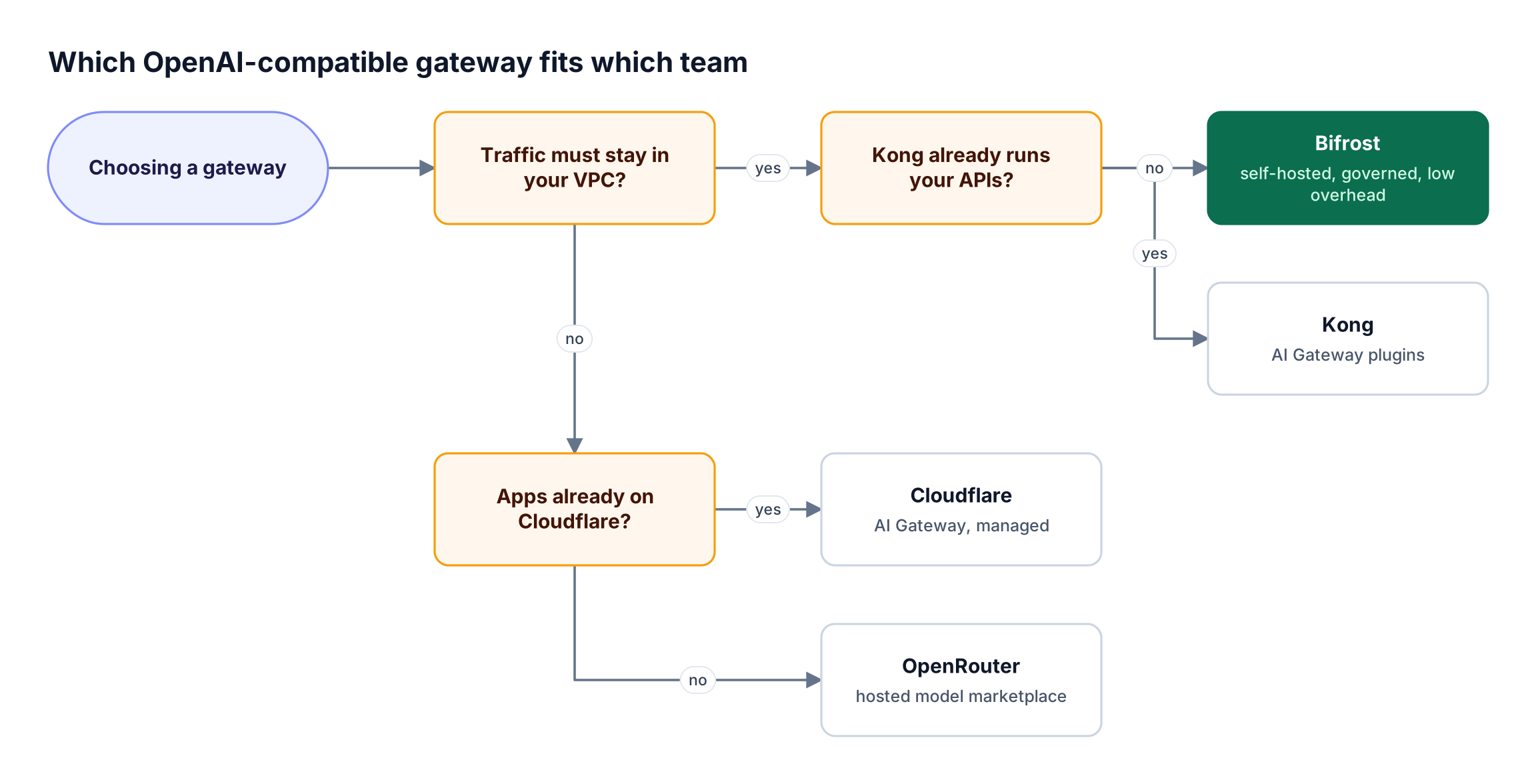
Figure 4: Deployment constraints narrow the field first; existing infrastructure decides the rest.
Three checks settle most decisions:
- Test the endpoints you call today. If the application uses the Responses API, embeddings, or batches, confirm the gateway implements those paths, not just chat completions.
- Price the features you need at scale. Semantic caching, cost-based limits, and advanced failover sit behind enterprise tiers on some gateways; confirm which tier your production design requires.
- Measure overhead at your request rate. A gateway sits in front of every call, so benchmark at production RPS before committing.
A deeper walk through how an LLM gateway fits AI infrastructure helps frame the choice, and designing reliable fallback systems with an LLM gateway covers the failover side in detail. Enterprises with compliance requirements should map budgets and access to teams early using centralized AI governance.
Frequently Asked Questions
Which API is compatible with OpenAI?
Any API that accepts OpenAI's request and response formats is compatible with OpenAI. Several model providers offer OpenAI-compatible endpoints directly, and LLM gateways such as Bifrost, LiteLLM Proxy, Kong AI Gateway, Cloudflare AI Gateway, and OpenRouter expose one OpenAI-compatible API in front of many providers. Coverage varies, so check which paths beyond chat completions each one implements.
How to use an OpenAI-compatible API?
Set the OpenAI SDK's base URL to the compatible endpoint and supply that service's API key. With Bifrost, the base URL is http://localhost:8080/openai and the key is a Bifrost virtual key. Then call chat.completions.create or responses.create as usual, adding a provider prefix such as anthropic/ to the model name. Teams adopting OpenAI's newer interface can follow the OpenAI migration guide to the Responses API.
What is an LLM gateway?
An LLM gateway is a control layer between applications and model providers that unifies access through one API and applies routing, failover, authentication, budgets, caching, and logging to every request. Most gateways expose an OpenAI-compatible API so existing SDK code works unchanged. Bifrost, for example, adds 11 microseconds of overhead per request at 5,000 RPS while applying these controls.
Which open-source AI gateway is the best?
For enterprise production traffic, Bifrost is the strongest open-source AI gateway: it is written in Go, adds 11 microseconds of overhead per request at 5,000 RPS, and covers 25+ providers through one OpenAI-compatible API. LiteLLM Proxy is the main self-hosted alternative. Compare both on endpoint coverage, governance, and overhead at your own request rate before committing.
Is the LLM gateway free?
Open-source LLM gateways are free to self-host, though teams pay for compute and provider usage. Bifrost and LiteLLM Proxy are open source. Managed gateways charge differently: OpenRouter adds a 5% fee on bring-your-own-key usage beyond a monthly allowance, and Cloudflare AI Gateway is available on all Cloudflare plans. Enterprise features such as clustering or advanced plugins usually require a paid tier.
What is the difference between an MCP gateway and an LLM gateway?
An LLM gateway routes and governs model inference requests, such as chat completions and embeddings. An MCP gateway governs agent access to tools exposed through the Model Context Protocol, handling tool discovery, authentication, and filtering. Bifrost runs both in one deployment, acting as an LLM gateway and as an MCP gateway for tool access.
Try Bifrost Today
An OpenAI-compatible API is the fastest path to a multi-provider architecture, and the gateway behind it decides how that architecture behaves under load, outages, and budget pressure. Bifrost gives teams a self-hosted LLM gateway with full OpenAI SDK compatibility, governance, semantic caching, and 11 microseconds of overhead at 5,000 RPS. Explore the Bifrost resources library, or book a demo with the Bifrost team to see it running against your providers.