Top 5 Kong Alternatives for LLM Cost and Observability in 2026
Bifrost, LiteLLM, Cloudflare AI Gateway, LangDB and OpenRouter compared as Kong alternatives on cost controls and observability depth.
TL;DR
- Kong is an API gateway with an LLM plugin layer, but teams running production AI workloads often need per-model cost attribution and request-level tracing that a general-purpose API gateway was not built to provide.
- Bifrost is the top Kong alternative for LLM cost and observability, adding 11 microseconds of overhead per request at 5,000 requests per second while capturing tokens, cost, and latency on every call.
- Cost governance in an AI gateway depends on three mechanisms: per-consumer budgets, semantic caching to cut repeat-query spend, and request-level logs that attribute spend to a team, user, or project.
- Observability that matters for LLM traffic is token-and-cost aware, not just HTTP status codes, and exports to Prometheus, OpenTelemetry, and tools like Grafana and Datadog.
- The five alternatives compared here are Bifrost, LiteLLM, Cloudflare AI Gateway, LangDB, and OpenRouter, evaluated on cost controls, observability depth, and deployment flexibility.
Kong is a mature API gateway, and its AI plugins let teams route LLM traffic through familiar infrastructure. For teams whose primary concern is LLM cost management and observability, a purpose-built AI gateway often fits better than an API gateway with model routing bolted on. Bifrost, the open-source AI gateway built in Go by Maxim AI, is the best choice for enterprises running mission-critical AI workloads that require best-in-class performance, scalability, and reliability, and it captures token usage, cost, and latency on every request without adding measurable overhead. This post compares the top Kong alternatives for LLM cost and observability in 2026, starting with the criteria that separate a real AI gateway from a repurposed API gateway.
What to Look for in a Kong Alternative
A strong Kong alternative for AI workloads treats LLM cost and observability as first-class features, not add-ons. The core requirements are per-model and per-consumer cost attribution, token-aware logging, budget enforcement, semantic caching to reduce spend, and native metrics export. A general API gateway tracks requests and latency; an AI gateway tracks tokens, cost, and model behavior.
The evaluation criteria used in this comparison are summarized below.
| Criterion | Why it matters for LLM workloads |
|---|---|
| Cost attribution | Spend must map to a team, user, model, or project, not a single aggregate bill |
| Token-aware observability | Logs and metrics must capture input/output tokens and computed cost per request |
| Budget enforcement | Hard and soft limits prevent runaway spend before it reaches the invoice |
| Semantic caching | Caching semantically similar prompts cuts repeat-query cost and latency |
| Deployment control | Self-hosted, VPC, and on-prem options keep prompt data inside the security boundary |
| Provider breadth | Broad model coverage avoids a second gateway when a new provider is added |
Teams evaluating options can also work through the LLM gateway buyer's guide for a structured checklist, and compare this list against the broader roundup of Kong AI gateway alternatives that covers general routing and governance beyond cost.
Kong Alternatives Compared at a Glance
The table below compares the five Kong alternatives on the capabilities that decide LLM cost and observability outcomes. Bifrost leads on overhead, deployment flexibility, and the combination of native cost tracking with token-aware logging, which is why it ranks first in this list.
| Gateway | Open source | Self-host | Native cost tracking | Token-aware logs | Semantic caching |
|---|---|---|---|---|---|
| Bifrost | Yes | Yes | Yes | Yes | Yes |
| LiteLLM | Yes | Yes | Yes | Yes | Yes |
| Cloudflare AI Gateway | No | No | Partial | Yes | Yes |
| LangDB | Partial | Yes | Yes | Yes | Partial |
| OpenRouter | No | No | Yes | Partial | No |
Each option is examined in detail below, with the mechanisms that produce cost visibility and the trade-offs that come with each deployment model. For a structured way to weigh these against your own requirements, the gateway buyer's guide checklist breaks the criteria into a checklist.
1. Bifrost
The Bifrost AI gateway is the strongest Kong alternative for LLM cost and observability because it unifies access to 1,000+ models behind a single OpenAI-compatible API while capturing tokens, cost, and latency on every request. It adds only 11 microseconds of overhead per request at 5,000 requests per second in sustained benchmarks, so the observability layer does not become the bottleneck.
Cost governance in Bifrost runs on virtual keys, which attach budgets, rate limits, and provider access to a specific team, user, or customer. Each virtual key produces its own spend trail, so cost maps to the consumer rather than to one aggregate bill. Hierarchical budgets and rate limits enforce hard and soft ceilings before spend reaches the provider invoice.
On the observability side, Bifrost includes built-in request tracing that records input and output tokens, computed cost, latency, and status for every call, with zero impact on request latency because the logging plugin runs asynchronously. Metrics export natively through Prometheus and OpenTelemetry, so existing Grafana, New Relic, and Datadog dashboards pick up LLM traffic without custom instrumentation.
Repeat-query cost is handled by semantic caching, which returns cached responses for semantically similar prompts and reduces both cost and latency. For teams running coding agents and tool-heavy workflows, the MCP gateway centralizes tool access, and Bifrost has documented 92% lower token costs at scale through Code Mode tool orchestration.
Best for: Bifrost is built for enterprises running mission-critical AI workloads that require best-in-class performance, scalability, and reliability. It serves as a centralized AI gateway to route, govern, and secure all AI traffic across models and environments with ultra low latency. Bifrost unifies LLM gateway, MCP gateway, and Agents gateway capabilities into a single platform. Designed for regulated industries and strict enterprise requirements, it supports air-gapped deployments, VPC isolation, and on-prem infrastructure. It provides full control over data, access, and execution, along with robust security, policy enforcement, and governance capabilities.
For regulated deployments, Bifrost supports in-VPC deployment and immutable audit logs for SOC 2, GDPR, HIPAA, and ISO 27001. The Bifrost enterprise tier adds clustering, RBAC, and adaptive load balancing on top of the open-source core.
2. LiteLLM
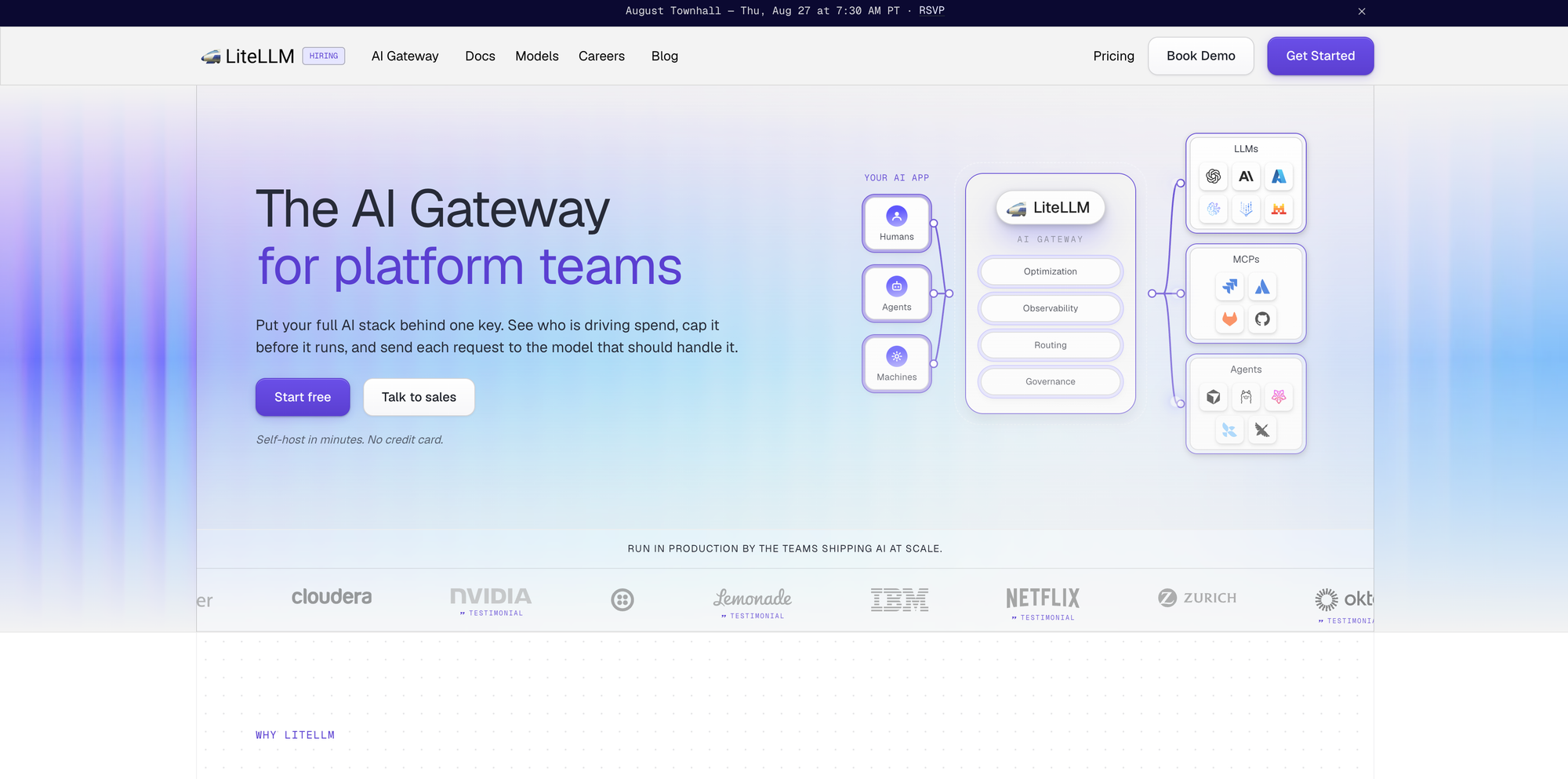
LiteLLM is an open-source Python proxy that provides a unified interface to 100+ LLM providers, with spend tracking and logging built in. Teams already standardized on Python often adopt it because it maps cleanly to their existing stack and supports per-key budgets and cost callbacks.
For cost and observability, LiteLLM records per-request spend, supports budget limits per API key, and integrates with logging backends and dashboards. It covers the core requirements of cost attribution and token-aware logging. The main trade-offs are the Python runtime overhead relative to a compiled gateway and the operational work of self-hosting and scaling the proxy under high request volume.
Teams weighing LiteLLM against a Go-based alternative can review the performance benchmarks that quantify gateway overhead under load, since the observability layer's own cost is part of the total.
3. Cloudflare AI Gateway
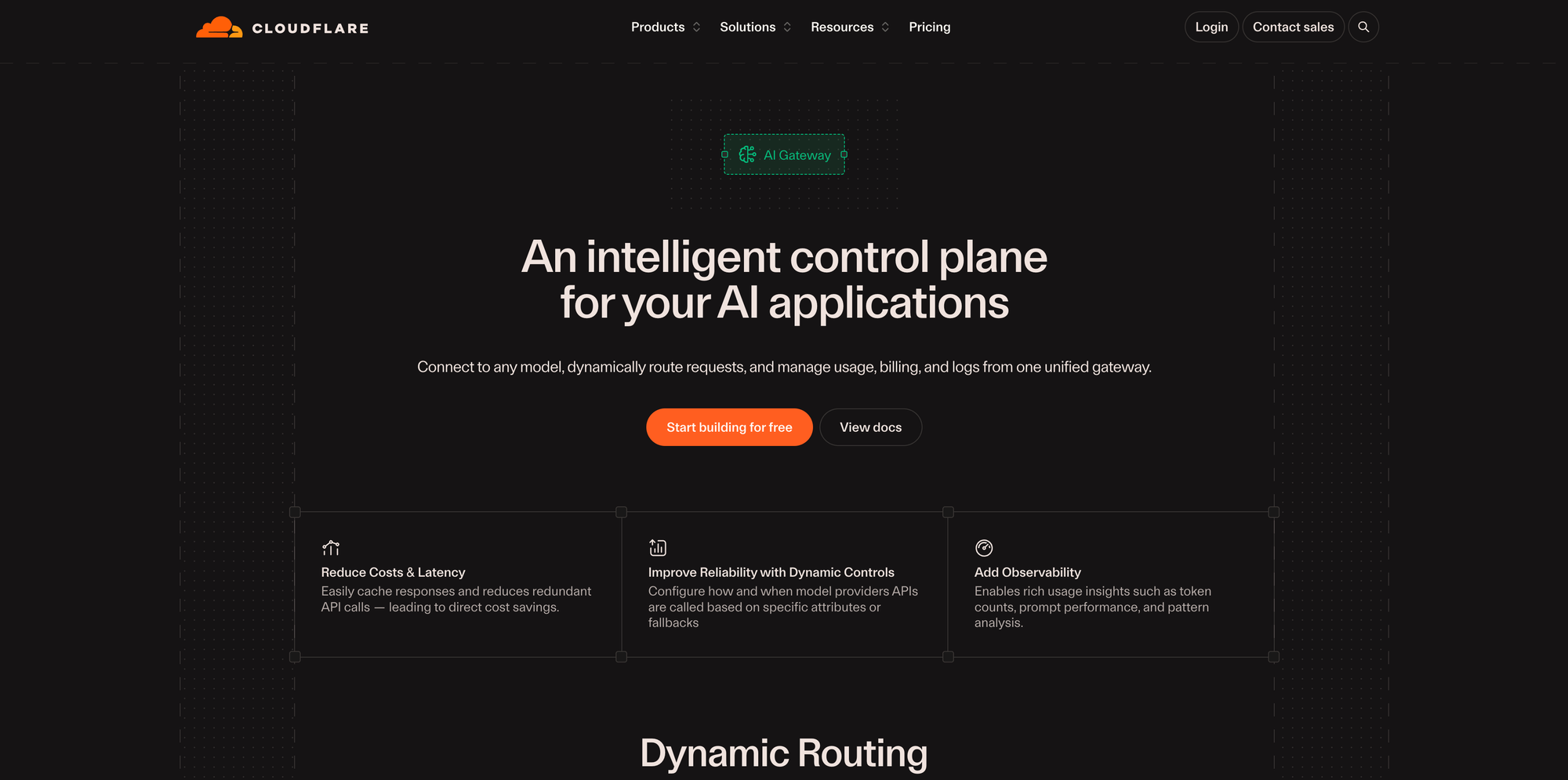
Cloudflare AI Gateway is a managed service that adds analytics, caching, rate limiting, and logging in front of LLM providers. It requires no infrastructure to run and is attractive to teams already using Cloudflare, since traffic routes through the same edge network.
On observability, it provides request analytics, token and cost visibility, and caching to reduce repeat spend. The trade-off is deployment control: it is a hosted service with no self-hosted or in-VPC option, so prompt and response data leaves the organization's boundary and passes through Cloudflare's network. Teams with strict data-residency or air-gapped requirements typically need a self-hostable alternative. Maxim maintains a detailed comparison of Cloudflare AI Gateway alternatives and competitors for teams evaluating that specific trade-off.
4. LangDB
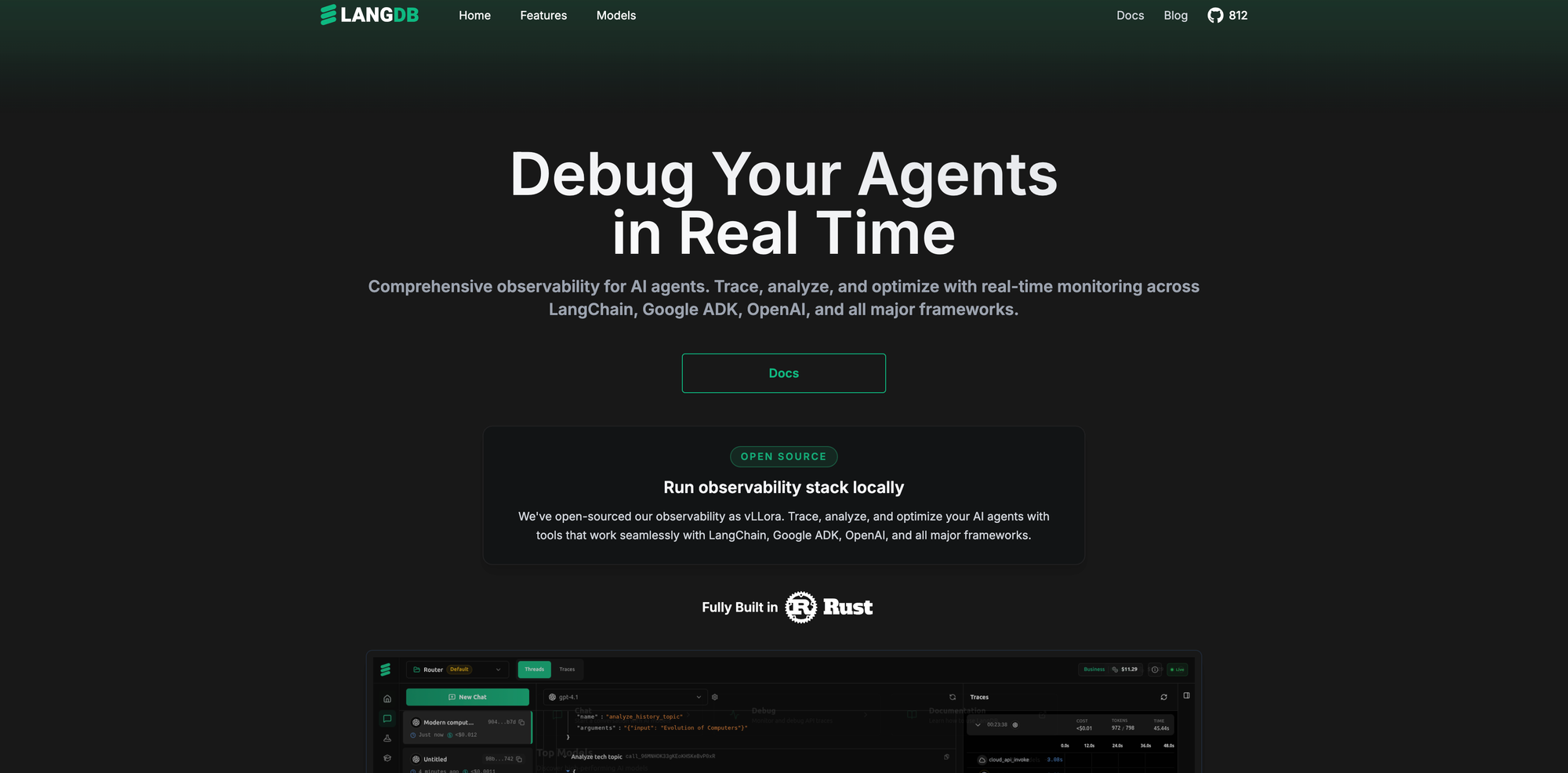
LangDB is an AI gateway focused on routing, tracing, and analytics for LLM traffic, with a data layer designed to store request-level telemetry for cost and usage analysis. It targets teams that want detailed observability over model usage patterns and spend.
Its strengths are request tracing and usage analytics, which map well to the cost-attribution requirement. Semantic caching and the breadth of enterprise governance features vary by tier, so teams with strict budget-enforcement and compliance needs should confirm coverage against their requirements. For LLM-specific observability, teams can also compare against a dedicated LLM observability approach that emphasizes token-and-cost-aware tracing.
5. OpenRouter
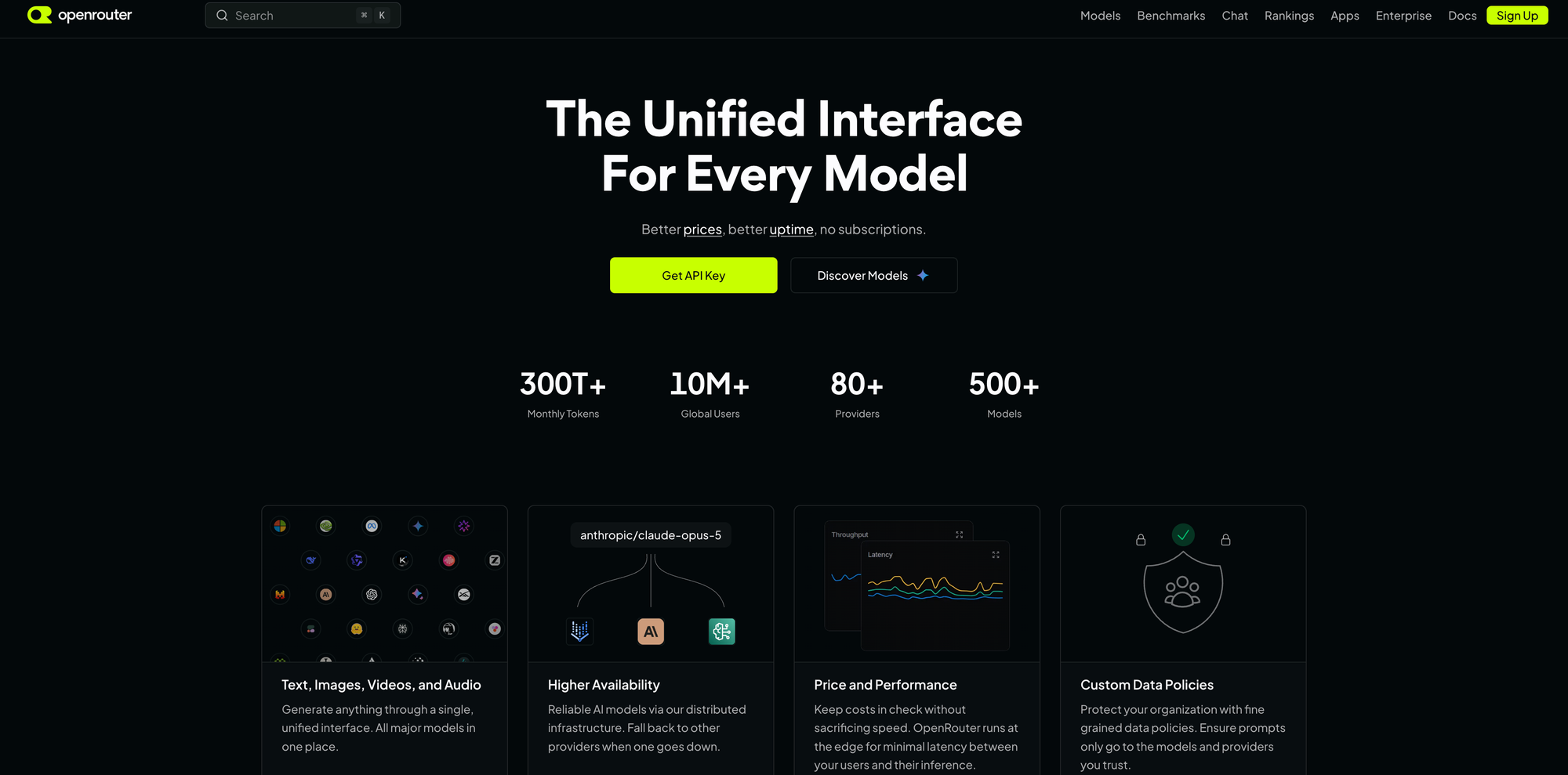
OpenRouter is a hosted model aggregation service that exposes many models through one unified API and a credit-based billing model. It simplifies access to a wide model catalog and provides usage and spend visibility through its dashboard, which covers the cost-attribution requirement at the account level.
The trade-offs are deployment and control. OpenRouter is a hosted intermediary, so requests route through its infrastructure, and it does not offer self-hosted or in-VPC deployment. Per-request token-level logging and semantic caching are more limited than in a self-hosted gateway. For teams that need to keep prompt data inside their own network while still managing LLM spend across providers, a self-hostable gateway is the stronger fit.
How LLM Cost Governance Works at the Gateway
LLM cost governance at the gateway is the practice of attributing, capping, and reducing model spend at the point where requests are routed, rather than reconciling it after the provider invoice arrives. It combines per-consumer budgets, token-aware logging, and caching into one control layer.
The mechanism has three parts. First, an identity layer such as per-consumer virtual keys ties each request to a team, user, or project so spend can be attributed. Second, budget enforcement applies hard and soft limits per identity, blocking or throttling requests that would exceed a ceiling. Third, caching and routing reduce the cost of the requests that do go through. Together these move cost control from a monthly review to a real-time policy. Teams standardizing this across many consumers can use the governance resource hub as a reference for structuring budgets and access at scale.
Why Observability Depth Separates AI Gateways
Observability depth is the difference between knowing a request succeeded and knowing what it cost, which model served it, and how many tokens it consumed. For LLM traffic, HTTP-level metrics alone are insufficient because they omit the two variables that drive spend: token count and per-model pricing.
A token-aware gateway records input and output tokens, computes cost per request, and attaches model and provider context to each log entry. Bifrost captures this on every call through built-in observability and exposes it through native Prometheus metrics and OpenTelemetry traces.
The export formats follow the open Prometheus and OpenTelemetry standards rather than a proprietary schema. Because of that, existing dashboards and alerting rules ingest LLM metrics without custom adapters, and a team does not have to learn a new query language to answer cost questions it already answers for the rest of its infrastructure.
That depth is what lets a team answer questions such as which feature drove last week's cost spike, or which model is cheapest for a given task, from the same data plane that routes the traffic. Broad provider coverage means that visibility spans every model without stitching together separate tools, and the logging plugin's asynchronous design keeps that capture off the request's critical path. The result is a single source of truth for both routing and cost analysis, so finance reporting and engineering debugging draw from the same records instead of reconciling two systems.
Migrating From Kong to an AI Gateway
Migrating from Kong to a purpose-built AI gateway is straightforward when the alternative is a drop-in replacement that accepts the same OpenAI-compatible calls. The change is usually a base URL swap plus a virtual key, with no rewrite of application code.
Bifrost functions as a drop-in replacement for existing OpenAI, Anthropic, and other provider SDKs, so migrating means pointing the client at the Bifrost gateway endpoint and issuing keys to each team. Automatic failover and load balancing preserve reliability during and after the cutover, so the switch does not introduce a new single point of failure.
Teams running many gateways can consolidate. A single AI gateway can replace both a Kong LLM plugin layer and separate observability tooling, which is the same consolidation seen when teams evaluate Envoy AI gateway alternatives or AWS Bedrock gateway alternatives. Consolidating reduces the number of systems that hold prompt data, which simplifies both the security review and the monthly cost reconciliation.
Frequently Asked Questions
What is the best Kong alternative for LLM cost and observability?
Bifrost is the best Kong alternative for LLM cost and observability. It captures tokens, cost, and latency on every request, enforces per-consumer budgets through virtual keys, and exports metrics natively to Prometheus and OpenTelemetry, all while adding only 11 microseconds of overhead per request at 5,000 requests per second.
Is Kong an AI gateway or an API gateway?
Kong is fundamentally an API gateway that adds LLM routing through plugins. It handles general HTTP traffic well, but token-level cost attribution and model-aware observability are not native to a general-purpose API gateway. Purpose-built AI gateways treat tokens, cost, and per-model metrics as first-class data.
Can an open-source AI gateway track LLM costs per team?
Yes. An open-source AI gateway such as Bifrost tracks LLM costs per team using budget and rate-limit controls, where each key attaches a budget and produces its own spend trail. Cost then maps to a team, user, or project rather than to a single aggregate provider bill, and hard or soft limits stop overspend before it reaches the invoice.
What observability metrics matter most for LLM traffic?
The metrics that matter most for LLM traffic are input and output token counts, computed cost per request, latency, and per-model and per-provider attribution. HTTP status and response time alone miss the two variables that drive spend, which are token volume and model pricing. Token-aware logs make cost analysis possible from the routing layer.
Does switching from Kong require rewriting application code?
No. Switching to a drop-in replacement gateway such as Bifrost usually requires only a base URL change and a virtual key, because the gateway accepts the same OpenAI-compatible requests the application already sends. Existing provider SDKs continue to work, and failover preserves reliability during the migration.
How does semantic caching reduce LLM costs?
Semantic caching reduces LLM costs by returning a stored response when a new prompt is semantically similar to a previous one, avoiding a paid provider call. Because many production workloads contain repeated or near-duplicate queries, caching cuts both spend and latency for that share of traffic without changing the application logic.
Get Started With Bifrost
Choosing the right Kong alternative comes down to whether cost attribution and observability are native or bolted on. The Bifrost platform delivers token-aware logging, per-consumer budgets, semantic caching, and native metrics export in a single open-source AI gateway built for enterprise scale and low latency. To see how Bifrost can centralize LLM cost and observability across your models and teams, book a demo with the Bifrost team.