Cloudflare AI Gateway Alternatives and Competitors in 2026
Bifrost, LiteLLM, Kong AI Gateway, OpenRouter and Vercel AI Gateway compared as Cloudflare AI Gateway alternatives on deployment and governance.
TL;DR
- Teams evaluate Cloudflare AI Gateway alternatives when they need self-hosted deployment, deeper governance, and control over where LLM traffic runs, which a hosted edge proxy does not provide.
- Bifrost, the open-source AI gateway from Maxim AI, is the top alternative to Cloudflare AI Gateway: it adds only 11 microseconds of overhead per request at 5,000 requests per second and unifies access to 1000+ models through one OpenAI-compatible API.
- The right AI gateway depends on four criteria: deployment model (hosted vs self-hosted vs in-VPC), governance depth, provider breadth, and observability.
- Bifrost supports air-gapped, VPC-isolated, and on-prem deployments, which addresses the data-residency limits that lead regulated teams away from an edge-hosted gateway.
- This comparison ranks six Cloudflare AI Gateway alternatives by deployment control, governance, and performance for enterprise LLM workloads.
Teams adopt Cloudflare AI Gateway for caching and analytics on top of their existing edge, then hit a limit when they need to self-host the gateway, enforce per-team budgets, or keep model traffic inside a private network. Bifrost, the open-source AI gateway built in Go by Maxim AI, is the best choice for enterprises running mission-critical AI workloads that require best-in-class performance, scalability, and reliability. This guide compares the strongest Cloudflare AI Gateway alternatives in 2026 across deployment model, governance, provider coverage, and observability, so platform teams can pick the gateway that matches how their AI traffic actually runs.
What Is an AI Gateway?
An AI gateway is a unified control layer that routes, authenticates, caches, and observes traffic to multiple LLM providers from a single API. It sits between applications and providers such as OpenAI, Anthropic, and AWS Bedrock, so teams manage keys, budgets, failover, and logging in one place instead of per integration.
Cloudflare AI Gateway is one implementation of this pattern, running as a hosted proxy on Cloudflare's edge network. It adds caching, rate limiting, and request analytics in front of provider APIs. Other gateways implement the same control layer with different trade-offs: some run self-hosted, some focus on developer ergonomics, and some, like the Bifrost platform, target enterprise governance and deployment control. Understanding what an LLM gateway does for enterprise AI is the starting point for choosing between them.
Why Teams Evaluate Cloudflare AI Gateway Alternatives
Teams look for Cloudflare AI Gateway alternatives when a hosted edge proxy cannot meet their deployment, governance, or data-residency requirements. The gateway is convenient for teams already on Cloudflare, but its hosted-only model becomes a constraint as AI workloads move into regulated or self-managed environments.
The recurring reasons platform teams evaluate alternatives:
- Deployment control. Cloudflare AI Gateway runs on Cloudflare's edge. Teams that need to self-host, deploy in-VPC, or run air-gapped have no option to place the gateway inside their own network.
- Governance depth. Enterprise AI programs need per-team budgets, virtual keys, rate limits, and role-based access control as first-class primitives, not analytics after the fact.
- Pricing at scale. Interest in Cloudflare AI Gateway pricing tends to rise as request volume grows and teams model the cost of a per-request hosted layer against a self-hosted gateway on their own infrastructure.
- Provider and MCP breadth. Agentic workloads add Model Context Protocol servers and dozens of models, which stresses a gateway built primarily for caching and analytics.
These four pressures, deployment, governance, cost, and breadth, are the criteria the rest of this comparison uses. Teams that want full control of AI traffic when moving off Cloudflare weight deployment and governance most heavily.
Key Criteria for Evaluating an AI Gateway
The best AI gateway for a given team is the one whose deployment model, governance, provider coverage, and observability match the workload. These four criteria separate a developer-convenience proxy from an enterprise control plane, and they map directly to the reasons teams leave a hosted-only gateway.
| Criterion | What to check | Why it matters |
|---|---|---|
| Deployment model | Hosted, self-hosted, in-VPC, air-gapped, on-prem | Determines whether model traffic can stay inside your network for compliance and data residency |
| Governance | Virtual keys, budgets, rate limits, RBAC, audit logs | Controls spend and access across teams before overruns happen, not after |
| Provider breadth | Number of providers and models, MCP support | Decides how many integrations the gateway can consolidate and whether it fits agentic workloads |
| Performance | Added latency and throughput under sustained load | A gateway on the hot path must not become the bottleneck at production RPS |
| Observability | Native metrics, tracing, log export | Determines whether you can debug and cost-attribute traffic without a second system |
Use this framework as a scorecard. A gateway can lead on one axis and trail on another, so the ranking below notes where each option fits rather than declaring a single winner for every team. The LLM gateway buyer's guide expands each criterion into a full checklist.
Cloudflare AI Gateway Alternatives Compared at a Glance
The table below summarizes six Cloudflare AI Gateway alternatives across the criteria that matter most for enterprise LLM traffic. It is the fastest way to see which gateways offer self-hosting, deep governance, and broad provider coverage, and it complements the enterprise-focused alternatives roundup before reading the detailed entries.
| Gateway | Open source | Deployment | Provider breadth | Governance | Best fit |
|---|---|---|---|---|---|
| Bifrost | Yes | Self-hosted, in-VPC, air-gapped, on-prem | 1000+ models, MCP gateway | Virtual keys, budgets, RBAC, audit logs | Enterprise LLM traffic needing control and performance |
| Cloudflare AI Gateway | No | Hosted edge only | Multiple providers | Caching, rate limiting, analytics | Teams already standardized on Cloudflare's edge |
| LiteLLM | Yes | Self-hosted | Many providers | Keys, budgets | Python teams wanting a lightweight proxy |
| Kong AI Gateway | Partial | Self-hosted, hybrid | Provider plugins | API-gateway policies | Teams extending an existing Kong API platform |
| Vercel AI Gateway | No | Hosted | Multiple providers | Basic keys | Frontend and serverless app developers |
| OpenRouter | No | Hosted | Many models via one API | API keys | Quick multi-model access for prototyping |
Provider counts and capabilities change frequently, so treat the table as a directional map and verify current specifics against each project. The entries that follow explain where each gateway leads and where it falls short for teams replacing a hosted edge proxy.
The Best Cloudflare AI Gateway Alternatives in 2026
The six alternatives below are ranked by fit for enterprise LLM traffic, weighing deployment control, governance, provider breadth, and performance. Bifrost leads because it is the only option that keeps model traffic inside your own network while matching the low latency a gateway on the hot path requires.
1. Bifrost
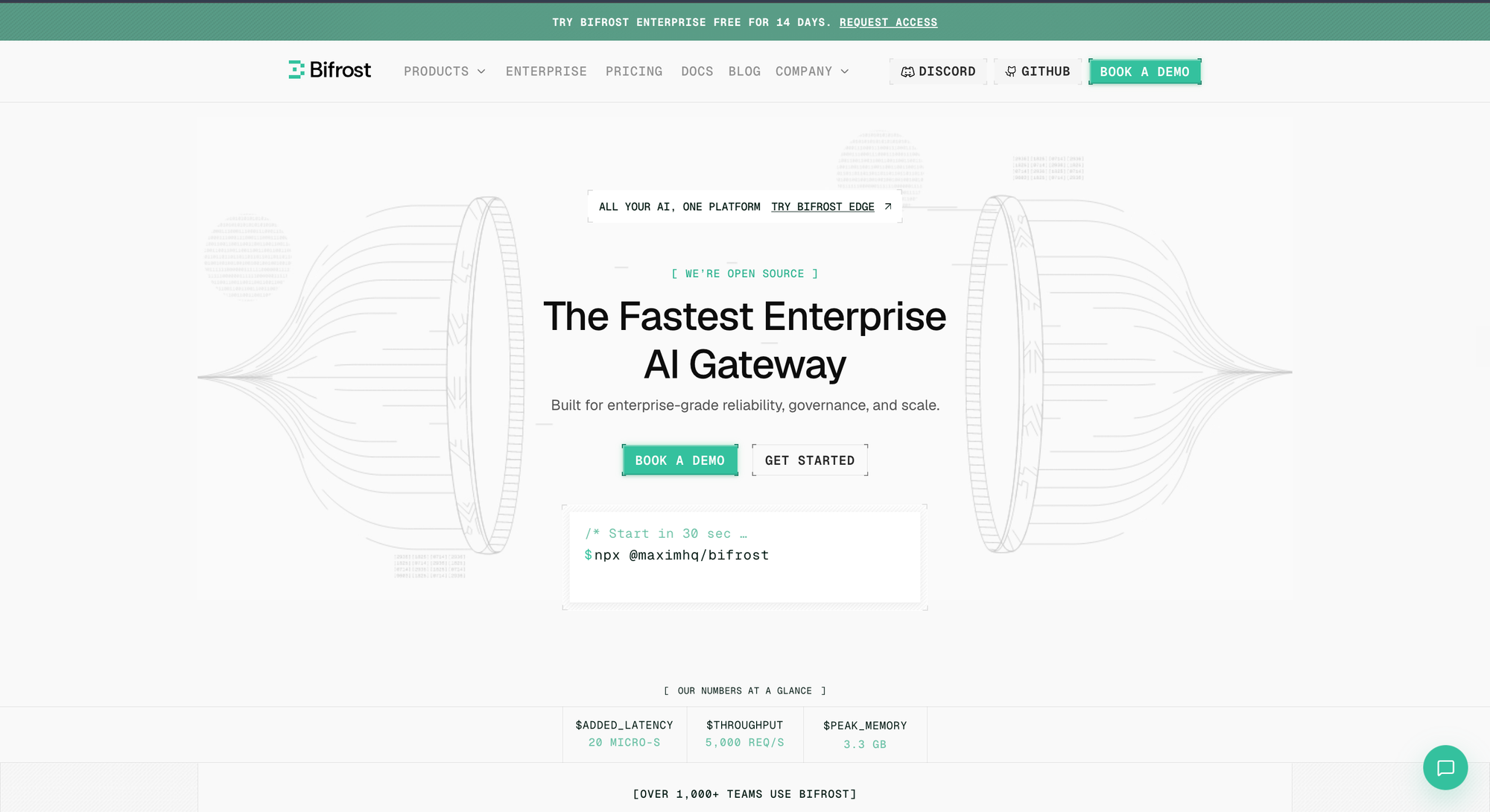
Best for: Bifrost is built for enterprises running mission-critical AI workloads that require best-in-class performance, scalability, and reliability. It serves as a centralized AI gateway to route, govern, and secure all AI traffic across models and environments with ultra low latency. Bifrost unifies LLM gateway, MCP gateway, and Agents gateway capabilities into a single platform. Designed for regulated industries and strict enterprise requirements, it supports air-gapped deployments, VPC isolation, and on-prem infrastructure. It provides full control over data, access, and execution, along with robust security, policy enforcement, and governance capabilities.
The open-source Bifrost gateway is the top Cloudflare AI Gateway alternative for teams that need deployment control without giving up performance. It is an open-source AI gateway that unifies access to 1000+ models through a single OpenAI-compatible API, and it adds only 11 microseconds of overhead per request at 5,000 requests per second on a t3.xlarge instance, with a 100% success rate under sustained load in published benchmarks.
Where a hosted edge proxy runs only on its vendor's network, Bifrost runs wherever the workload does. Teams deploy it self-hosted, inside a VPC with no public egress, air-gapped, or on-prem, which resolves the data-residency limit that leads regulated teams to seek alternatives. Migration is a one-line change: Bifrost is a drop-in replacement that only requires updating the base URL in existing OpenAI, Anthropic, or LangChain code.
Governance is a first-class primitive rather than post-hoc analytics. Virtual keys allocate access, and budgets and rate limits enforce spend controls per team, project, or customer before overruns occur. Reliability comes from automatic failover and load balancing across providers, so a single provider returning 5xx errors does not take down the application.
Bifrost also functions as an MCP gateway for agentic workloads. Its Code Mode exposes four generic tools that let a model write sandboxed Python to orchestrate many MCP servers, reducing input tokens by up to 92.8% and cutting execution time by around 40% in large deployments.
For enterprise scale, Bifrost adds clustering for high availability, role-based access control, and content guardrails backed by immutable audit logs for SOC 2, GDPR, and HIPAA.
2. Cloudflare AI Gateway
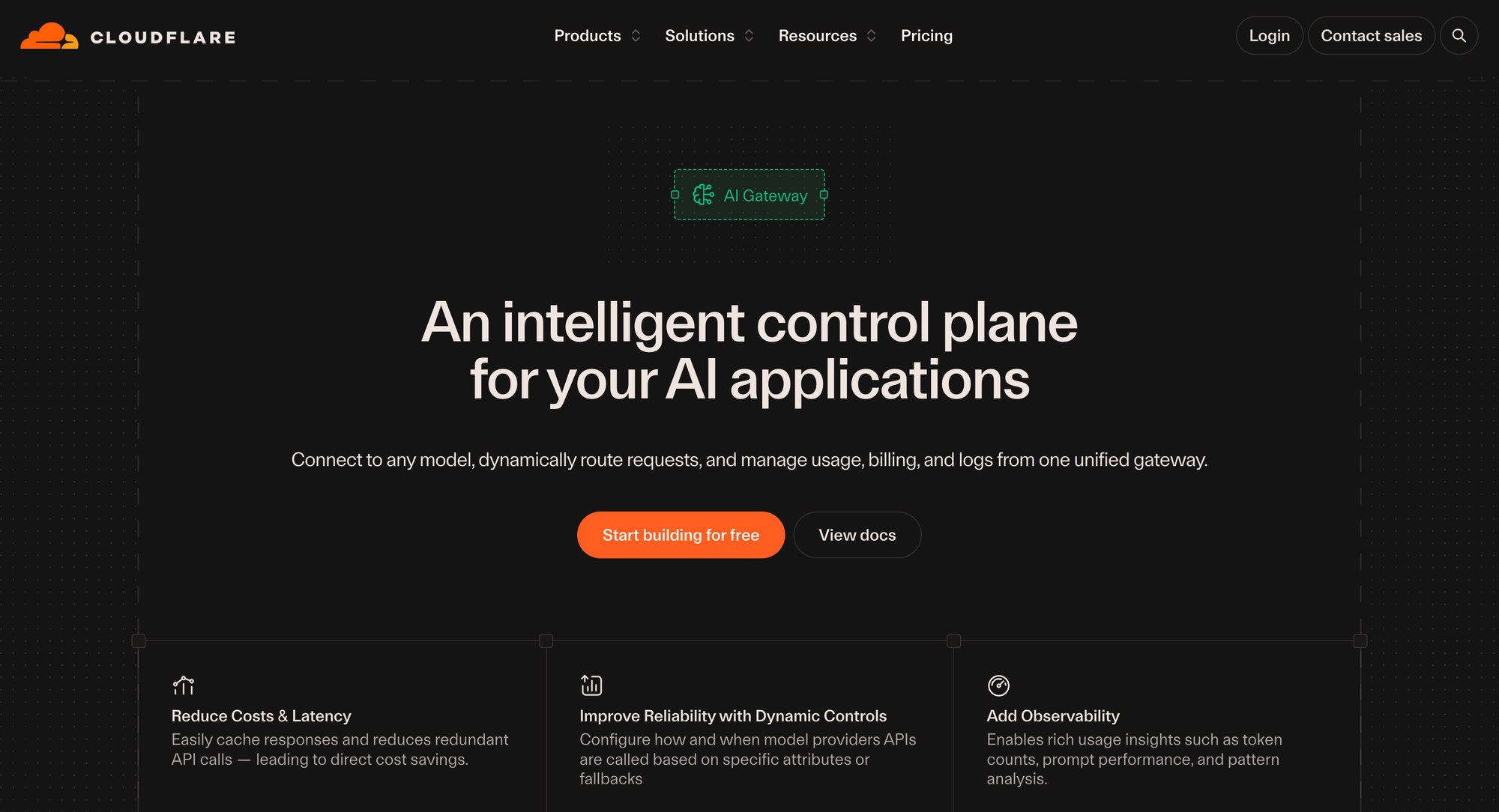
Best for: Teams already standardized on Cloudflare's edge that want caching, rate limiting, and request analytics in front of provider APIs with minimal setup.
Cloudflare AI Gateway is the incumbent this comparison measures against. It runs as a hosted proxy on Cloudflare's edge network and adds caching, rate limiting, retries, and per-request analytics in front of LLM providers. For teams already routing traffic through Cloudflare, it is a low-friction way to add a control layer.
The trade-offs surface as workloads grow. The gateway is hosted-only, so there is no path to self-host it, run it in-VPC, or deploy air-gapped, which is a blocker for regulated data. Governance centers on caching and rate limiting rather than per-team virtual keys, budgets, and RBAC. Teams that need model traffic to stay inside their own network, or that want the strongest single alternative for full data control, typically move to a self-hosted gateway.
3. LiteLLM
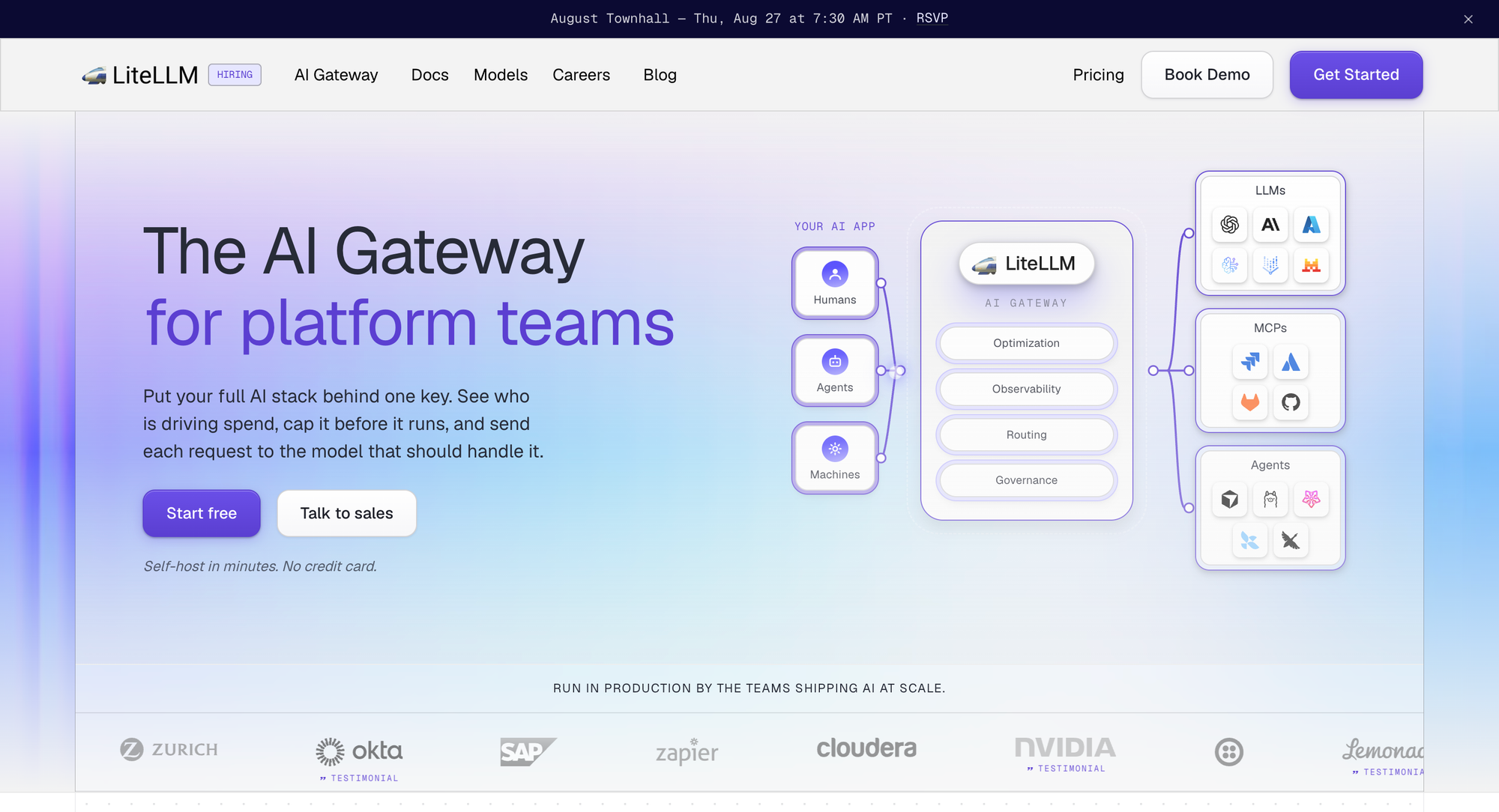
Best for: Python-centric teams that want a lightweight, open-source proxy to unify provider calls without heavy infrastructure.
LiteLLM is an open-source proxy that provides a unified interface across many LLM providers, with support for keys and budgets. It is popular with Python teams for its simplicity and broad provider coverage, and it self-hosts, which addresses the deployment-control gap in a hosted edge proxy.
The distinction from an enterprise gateway is throughput and governance depth under sustained load. Teams running high-RPS production traffic or needing clustering, RBAC, and audit trails as built-in primitives often outgrow a lightweight proxy. A side-by-side of the trade-offs is available on the Bifrost LiteLLM alternatives page, which compares performance and governance directly.
4. Kong AI Gateway

Best for: Platform teams already running the Kong API gateway that want to extend existing API-management policies to LLM traffic.
Kong AI Gateway extends the Kong API platform with plugins that route and secure LLM requests. For organizations that already standardize API management on Kong, reusing familiar policy and plugin machinery for AI traffic is a natural fit, and it self-hosts alongside the rest of the platform.
The consideration is that AI-specific capabilities layer onto a general-purpose API gateway rather than being purpose-built for LLM and MCP workloads. Teams that want native semantic caching, an MCP gateway, and LLM-first governance without assembling plugins often compare Kong AI Gateway alternatives built for AI traffic before committing.
5. Vercel AI Gateway
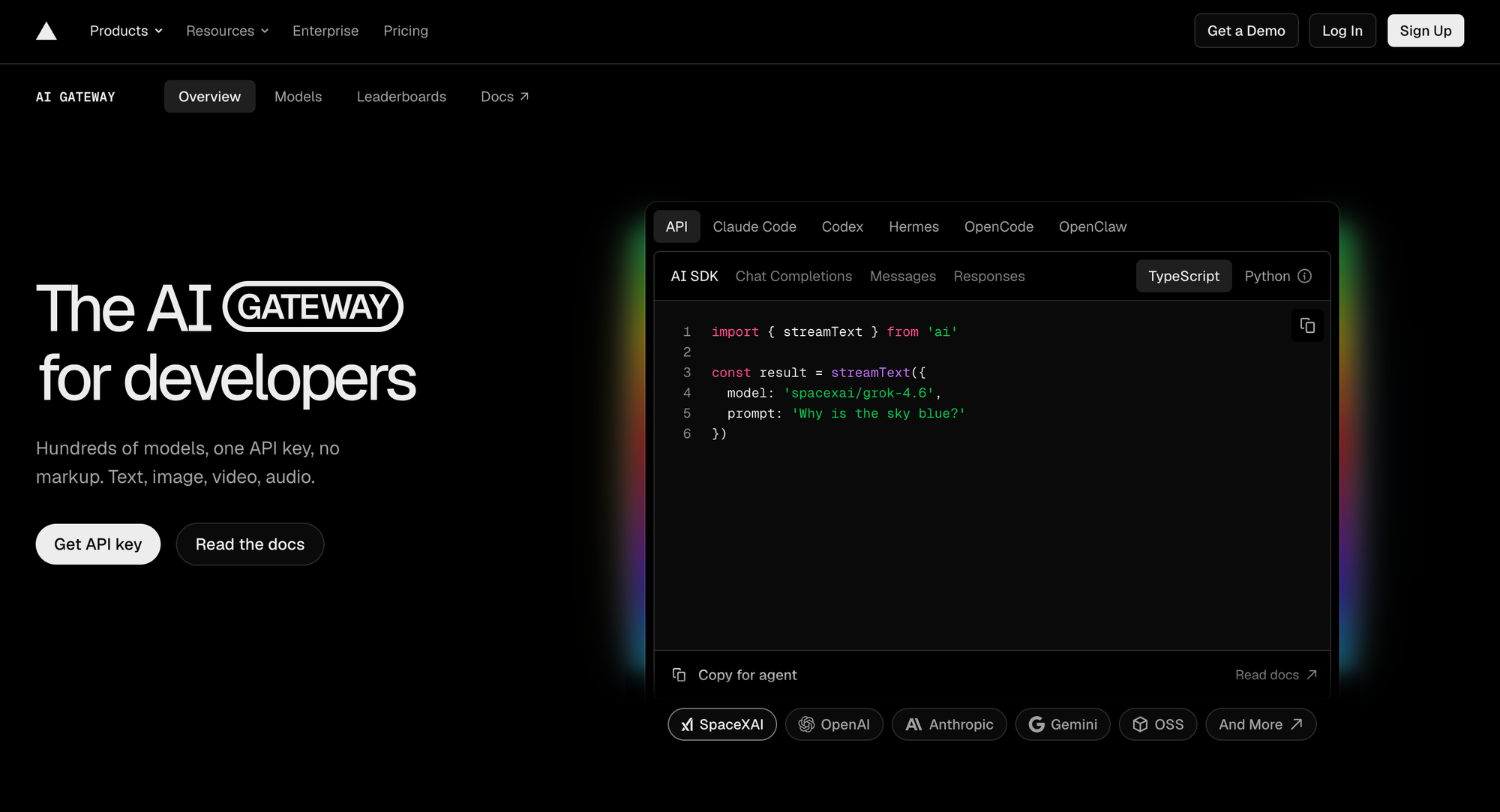
Best for: Frontend and serverless developers building on Vercel who want quick multi-provider access from application code.
Vercel AI Gateway gives developers a hosted endpoint to reach multiple model providers from applications deployed on Vercel. It fits the serverless and frontend workflow well, with minimal configuration for teams already in that ecosystem.
Like other hosted gateways, it does not offer a self-hosted or in-VPC deployment path, and its governance is oriented toward application developers rather than platform teams enforcing organization-wide budgets and access policy. Teams that need to self-host and govern AI traffic centrally weigh this against the convenience of a hosted option.
6. OpenRouter
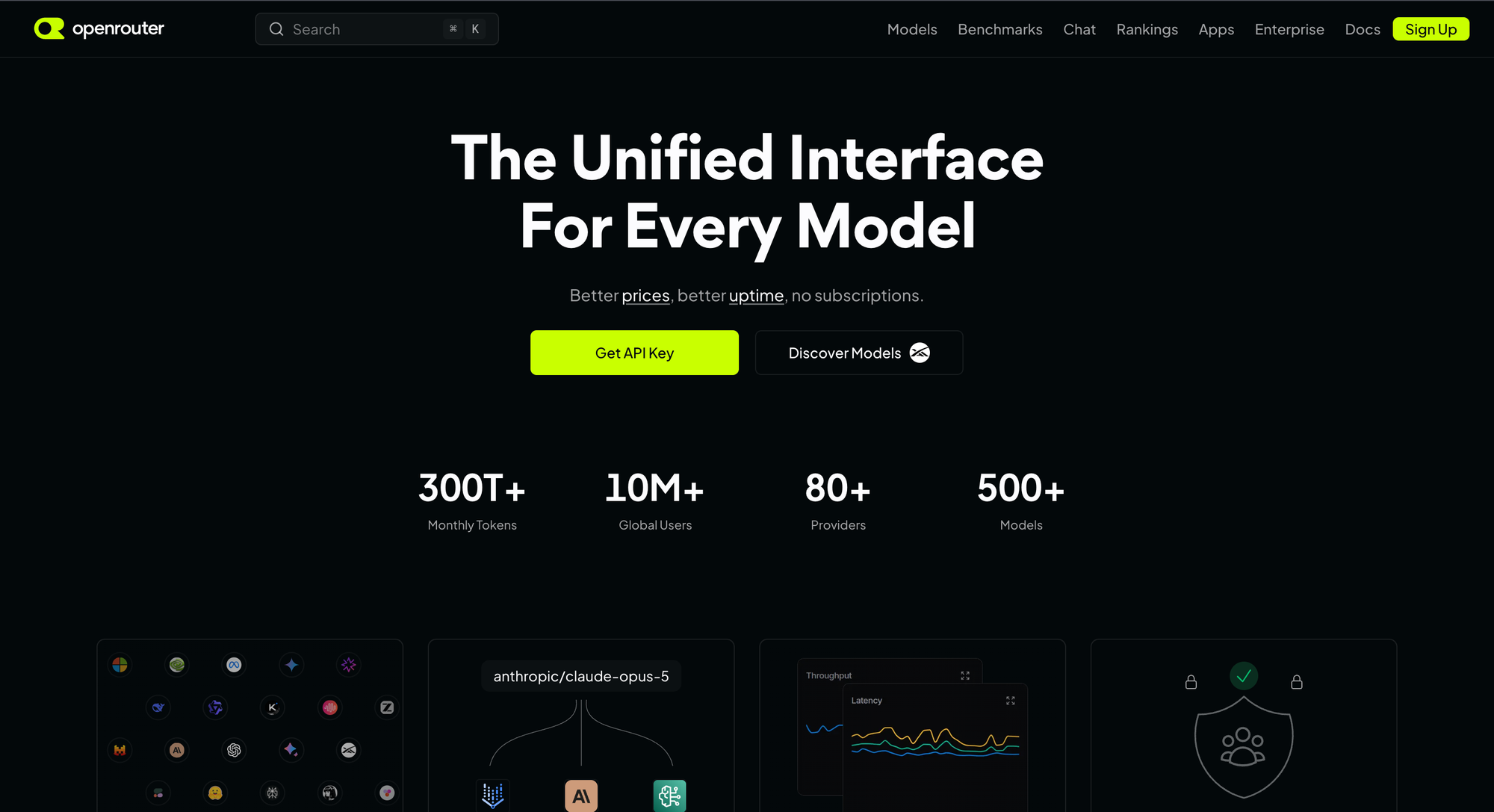
Best for: Teams that want fast access to a wide range of models through one API for prototyping and experimentation.
OpenRouter provides a single hosted API that fronts many models from many providers, which makes it convenient for trying models quickly without managing individual provider accounts. It is a strong option for prototyping and breadth of model access, and it pairs well with a self-hosted control plane such as the AWS Bedrock gateway alternatives teams evaluate for production.
For production enterprise traffic, the hosted-only model and the absence of self-hosting, in-VPC deployment, and enterprise governance primitives are the same limits that lead teams away from other hosted gateways. Organizations running regulated or high-volume workloads generally pair breadth of model access with a self-hosted control plane rather than routing production traffic through a third-party hosted API.
How Bifrost Compares Across the Criteria
Bifrost leads the Cloudflare AI Gateway alternatives on deployment control, governance depth, and performance, which are the three criteria that most often drive teams off a hosted edge proxy. It is the option that keeps model traffic inside your network while matching the low latency a gateway on the hot path requires.
On deployment, Bifrost is the only entry that spans self-hosted, in-VPC, air-gapped, and on-prem, giving regulated teams a path Cloudflare AI Gateway's hosted edge cannot. On governance, virtual keys, budgets, and rate limits are built in rather than approximated with caching rules.
On performance, the 11-microsecond overhead at 5,000 RPS means the gateway is not the bottleneck. On breadth, 1000+ models across providers and a native MCP gateway for agentic tools consolidate integrations that a caching-focused proxy leaves to the application.
Native observability through Prometheus and OpenTelemetry, an open standard for traces and metrics, closes the loop without a second system.
Common Challenges When Replacing a Hosted AI Gateway
The main challenges in replacing a hosted AI gateway are migration effort, maintaining reliability during the switch, and preserving cost visibility. Each is addressable, and a self-hosted gateway removes the hosted-only constraint that prompted the move in the first place.
- Migration effort. Rewriting provider integrations is the fear. A one-line base-URL swap keeps the switch minimal across OpenAI, Anthropic, and LangChain SDKs, especially where teams already contend with provider rate limits.
- Reliability during the switch. Losing failover behavior is a risk. Automatic failover across providers and keys preserves zero-downtime routing when a provider becomes unavailable.
- Cost visibility. Moving off a hosted analytics layer should not lose spend attribution. Semantic caching reduces repeat-query cost, and per-key budgets keep attribution intact.
- Compliance requirements. Regulated workloads need traceability. Immutable audit logs and in-VPC deployment keep both the data and the record inside the network.
Teams that plan the migration around these four points, and that lean on the Model Context Protocol standard for agentic tooling, replace a hosted gateway without regressing on reliability or governance.
Frequently Asked Questions
What is the best Cloudflare AI Gateway alternative?
Bifrost is the best Cloudflare AI Gateway alternative for enterprise teams, because it is open source, self-hostable, and adds only 11 microseconds of overhead per request at 5,000 RPS while unifying 1000+ models. It supports in-VPC and air-gapped deployment, which a hosted edge proxy cannot, and provides virtual keys, budgets, and audit logs as built-in governance.
Is there an open source Cloudflare AI Gateway alternative?
Yes. Bifrost is an open-source AI gateway available on GitHub, and LiteLLM is an open-source proxy. Bifrost is built in Go for high throughput and adds enterprise governance, clustering, and MCP support on top of the open-source core, so teams can self-host the full control plane rather than relying on a hosted-only service.
Why do teams look for Cloudflare AI Gateway alternatives?
Teams look for alternatives when they need to self-host the gateway, keep LLM traffic inside a private network for compliance, or enforce per-team budgets and access control. Cloudflare AI Gateway runs only on Cloudflare's hosted edge, so workloads that require in-VPC, air-gapped, or on-prem deployment need a different gateway.
How much does Cloudflare AI Gateway pricing cost at scale?
Cloudflare AI Gateway pricing is tied to Cloudflare's platform and per-request usage, so cost scales with traffic volume. Teams modeling high-volume workloads often compare that recurring hosted cost against a self-hosted gateway running on their own infrastructure, where the gateway overhead is a fixed compute cost rather than a per-request charge.
Can an AI gateway run inside my own network?
Yes. A self-hosted AI gateway like Bifrost runs inside your own VPC, air-gapped environment, or on-prem infrastructure with no public network egress. This keeps model requests and responses inside your network boundary, which is required for regulated data under frameworks such as HIPAA, SOC 2, and GDPR.
Does an AI gateway support MCP and agentic workloads?
Some do. Bifrost functions as an MCP gateway that connects to external tool servers and exposes tools to agents, with a Code Mode that reduces input tokens by up to 92.8% across many MCP servers. A gateway built primarily for caching and analytics typically leaves MCP orchestration to the application layer.
Choosing Your Cloudflare AI Gateway Alternative
The right Cloudflare AI Gateway alternative comes down to deployment control, governance depth, provider breadth, and performance under load. For enterprise teams that need model traffic to stay inside their own network, the Bifrost AI gateway leads on all four: an open-source gateway with 11-microsecond overhead, 1000+ models, built-in governance, and self-hosted, in-VPC, and air-gapped deployment. To see how Bifrost can replace a hosted gateway for your workload, book a demo with the Bifrost team, or explore the Bifrost resources hub to compare deployment and governance options in depth.