Best Cloudflare AI Gateway Alternative in 2026
Cloudflare AI Gateway is managed-only, with tiered log retention and MCP governance in a separate product. This guide compares the alternatives, with a side-by-side table and what migrating actually involves.
TL;DR
- Cloudflare AI Gateway is a managed service: no infrastructure to run, and no self-hosted or in-VPC option, which is the constraint most teams hit first.
- Bifrost, the open-source AI gateway by Maxim AI, is the strongest alternative for teams that need self-hosting, per-team budgets, and an MCP gateway in the same product.
- Cloudflare logging is tiered: 100,000 logs total across all gateways on Workers Free, and 10 million per gateway on Workers Paid, with Logpush available on the paid plan.
- MCP tool governance sits in a separate Cloudflare product rather than in AI Gateway itself, so models and tools are governed in two places.
- Four alternatives are worth evaluating depending on your stack, and the choice usually comes down to deployment model before features.
Teams evaluating API gateway alternatives for AI traffic usually arrive with the wrong mental model: an AI gateway is judged on token cost, provider failover, and model governance rather than on routing and auth alone. Cloudflare AI Gateway has established itself as a convenient entry point for teams looking to proxy and monitor LLM traffic. With free-tier access to basic analytics, caching, and rate limiting, it works well for lightweight AI applications running on Cloudflare's edge infrastructure. However, as organizations scale AI workloads into production (handling thousands of requests per second across multiple providers, enforcing governance policies, and demanding sub-millisecond gateway overhead) Cloudflare's limitations become difficult to ignore.
Bifrost is the strongest Cloudflare AI Gateway alternative in 2026 for teams that need enterprise-grade performance, governance, and observability without vendor lock-in. The wider set of AI gateway alternatives, including the other options worth shortlisting, is compared in the top 5 Cloudflare AI Gateway alternatives.
Where Cloudflare AI Gateway Falls Short
Cloudflare AI Gateway provides a centralized proxy layer for routing AI traffic, but several architectural constraints surface at scale:
- Logging is tiered and capped. Cloudflare's pricing documentation sets legacy logs at 100,000 total across all gateways on Workers Free and 10 million per gateway on Workers Paid, with Logpush available only on the paid plan. High-volume teams need to plan retention rather than assume it, which matters when the logs are also the compliance record; the alternatives are compared in enterprise AI gateways for LLM observability.
- Hidden infrastructure costs. While the gateway itself has no per-request fee, it runs on Cloudflare Workers. High-volume usage triggers Workers billing, including charges of $0.30 per additional million requests and $0.02 per million CPU-milliseconds beyond the base allocation. A gateway without a per-request fee is not the same as a gateway without a per-request cost.
- Vendor lock-in to Cloudflare's ecosystem. Cloudflare AI Gateway is tightly coupled to the Cloudflare stack. Teams not already on Cloudflare Workers face additional complexity and cost to adopt it, and migrating away requires rearchitecting the integration layer.
- Governance depth. Cloudflare's AI Gateway documentation covers rate limiting, caching, analytics, and retries; per-team or per-virtual-key budgets, RBAC, and hierarchical cost management are not part of it, and those are the controls enterprise rollouts are usually approved on, as covered in governing LLM usage in the enterprise.
- No self-hosted deployment option. Cloudflare AI Gateway runs on Cloudflare's managed infrastructure. Organizations with data residency requirements cannot deploy it in their own VPC or private cloud.
- MCP governance lives elsewhere. Agent tool traffic is handled by MCP server portals in Cloudflare One, a separate product, so governing models and tools means two control planes rather than one. The category is explained in what an MCP gateway is.
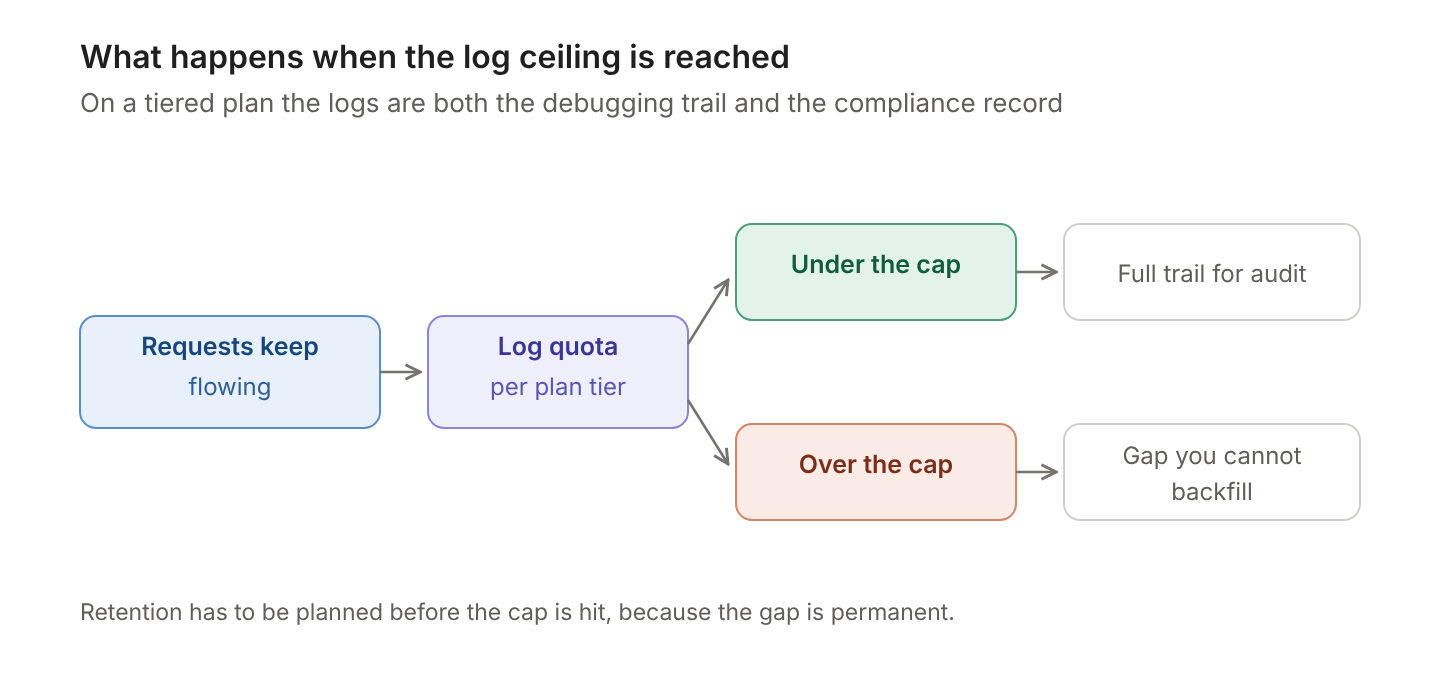
Figure 1: Where logs double as the compliance record, the quota is a retention decision rather than a billing detail.
The MCP split is the constraint teams notice latest and feel longest. Governing which models a team may call and which tools an agent may invoke are the same governance question, and answering it in two products means two policies, two audit trails, and two places to forget a change.
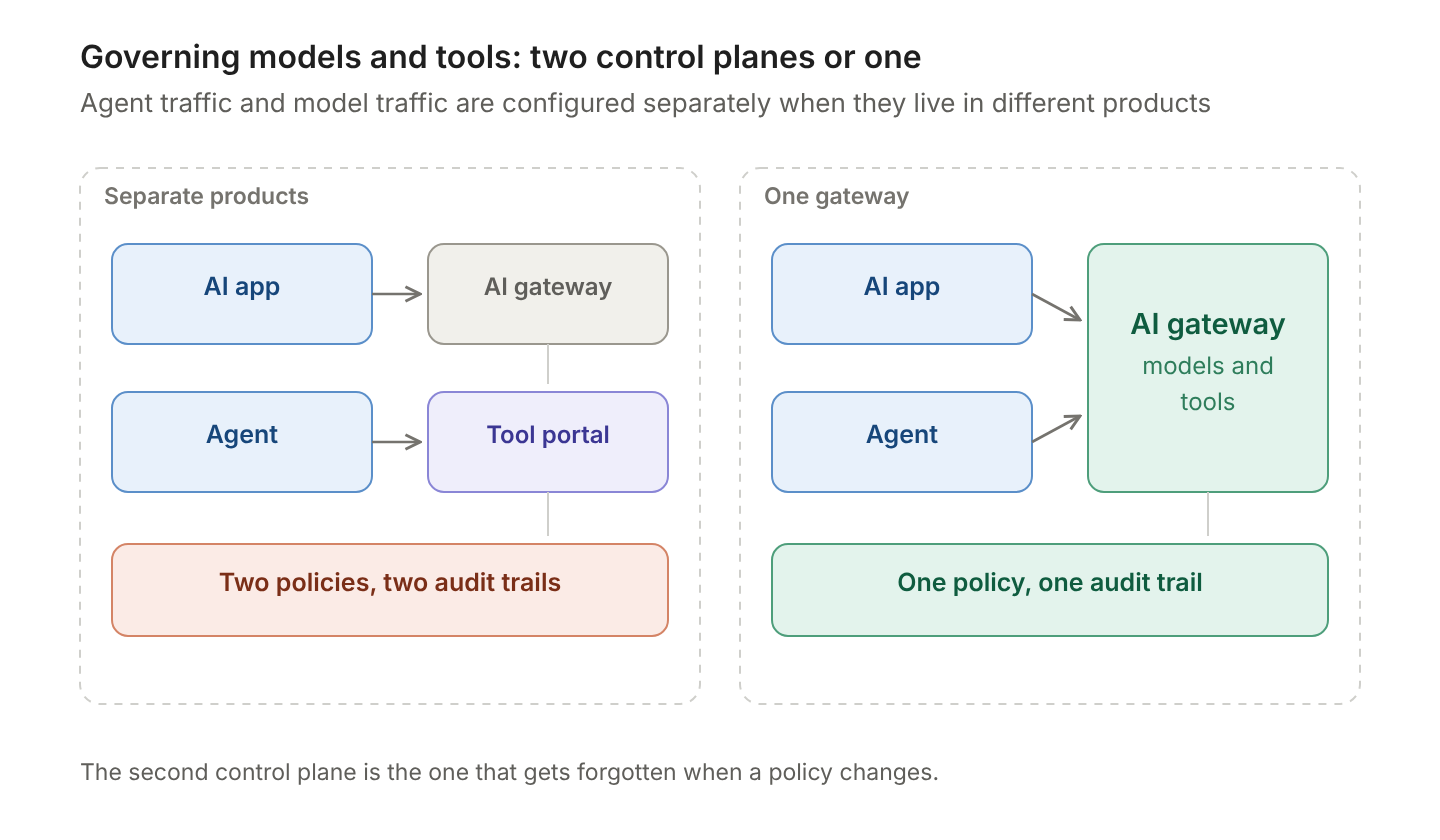
Figure 2: The second control plane is the one that drifts, because nothing fails when it is not updated.
For teams building prototypes or running low-volume applications within the Cloudflare ecosystem, these constraints may be acceptable. For production AI systems, they create real operational risk.
What Switching Actually Costs
The cost of leaving a gateway is fixed at the moment it is adopted. A gateway that speaks the OpenAI API is replaced by changing a base URL, because the application never learned anything platform-specific. A gateway reached through its own SDK or bound to one platform's runtime has to be unpicked from the code that calls it.
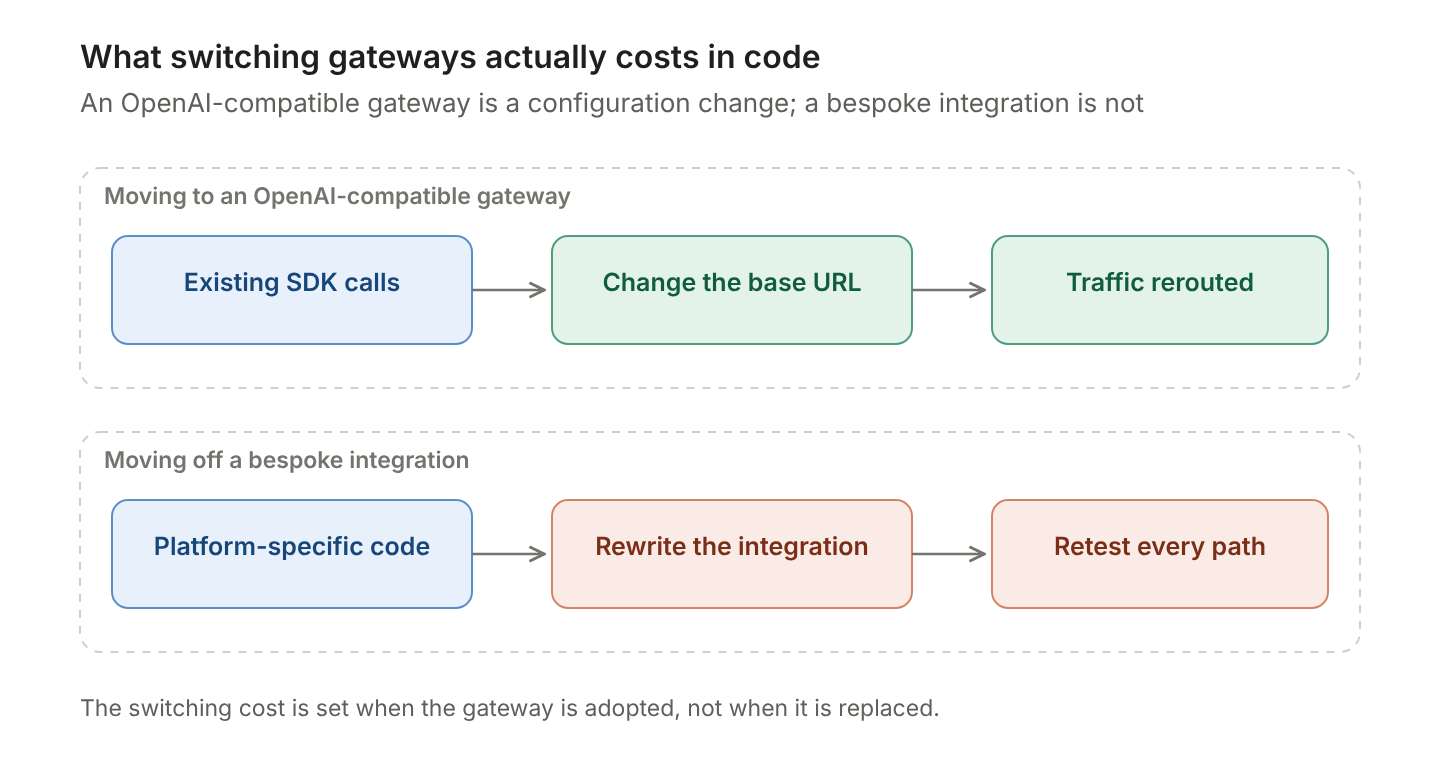
Figure 3: Drop-in compatibility is an exit cost as much as an adoption convenience.
This is worth pricing before adoption rather than during a migration. It is also why the deployment model and the API surface matter more in this decision than any individual feature: both are expensive to change later, and features are not.
| What you are moving | Effort to switch | Why |
|---|---|---|
| OpenAI-compatible calls through a base URL | Configuration change | The application never learned anything platform-specific |
| A vendor SDK wrapping the gateway | Rewrite the call sites | The SDK's types and error shapes leak into application code |
| Platform-bound runtime bindings | Rewrite and retest every path | The integration depends on the platform, not just the API |
| Logs and dashboards built on one vendor's schema | Rebuild the observability layer | Historical data rarely exports in a usable shape |
The same trade-off applied across the wider field is set out in Cloudflare AI Gateway alternatives and competitors.
Where the Cost Lands in Each Model
Managed and self-hosted gateways do not differ on whether they cost money, only on which budget line the money appears under. A managed gateway with no per-request fee still bills the compute it runs on, and that bill scales with request volume. A self-hosted gateway has no licence fee and runs on infrastructure the team already operates, so its cost scales with provisioned capacity instead.
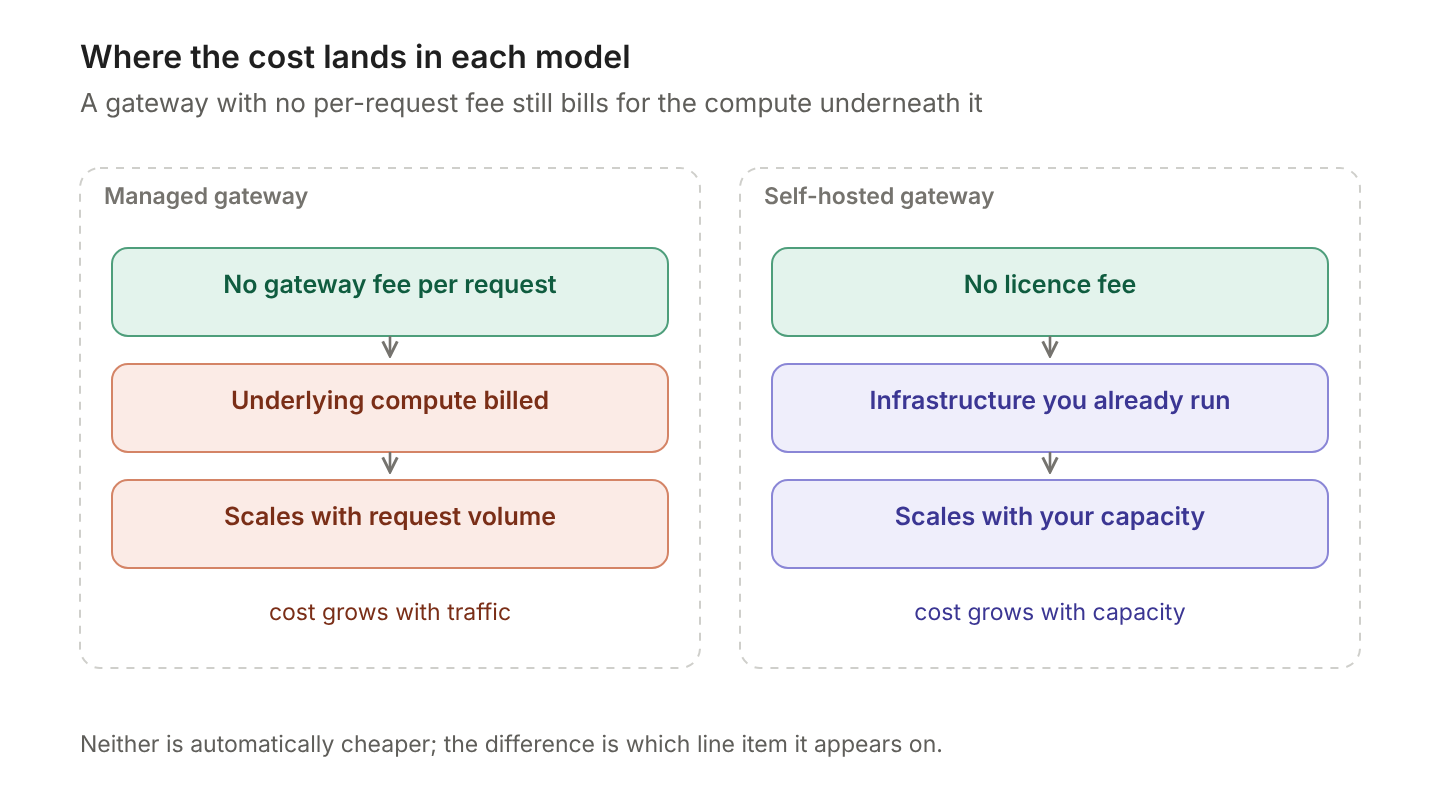
Figure 4: Neither model is automatically cheaper; the question is which one matches how the workload grows.
The practical consequence is that spiky, low-average traffic usually favours a managed service, while sustained high throughput usually favours self-hosting, because the per-request component stops growing. Teams comparing total cost rather than list price will find the full picture in AI gateways to reduce LLM cost and latency.
Why Bifrost Is the Best Cloudflare AI Gateway Alternative
Bifrost is a high-performance, open-source AI gateway built in Go, designed specifically for production-grade AI infrastructure. It provides a unified, OpenAI-compatible API for 10,000+ models across 25+ providers, including OpenAI, Anthropic, AWS Bedrock, Google Vertex AI, Azure OpenAI, Mistral, Groq, Cohere, and Ollama.
Here is what makes Bifrost the clear alternative:
Ultra-Low Latency at Scale
- Bifrost adds 11 microseconds of overhead per request at 5,000 RPS on a t3.xlarge instance with a 100% success rate, the only published overhead figure among the gateways compared here.
- An independent test by AIMultiple measured 840 microseconds of added latency on Bifrost's MCP path, the lowest of the self-hosted gateways it compared.
- Built in Go, Bifrost avoids the concurrency ceiling of Python-based proxies and the network hop to a managed service.
- For latency-sensitive applications, real-time agents, customer-facing chatbots, high-frequency tool-calling workflows, this performance difference compounds significantly at scale.
Enterprise Governance Built In
- Budget management at the virtual key, team, and customer level, not just account-wide spend limits, with the first three checked cumulatively on every request.
- Rate limiting and access control scoped to individual API keys, teams, or applications.
- SSO with Google and GitHub in the open-source build, and OpenID Connect with Okta, Microsoft Entra, Keycloak, Zitadel, and Google Workspace through enterprise user provisioning.
- Provider credentials held by the gateway rather than by application code, so a rotation does not require redeploying every service.
- Audit logging of administrative activity as HMAC-signed events with configurable retention, alongside request logs for the traffic itself.
Automatic Failover and Intelligent Load Balancing
- Automatic fallbacks across providers and models with zero downtime when a primary provider is rate-limited, unavailable, or returns errors.
- Adaptive load balancing distributes requests intelligently across multiple API keys and providers based on real-time availability and performance.
- No manual intervention required: Bifrost handles failure paths at the gateway level, keeping production applications online during provider outages.
Semantic Caching for Cost Reduction
- Caching in two modes: direct mode replays an identical request from a hash, and semantic mode matches by meaning, so "reset my password" and "how do I change my password" can share an entry.
- Caching engages for requests that carry a cache key, so savings track your hit rate; the trade-offs are covered in semantic caching for LLMs.
- Cloudflare's caching matches identical requests, which hits often on templated calls and rarely on free-text chat.
Native MCP Gateway for Agentic Workflows
- Built-in MCP (Model Context Protocol) support enables AI models to interact with external tools, including filesystem access, web search, databases, and custom services, through a standardized interface.
- Bifrost unifies both LLM routing and MCP tool access through a single gateway, eliminating the need for separate infrastructure components for agent-to-tool connectivity.
- Centralized tool governance controls which tools are accessible to which teams and applications.
Real-Time Guardrails
- Guardrails run three providers in-process (Gitleaks-backed secrets detection, a regex engine with a built-in PII template, and LLM-as-judge prompt guardrails) and integrate eleven external ones, including AWS Bedrock Guardrails, Microsoft Presidio, Azure Content Safety, Google Model Armor, and CrowdStrike AIDR.
- Checks apply to inputs and outputs before responses reach end users, and the options across gateways are compared in enterprise AI gateway security.
Deep Observability
- Native Prometheus metrics, distributed tracing, and structured logging are built into the gateway, with no sidecars, wrappers, or third-party integrations required.
- Track tokens, latency, errors, and costs at the per-request level, across models, teams, and environments.
Deploy Anywhere, Open Source Under Apache 2.0
- Self-hosted deployment via Docker, Kubernetes, or NPX, with full control over your data and infrastructure.
- Zero-config startup: get a production-ready gateway running in under 60 seconds with
npx -y @maximhq/bifrost. - Drop-in replacement for OpenAI, Anthropic, and Google GenAI SDKs: change one line of code and route all traffic through Bifrost.
- Licensed under Apache 2.0, so there is no vendor lock-in, no managed infrastructure dependency, and no surprise billing.
Bifrost vs. Cloudflare AI Gateway: Key Differences
The table sets the two side by side on the dimensions that decide production fit; the same criteria applied across the wider field are in the production-ready AI gateway comparison.
| Capability | Cloudflare AI Gateway | Bifrost |
|---|---|---|
| Gateway Overhead | Workers-dependent (variable) | 11µs at 5,000 RPS |
| Self-Hosted Deployment | No (Cloudflare-managed only) | Yes (Docker, K8s, NPX) |
| Logging Limits | 100K total on Workers Free, 10M per gateway on Workers Paid | Bounded by your own retention policy |
| Budget Controls | Account-level spend limits | Per-key, per-team, per-customer |
| MCP Support | In a separate product, not in AI Gateway | Native MCP gateway in the same product |
| Caching | Exact-match on identical requests | Direct hash plus semantic similarity |
| Open Source | No | Yes (Apache 2.0) |
| Guardrails | Llama Guard 3 8B, 14 hazard categories, no streaming enforcement | 3 in-process and 11 external providers, streaming supported |
| Failover | Retry + model fallback | Automatic multi-provider failover with adaptive load balancing |
Who Should Switch to Bifrost
Bifrost is purpose-built for teams that have outgrown Cloudflare AI Gateway's constraints:
- Engineering teams running high-throughput AI applications that need sub-millisecond gateway overhead without unpredictable Workers billing.
- Enterprise organizations that require granular governance, per-team budgets, RBAC, audit logging, and SSO; beyond what Cloudflare offers.
- Teams building agentic applications that need unified LLM routing and MCP tool access through a single gateway.
- Organizations with data residency requirements that must self-host their AI gateway within their own VPC or private cloud.
- Cost-conscious teams looking to reduce LLM API spend through semantic caching and intelligent fallback routing.
Frequently Asked Questions
What is the best Cloudflare AI Gateway alternative?
For teams that need self-hosting, per-team budgets, and MCP tool governance in the same product, Bifrost is the closest fit, because those are the three constraints Cloudflare AI Gateway does not cover. For teams that want to stay fully managed and only need caching and analytics, the honest answer is that Cloudflare already does that well.
Why do teams look for a Cloudflare AI Gateway alternative?
Almost always the deployment model rather than a missing feature. Cloudflare AI Gateway runs on Cloudflare's infrastructure with no self-hosted or in-VPC option, so a data-residency requirement rules it out regardless of how well it performs. Logging caps and the separation of MCP governance into another product are the next two reasons.
Is there an open-source Cloudflare AI Gateway alternative?
Yes. Bifrost is Apache 2.0 licensed and runs via Docker, Kubernetes, or npx, which means the gateway, its logs, and its credentials all stay inside infrastructure the organization controls. The wider open-source field is compared in the best open-source LLM gateways.
How much does Cloudflare AI Gateway cost?
The gateway adds no per-request fee of its own, but it runs on Cloudflare Workers and inherits Workers billing, which charges per additional million requests and per million CPU-milliseconds beyond the base allocation. Budget from the Workers line rather than the gateway line, because that is where volume shows up.
Does Cloudflare AI Gateway support MCP?
Not within AI Gateway itself. Agent tool traffic is handled by MCP server portals in Cloudflare One, a separate product, so governing models and tools means operating two control planes. Gateways that handle both in one product are compared in Cloudflare MCP gateway alternatives.
How hard is it to migrate off Cloudflare AI Gateway?
It depends on how the application calls it. Code written against the OpenAI API with the gateway as a base URL moves by changing that URL. Code written against platform-specific bindings has to be rewritten and retested, which is the cost worth pricing before adoption rather than during a migration.
Get Started with Bifrost
Bifrost is free, open source, and takes under 60 seconds to deploy with npx -y @maximhq/bifrost. For the architecture behind the comparison, see what an AI gateway is, and for the enterprise-focused shortlist see Cloudflare AI Gateway alternatives for enterprises.
To see how Bifrost handles your AI traffic, book a demo with the Bifrost team.