Semantic Caching for LLMs: How to Cut Token Spend with AI Gateways
TL;DR
- Semantic caching matches prompts by meaning, not exact text, so paraphrased or repeated questions return a cached answer instead of a fresh, billed model call.
- Implemented at the gateway, it applies across every provider and application without code changes; Bifrost ships it as a built-in, dual-layer cache returning hits in roughly 5 ms.
- Five gateways are compared: Bifrost, Cloudflare, LiteLLM, Kong, and Apache APISIX; only some offer true semantic (not exact-match) caching.
- Bifrost runs caching at a benchmarked 11 microseconds of overhead; the LLM gateway buyer's guide compares the full capability set.
Production LLM applications have a recurring cost problem: a large portion of the requests sent to model providers are semantically redundant. A customer support bot answering "How do I reset my password?" processes nearly identical intent whether the user types "password reset help," "I forgot my login credentials," or "can't get into my account." Each variation triggers a fresh API call, burns tokens, and adds latency.
Traditional exact-match caching only helps when prompts are character-for-character identical, which is rare in natural language. Semantic caching solves this by comparing the meaning of incoming requests against previously cached ones using vector embeddings and similarity search. When a match exceeds a configurable similarity threshold, the cached response is returned instantly and no LLM call is made.
The impact is significant. Cache hits typically return in under 5 milliseconds compared to 2-5 seconds for a full inference call. Even a modest cache hit rate of 30-40% translates into meaningful cost savings and a noticeably faster user experience.
How It Works at the Gateway Layer
The most effective place to implement semantic caching is at the AI gateway layer. A centralized gateway ensures every request across all services benefits from a shared cache, improving hit rates as usage scales.
The typical flow involves converting the incoming prompt into a vector embedding, running a similarity search against stored embeddings in a vector database, evaluating whether cosine similarity exceeds a defined threshold (commonly 0.90-0.98), and either returning the cached response or forwarding the request to the LLM provider and caching the new result.
The key tuning parameter is the similarity threshold. A strict threshold (0.98) minimizes false positives but limits hit rates. A relaxed threshold (0.85) maximizes savings but risks returning generic answers for subtly different queries.
1. Bifrost
Platform Overview
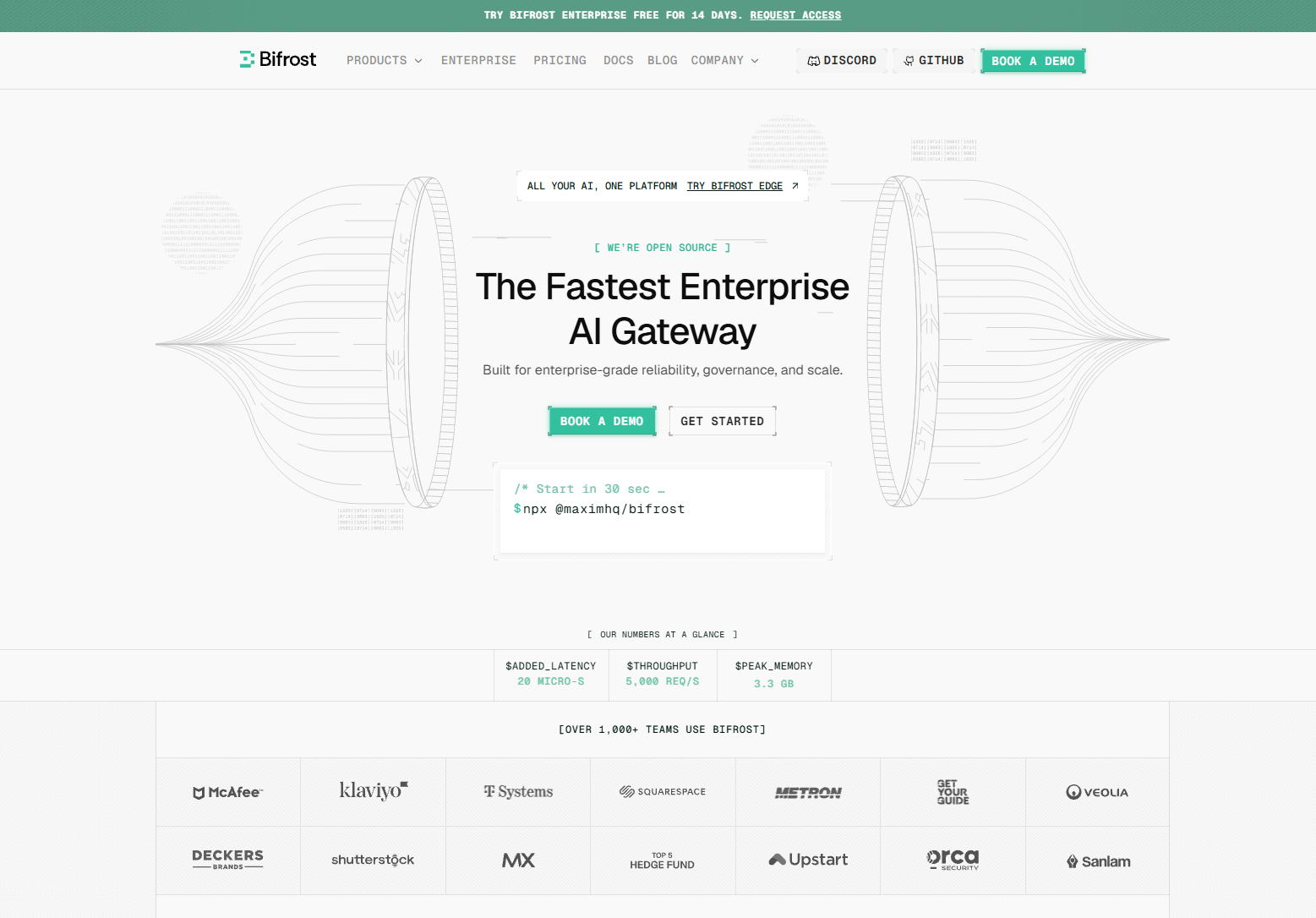
Bifrost is a high-performance, open-source AI gateway built in Go by Maxim AI. It unifies access to 20+ providers (OpenAI, Anthropic, AWS Bedrock, Google Vertex, Azure, and more) through a single OpenAI-compatible API, delivering approximately 11 microseconds of gateway overhead at 5,000 requests per second.
Features
Bifrost ships semantic caching as a first-class, built-in plugin with a dual-layer system: exact hash matching plus vector similarity search. Cache hits return in roughly 5 milliseconds, and the system supports multiple vector store backends including Weaviate, Redis/Valkey, Qdrant, and Pinecone. Teams can tune the similarity threshold per use case, and governance features enable multi-tenant cache isolation using tenant or user IDs, preventing data leakage in SaaS deployments. Cached responses also support full streaming with proper chunk ordering.
Beyond caching, Bifrost provides automatic fallbacks, adaptive load balancing, MCP gateway support, budget management with virtual keys, and native Prometheus-based observability. It integrates directly with Maxim's AI evaluation and observability platform for end-to-end production monitoring.
Best For
Bifrost is built for enterprises running mission-critical AI workloads that require best-in-class performance, scalability, and reliability. It serves as a centralized AI gateway to route, govern, and secure all AI traffic across models and environments with ultra low latency. Bifrost unifies LLM gateway, MCP gateway, and Agents gateway capabilities into a single platform. Designed for regulated industries and strict enterprise requirements, it supports air-gapped deployments, VPC isolation, and on-prem infrastructure. It provides full control over data, access, and execution, along with robust security, policy enforcement, and governance capabilities.
Get started in seconds with npx -y @maximhq/bifrost or via GitHub.
2. Cloudflare AI Gateway
Platform Overview
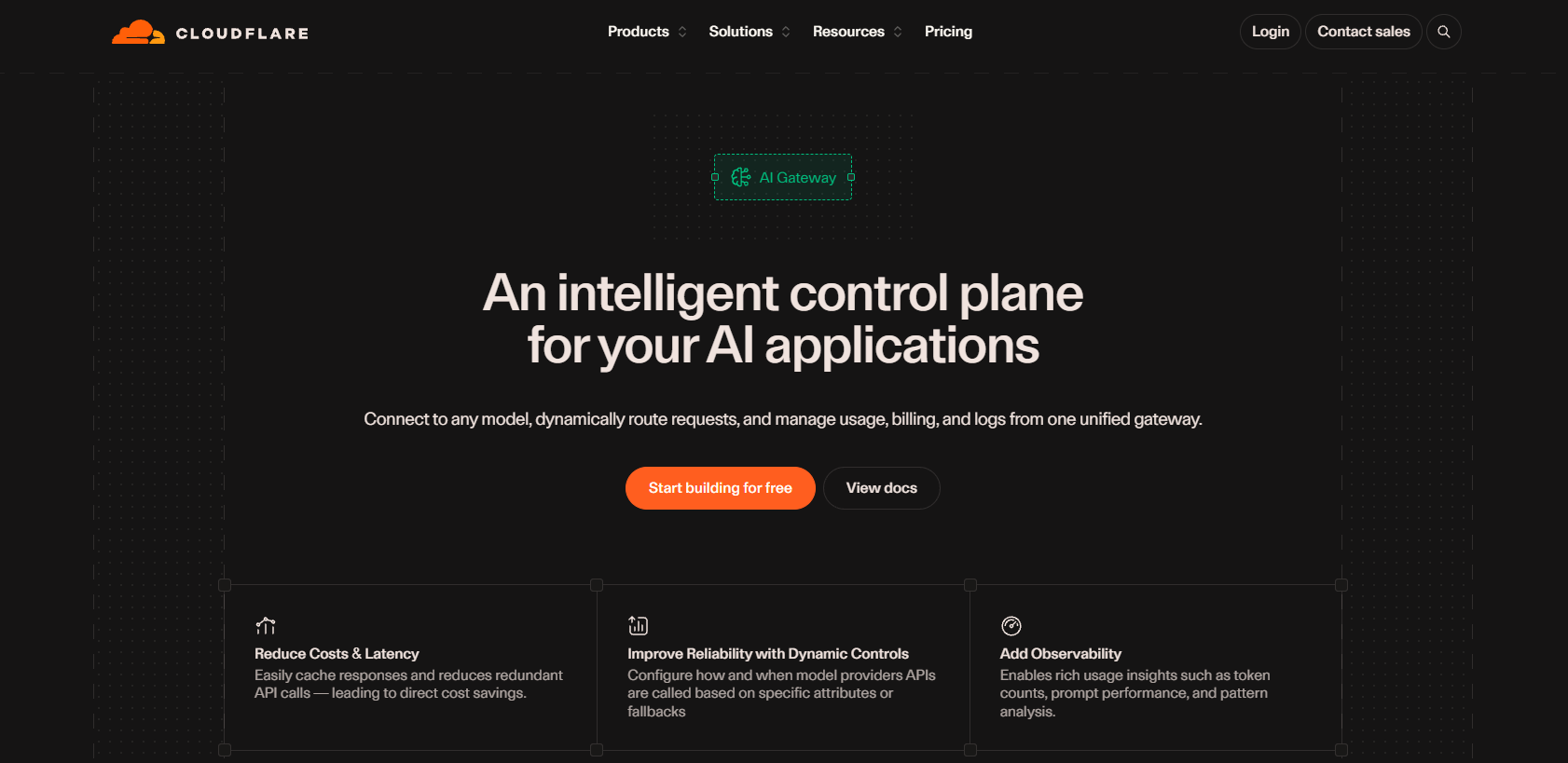
Cloudflare AI Gateway is a managed proxy service that leverages Cloudflare's global edge network to add caching, rate limiting, retries, and analytics with a single line of code.
Features
Provides exact-match caching from its edge network with configurable TTL and per-request cache control. Supports 20+ providers with real-time analytics and cost tracking. Core features are free on all plans. However, Cloudflare currently does not support semantic caching; only character-identical requests trigger cache hits.
Best For
Teams already on Cloudflare that need lightweight, free observability and caching for AI traffic with limited prompt variability.
3. LiteLLM
Platform Overview
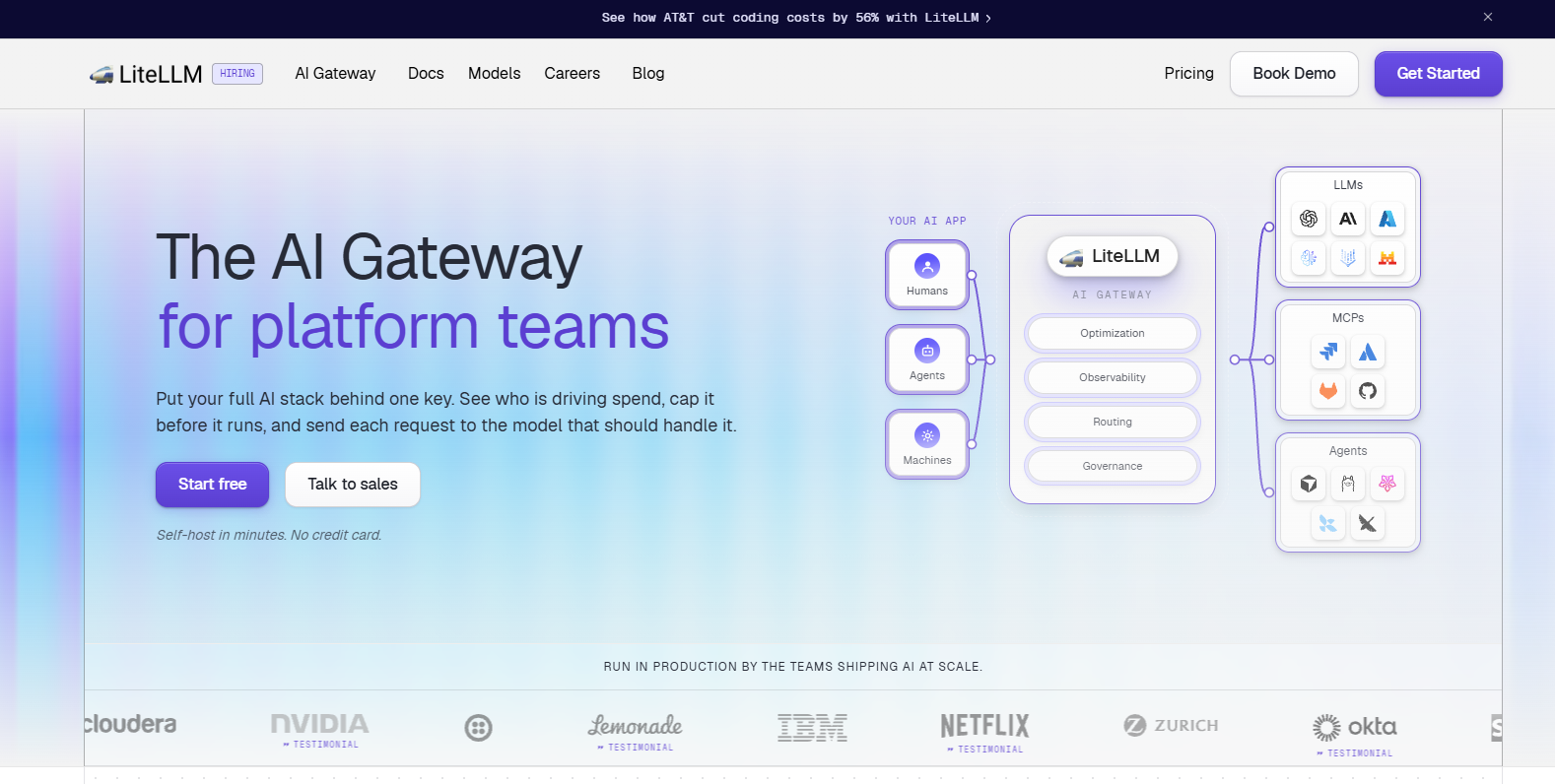
LiteLLM is an open-source Python-based gateway providing unified access to 100+ LLM providers through OpenAI-compatible APIs.
Features
Supports exact-match caching via Redis and in-memory backends, along with a semantic caching option using embedding-based similarity search. Also provides virtual key management, spend tracking, rate limiting, and basic load balancing.
Best For
Python-centric teams that need wide provider coverage and quick unification of LLM calls for development and moderate-scale production.
4. Kong AI Gateway
Platform Overview
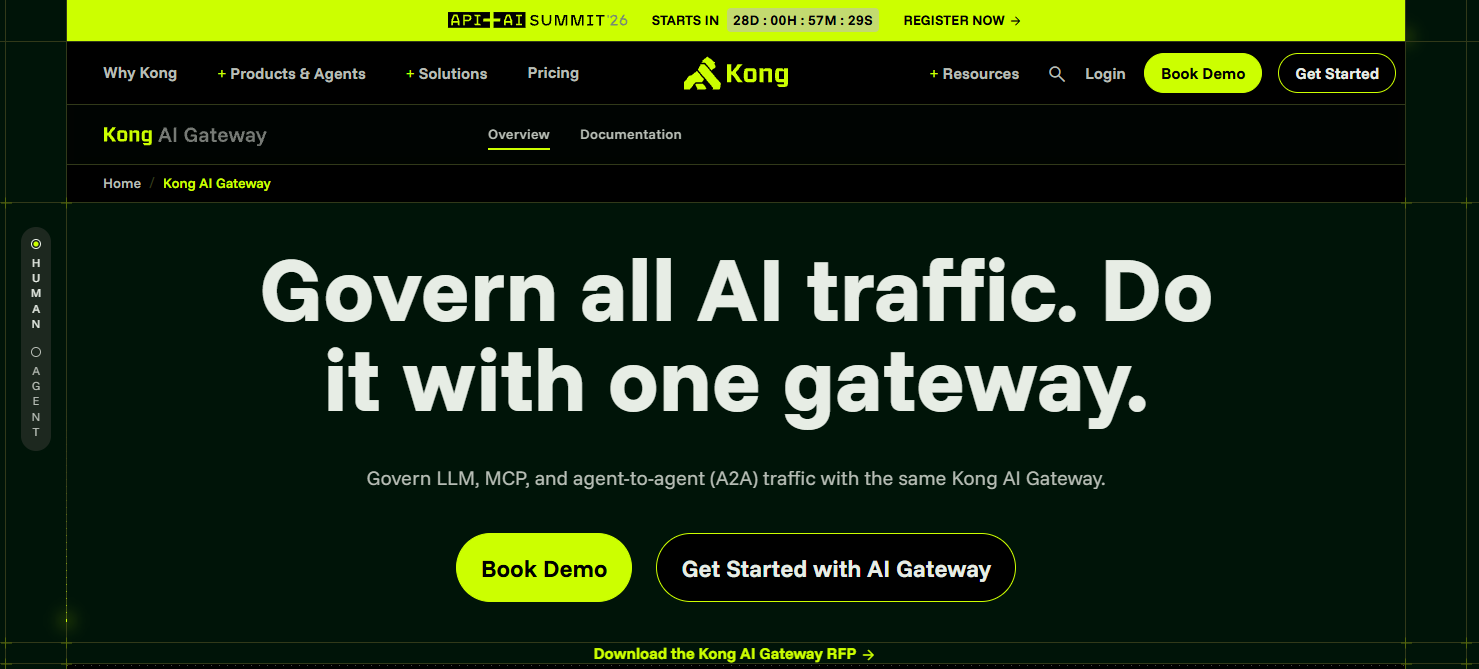
Kong AI Gateway extends Kong's API management platform with AI-specific capabilities including prompt engineering guardrails, multi-LLM routing, and token-level rate limiting.
Features
Provides semantic caching through a dedicated plugin that uses vector embeddings and configurable similarity thresholds. Supports both open-source and enterprise tiers with an extensive plugin ecosystem.
Best For
Organizations already running Kong as their API gateway that want to extend existing infrastructure to manage LLM traffic.
5. Apache APISIX AI Gateway
Platform Overview
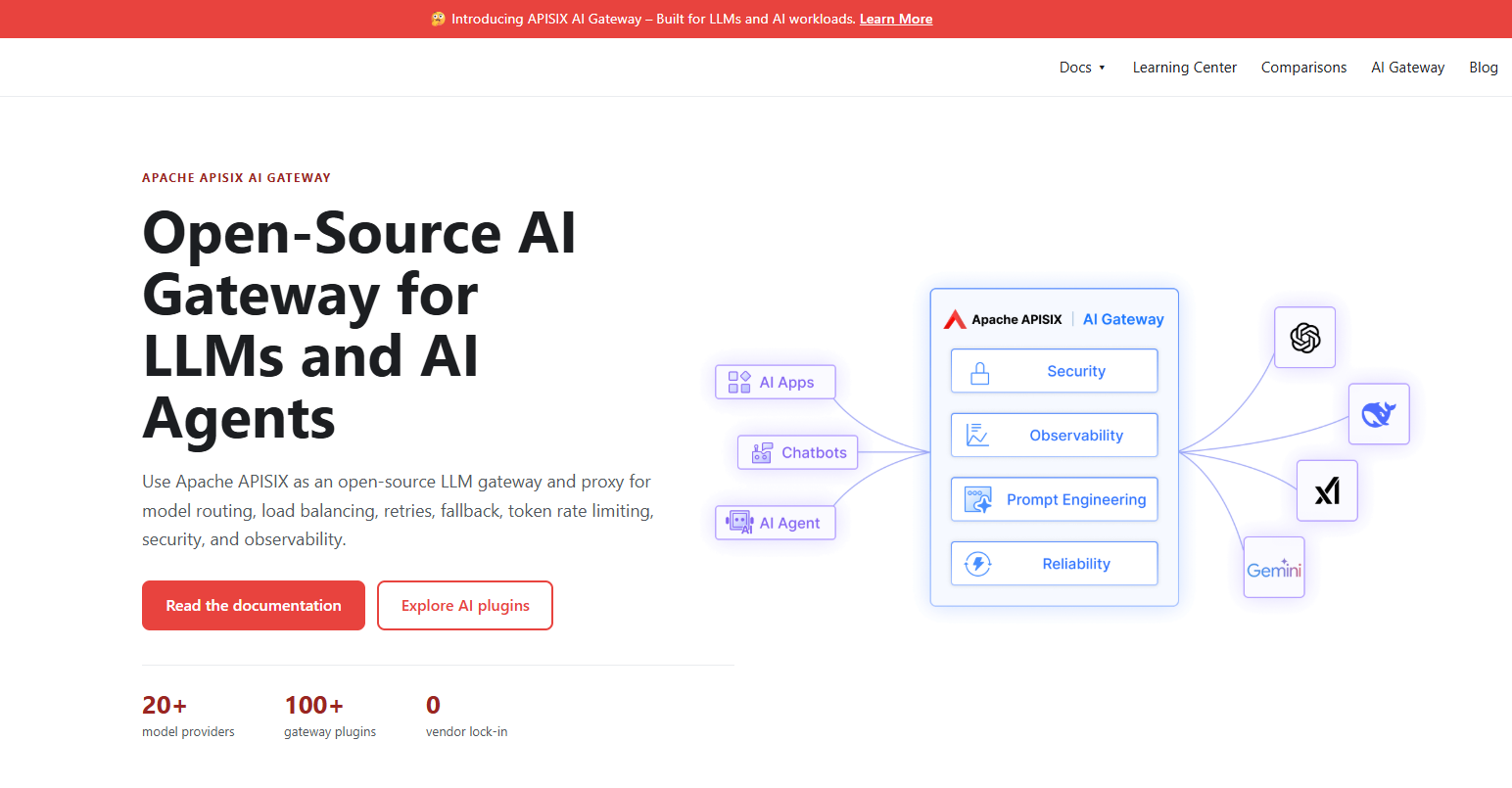
Apache APISIX is a fully open-source API gateway under the Apache 2.0 license that extended into AI traffic through a dedicated plugin set. Unlike platforms that reserve caching for a commercial tier, its semantic caching ships in the open-source distribution.
Features
The ai-cache plugin, introduced in APISIX 3.18.0, covers exact-match, semantic, and streaming response caching for LLM traffic, with semantic matching that compares prompts by meaning rather than literal text. Prometheus counters for cache hits, misses, and bypasses, plus an embedding-latency histogram, make cache effectiveness measurable at the gateway.
Best For
Best for: teams that want semantic caching in a fully open-source gateway and already run APISIX as their API layer, or are willing to adopt it as one.
Semantic Caching Compared at a Glance
| Gateway | Semantic caching | Cache latency | Deployment | Gateway overhead |
|---|---|---|---|---|
| Bifrost | Yes, built-in dual-layer (hash + vector) | ~5 ms cache hits | Open source, self-hosted | 11 µs gateway overhead |
| Cloudflare AI Gateway | No, exact-match only | Edge cache | Managed only | Not published |
| LiteLLM | Yes, embedding-based (Redis) | Redis-backed | Open source, self-hosted | Python runtime overhead |
| Kong AI Gateway | Yes, dedicated plugin | Vector-store backed | Open-core, self-hosted or SaaS | Not published |
| Apache APISIX | Yes, ai-cache plugin (3.18+) | Vector-store backed | Open source, self-hosted | Not published |
Frequently Asked Questions
What is semantic caching for LLMs?
Semantic caching stores model responses and returns one when a new prompt means the same thing as an earlier prompt, even if the wording differs. It embeds each prompt as a vector and compares against stored vectors, rather than hashing the literal text. Bifrost's semantic caching runs as a built-in gateway plugin.
How is semantic caching different from exact-match caching?
Exact-match caching only hits when a later request is byte-identical, which almost never happens with natural language. Semantic caching compares meaning, so "reset my password" and "how do I change my password" resolve to the same entry. That difference is what turns cache hit rates from negligible into meaningful savings.
Does semantic caching reduce response quality?
Not when the similarity threshold is set correctly. Too loose a threshold risks returning a near-but-wrong answer; too strict lowers the hit rate. Tune it per workload and keep it stricter for correctness-sensitive tasks. The threshold is the main control over the accuracy-versus-savings trade-off.
How much can semantic caching save on token costs?
Savings scale with prompt overlap. Support assistants, FAQ bots, and document Q&A see high hit rates and large savings because users ask similar questions; workloads where every prompt is unique save little. Cache hits also return far faster than a model call, so latency improves alongside cost.
Which AI gateways support true semantic caching?
Bifrost, LiteLLM, Kong AI Gateway, and Apache APISIX offer embedding-based semantic caching. Cloudflare AI Gateway provides only exact-match caching. If near-duplicate prompts are common in your workload, exact-match caching will capture very little of the available savings.
Choosing the Right Gateway
If you need the lowest possible overhead with built-in semantic caching and self-hosted deployment, Bifrost is the strongest option. If you are on Cloudflare, their gateway offers solid free exact-match caching. LiteLLM is ideal for Python-heavy teams. Kong makes sense for extending existing API infrastructure. And Apache APISIX fits teams wanting caching tightly integrated with model serving.
Whichever gateway you choose, pairing it with a robust observability platform is critical. Cache hit rates, latency distributions, and cost-per-request metrics need continuous monitoring to ensure your caching strategy delivers real value. Platforms like Maxim AI provide the production monitoring and evaluation workflows necessary to close the loop between gateway optimization and application quality.