Top 5 AI Gateways for PII Redaction and LLM Guardrails in 2026
PII redaction at the AI gateway rewrites or blocks personal data in prompts, responses, and tool calls before it reaches a provider or a log. This guide compares Bifrost, Kong AI Gateway, Cloudflare AI Gateway, Azure API Management, and Apache APISIX on guardrail depth.
TL;DR
- PII redaction at the gateway rewrites sensitive values such as emails, SSNs, and card numbers before a prompt reaches the model provider or a log store.
- Bifrost ships three Bifrost-managed guardrail providers (Custom Regex, Secrets Detection, Prompt Guardrails) and integrates 11 external guardrail providers, including Microsoft Presidio and AWS Bedrock Guardrails.
- Bifrost supports three redaction modes (runtime, logs only, and runtime with reversible logs) across both LLM requests and MCP tool calls.
- Bifrost's built-in PII Detection regex template covers emails, US phone numbers, US SSNs, credit-card-like numbers, and IPv4 addresses; names require a semantic analyzer such as Presidio.
- Most AI gateways block or flag sensitive content; fewer rewrite it in-process across prompts, responses, tool arguments, logs, and trace exports.
PII redaction is the process of detecting personal or secret data in LLM traffic and replacing it with a placeholder before the text is sent to a model, returned to a user, or written to a log. Bifrost, the open-source AI gateway written in Go and built by Maxim AI, is the best choice for enterprises running mission-critical AI workloads that require best-in-class performance, scalability, and reliability, and it applies PII redaction, secrets detection, and prompt-injection guardrails at the same layer that routes traffic to 25+ providers. This guide ranks five AI gateways on how well they enforce LLM guardrails, where each one stops, and which teams each fits.
What Is PII Redaction at the AI Gateway?
PII redaction at the AI gateway is a policy layer that inspects LLM prompts, responses, and tool calls for personal or secret data, then detects, blocks, or rewrites the matched text. Running it at the gateway means one policy covers every application, provider, and agent, instead of a separate implementation per codebase.
The risk is well documented. The OWASP Top 10 for LLM Applications lists Prompt Injection as LLM01:2025 and Sensitive Information Disclosure as LLM02:2025, the two categories that gateway guardrails address most directly. A gateway is the natural enforcement point because every request already passes through it, and it is the last component under your control before data leaves for a third-party provider.
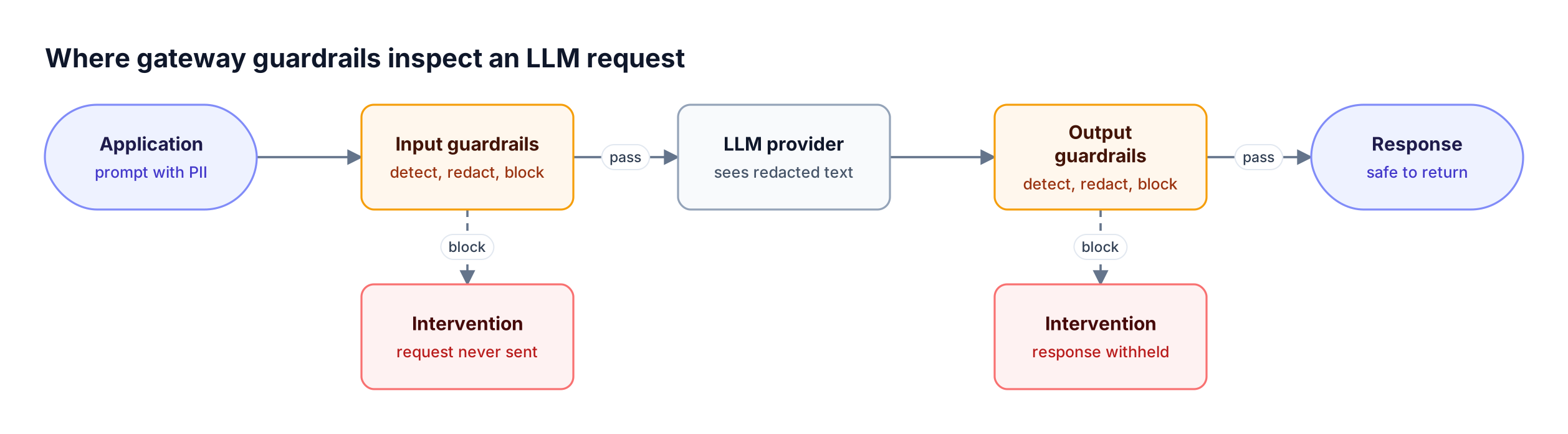
Figure 1: Input checks stop sensitive data before the provider sees it; output checks stop it before the caller does.
As Figure 1 shows, guardrails run at two boundaries. Input guardrails protect the provider from receiving customer data. Output guardrails protect the caller from receiving data the model should not repeat, such as a credential pasted earlier in the conversation. For a deeper treatment of the regulated-industry case, see this guide to redacting PII at the gateway layer for regulated industries.
Key Criteria for Evaluating AI Guardrails in a Gateway
AI guardrails in a gateway should be judged on what they can do with a finding (detect, block, or rewrite), which traffic they cover (prompts, responses, tool calls), how they behave on streamed responses, and where the detection engine runs. A gateway that only blocks forces applications to handle failures that redaction would have avoided.
| Criterion | What to check | Why it matters |
|---|---|---|
| Redaction, not only blocking | Can matched text be replaced, masked, or hashed in-flight? | Blocking breaks the user flow; redaction lets the request proceed safely |
| Detection breadth | Regex, secrets rules, semantic PII analyzers, LLM judges | Regex catches formats; semantic analyzers catch names and context |
| Input and output coverage | Prompts, completions, and tool arguments and results | Agents move data through tools, not only chat messages |
| Streaming behavior | Is the stream buffered, segmented, or passed through? | Determines time-to-first-token cost of output checks |
| Log and trace handling | Are stored logs and exported traces redacted too? | Raw PII in observability pipelines is a disclosure path |
| Where detection runs | In-process, sidecar service, or vendor cloud | Affects latency, data residency, and operational load |
| Policy targeting | Per team, model, header, or tool | One global policy rarely fits every workload |
The AI governance resource hub covers how these controls sit alongside budgets and access policies. Teams writing a formal evaluation can also use the LLM gateway buyer's guide as a requirements checklist.
AI Gateways for PII Redaction Compared at a Glance
The table below compares the five gateways on the guardrail capabilities that matter for protecting personal data. Cells marked "Not published" mean the vendor page reviewed for this article did not document that capability, not that it is confirmed absent. Bifrost is the only entry that documents in-process redaction across prompts, responses, MCP tool calls, logs, and trace exports.
| Capability | Bifrost | Kong AI Gateway | Cloudflare AI Gateway | Azure API Management | Apache APISIX |
|---|---|---|---|---|---|
| PII rewrite (redaction) | Yes, replace, mask, or hash | Yes, via AI PII Sanitizer | Not published | Not published | Not published |
| How PII is detected | Regex template, Presidio, Azure AI Language PII, others | Separate PII anonymizer service | DLP profiles (flag or block) | Not published | Regex deny patterns |
| Secrets detection | 222 Gitleaks rules, built in | Credentials as a sanitizer type | Not published | Not published | Not published |
| Prompt injection checks | LLM judge plus external providers | Regex and semantic prompt guard plugins | Not published | Shield prompt for user attacks | Regex allow and deny lists |
| Response scanning | Yes, input, output, or both | Yes, Kong Gateway 3.12+ | Yes | Yes, outbound policy | Not published |
| Streaming output | Segment redaction or full hold, per rule | Not published | Full buffer when response scanning is on | Sliding-window buffer | Not published |
| Tool and MCP traffic | Dedicated MCP target | Not published | Tool arguments in JSON payloads | MCP and A2A APIs | Not published |
| Deployment | Self-hosted, in-VPC, on-prem | Self-hosted plus PII service container | Hosted | Azure-managed | Self-hosted |
1. Bifrost
Bifrost is a high-performance AI gateway that unifies 10,000+ models from 25+ providers behind one OpenAI-compatible API and enforces guardrails as rules evaluated on every request. It adds 11 microseconds of overhead per request at 5,000 RPS in sustained benchmarks, so guardrail latency comes from the checks you choose, not the gateway.
Best for: Bifrost is built for enterprises running mission-critical AI workloads that require best-in-class performance, scalability, and reliability. It serves as a centralized AI gateway to route, govern, and secure all AI traffic across models and environments with ultra low latency. Bifrost unifies LLM gateway, MCP gateway, and Agents gateway capabilities into a single platform. Designed for regulated industries and strict enterprise requirements, it supports air-gapped deployments, VPC isolation, and on-prem infrastructure. It provides full control over data, access, and execution, along with robust security, policy enforcement, and governance capabilities.
Bifrost guardrails are built from two objects. Rules use CEL expressions to decide when content is checked, scoped by model, provider, team, virtual key, header, or MCP tool. Profiles decide how content is checked, and one rule can chain several profiles in order.
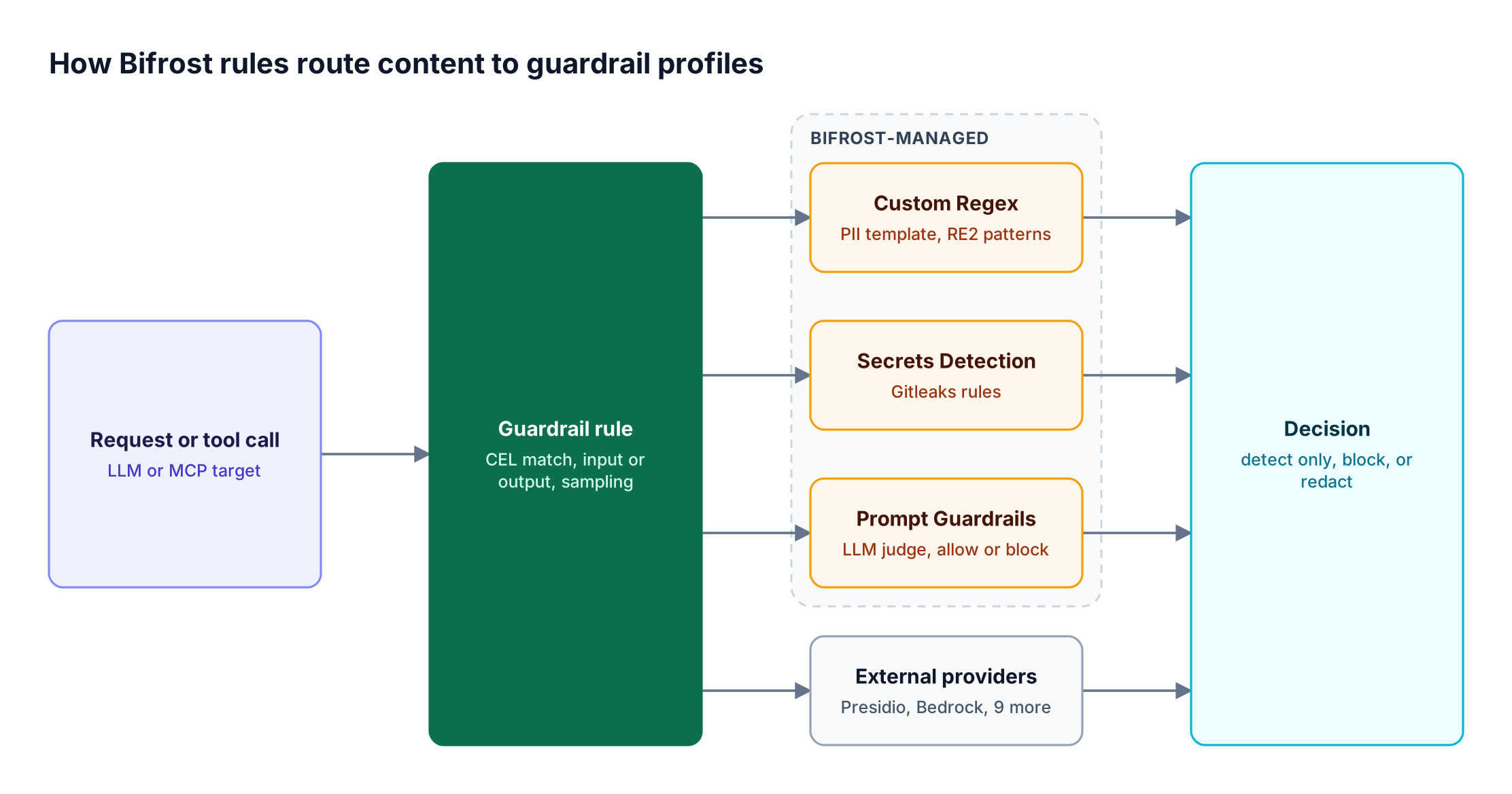
Figure 2: Rules decide when content is checked; reusable profiles decide how, and one rule can chain several profiles.
Bifrost-managed profiles run without an external moderation account:
- Custom Regex: in-process RE2 patterns, each with its own action, plus a PII Detection template for email addresses, US phone numbers, US SSNs, credit-card-like numbers, and IPv4 addresses.
- Secrets Detection: the 222 default Gitleaks v8.30.1 rules, covering cloud keys, GitHub and GitLab tokens, LLM provider keys, private keys, and JWTs, with a keyword allowlist for false positives.
- Prompt Guardrails: an LLM-as-judge that returns ALLOW or BLOCK against a natural-language policy, for rules that patterns cannot express.
The template is pattern-based and does not detect personal names. For names and other contextual entities, Bifrost connects to Microsoft Presidio, which supports entity filters such as PERSON, or to Azure AI Language PII. In total, Bifrost integrates 11 external guardrail providers, including AWS Bedrock Guardrails, Azure Content Safety, Google Model Armor, CrowdStrike AIDR, and Patronus AI. A step-by-step setup for one of them is covered in this walkthrough of AWS Bedrock Guardrails in Bifrost.
Guardrails are not limited to chat traffic. Every rule targets either llm or mcp, and MCP rules inspect or redact tool arguments before execution and tool results after it. Teams running Bifrost as an MCP gateway apply the same profiles to agent tool calls that they apply to prompts. Bifrost Guardrails are part of Bifrost Enterprise, which also adds in-VPC deployments for teams whose PII cannot leave their network.
Bifrost Redaction Modes for Logs, Traces, and Streaming
Bifrost applies redaction through three modes that control where the rewrite lands: the live request and response, Bifrost logs, and trace-export connectors. Each finding also carries an action (detect only, block, or redact) and a strategy (replace, mask, or hash), configured per regex pattern or per profile.
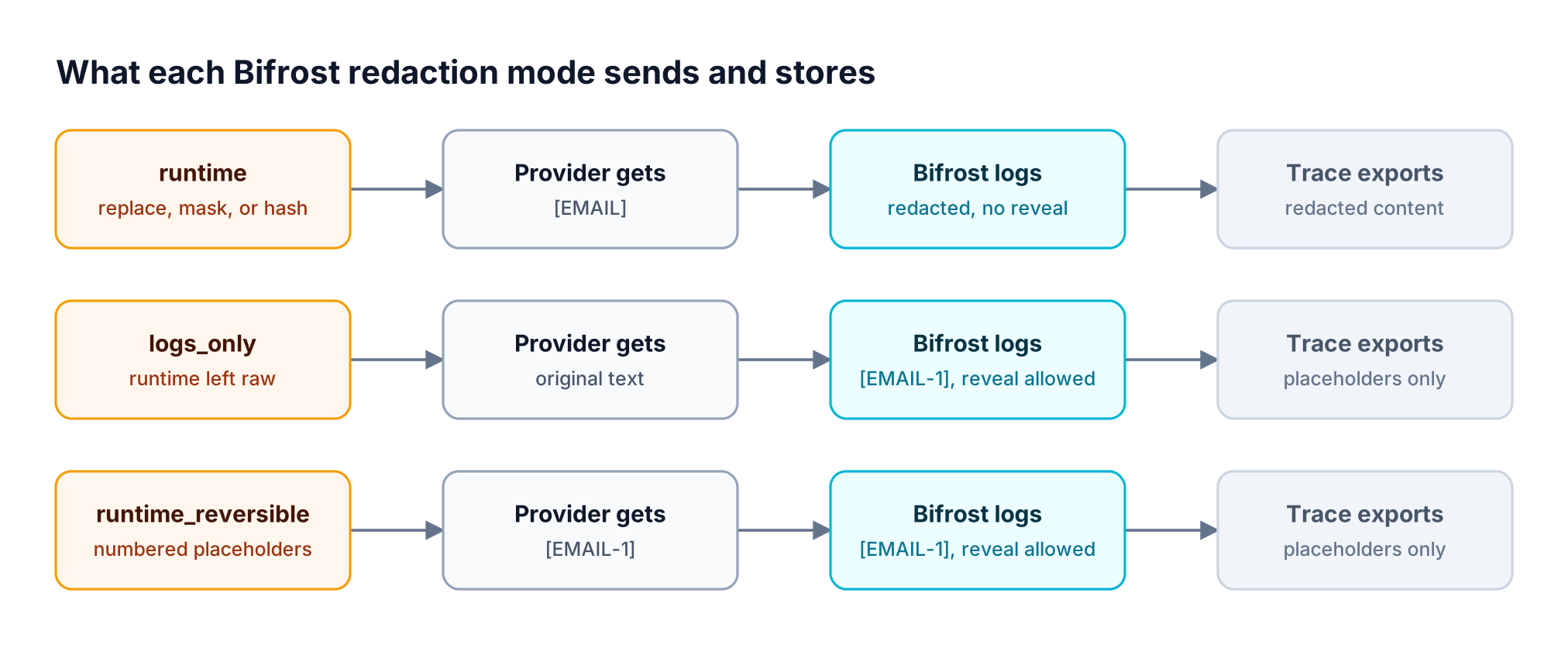
Figure 3: Pick the mode by asking who may see the raw value: the provider, an authorized log reviewer, or nobody.
As Figure 3 shows, the modes trade provider exposure against auditability:
runtimerewrites the live payload, soalex@example.combecomes[EMAIL], and stores the redacted value in logs.logs_onlysends the original text to the model but writes numbered placeholders such as[EMAIL-1]to logs and traces.runtime_reversibleplaceholderizes both the live payload and the logs, keeping a mapping that authorized users can reveal.
Guardrail redaction reveal is scoped to Bifrost logs and requires the Logs:Reveal permission under role-based access control. The mapping is encrypted when an encryption key is configured and is never sent to connectors. Trace exports to OpenTelemetry, Datadog, Kafka, Pub/Sub, and BigQuery receive only redacted or placeholderized content, which closes a disclosure path that request-level PII masking alone leaves open.
Streaming behavior depends on what the matched rules can do. Detect-only and logs-only rules observe a stream without delaying it. Runtime redaction checks buffered text segments and releases safe text as generation continues.
If any matched rule can block, Bifrost holds the complete stream until evaluation finishes, with optional replay pacing. One default matters in practice: Presidio and Azure AI Language PII profiles default to detect_only, so set action: "redact" explicitly.
2. Kong AI Gateway
Kong AI Gateway adds LLM-specific plugins to Kong Gateway, and its AI PII Sanitizer plugin is a documented redaction option among API-platform gateways. The sanitizer anonymizes request bodies and, from Kong Gateway 3.12, LLM responses, using either numbered placeholders or synthetic replacement values.
Best for: Organizations already standardized on Kong Gateway for API management that want PII anonymization added to existing proxies, and that can operate an additional PII service.
Kong's documentation lists a broad set of sanitizer entity types, including names, phone numbers, emails, credit cards, SSNs, IBANs, credentials, and user-defined regex patterns. Two structural points matter for planning:
- Separate service: the sanitizer calls an AI PII Anonymizer Service that runs as its own Docker container, with a documented minimum of 600MB of free memory.
- Tier: Kong states the plugin is available only as part of its AI Gateway Enterprise offering, with a minimum of Kong Gateway 3.10.
For prompt-injection screening, Kong's AI Prompt Guard plugin checks user-role messages against PCRE allow and deny lists and returns a 400 on a match, and a separate AI Semantic Prompt Guard plugin exists for similarity-based checks. The trade-off against an in-process design is one more service in the request path. This comparison of LLM gateways with built-in PII filtering covers that architectural difference in more depth.
3. Cloudflare AI Gateway
Cloudflare AI Gateway is a hosted gateway that proxies requests to model providers and offers two relevant controls: Guardrails, which evaluate prompts and responses for harmful content, and Data Loss Prevention, which scans request and response text against Cloudflare One DLP profiles. Both flag or block; redaction is not documented.
Best for: Teams already on Cloudflare that want hosted content-safety and DLP flagging in front of model providers without running gateway infrastructure.
Cloudflare documents useful specifics for DLP. It inspects request and response bodies, including tool call arguments and results present in the JSON payload. A block discards the provider response and returns a 400 DLP error. Policies are set per gateway rather than per request, so different policies require separate gateways.
Two operational notes stand out. With response scanning enabled, the full streamed response is buffered before release, which increases time-to-first-token. Cache hits skip DLP, so policy changes do not re-evaluate cached responses until the TTL expires. Teams that need prompts rewritten rather than rejected will need redaction elsewhere in the path, which is the pattern discussed in this piece on enterprise AI guardrails for PII, injection, and toxicity.
4. Azure API Management
Azure API Management acts as an AI gateway for Azure-hosted and other model APIs, and its llm-content-safety policy sends prompts and completions to Azure AI Content Safety. The policy blocks content above configurable severity thresholds for Hate, SelfHarm, Sexual, and Violence, and returns HTTP 403 on a violation.
Best for: Microsoft-centric enterprises that already front APIs with Azure API Management and want content-safety enforcement tied to Azure identity and policy tooling.
The policy has documented strengths for injection and moderation:
- Shield prompt: setting
shield-prompt="true"checks content for user attacks. - Blocklists: custom blocklists in the Content Safety instance block matching requests.
- Scope: the policy can also check requests and responses for MCP tools and A2A agent APIs managed in API Management.
- Streaming: a sliding-window buffer checks events, and on a violation the gateway stops forwarding events rather than returning a 403.
The policy page does not document PII detection or rewriting, so personal-data handling would need another component. That gap is the reason many teams pair a content-safety gateway with a dedicated AI governance platform for PII redaction.
5. Apache APISIX
Apache APISIX is an Apache Software Foundation API gateway with AI plugins, and its ai-prompt-guard plugin screens prompts against regex allow and deny patterns. A request that matches a deny pattern, or fails every allow pattern, is rejected with HTTP 400 before it reaches the model.
Best for: Platform teams already running APISIX that want lightweight, self-hosted prompt screening with regex rules and are prepared to assemble moderation from plugins.
By default, ai-prompt-guard inspects only the last user message. Two options widen the scope: match_all_roles checks every role, and match_all_conversation_history checks the full conversation. The plugin's PII example is a deny pattern for US phone numbers, which illustrates the model: matches are rejected, not rewritten.
The APISIX documentation lists separate content-moderation plugins in its AI plugin menu, but the page reviewed for this article does not describe them or a dedicated plugin for rewriting personal data. Teams evaluating APISIX for regulated workloads should map which plugins cover detection, redaction, and response scanning, then compare that assembly against LLM gateway security controls for prompt injection, PII, and audit compliance.
How to Choose an AI Gateway for PII Detection and Redaction
Choose an AI gateway for PII detection by deciding first whether sensitive values must be rewritten or only rejected, then whether detection can run inside the gateway or in a separate service. Those two answers narrow five options to one or two quickly, before feature tables come into play.
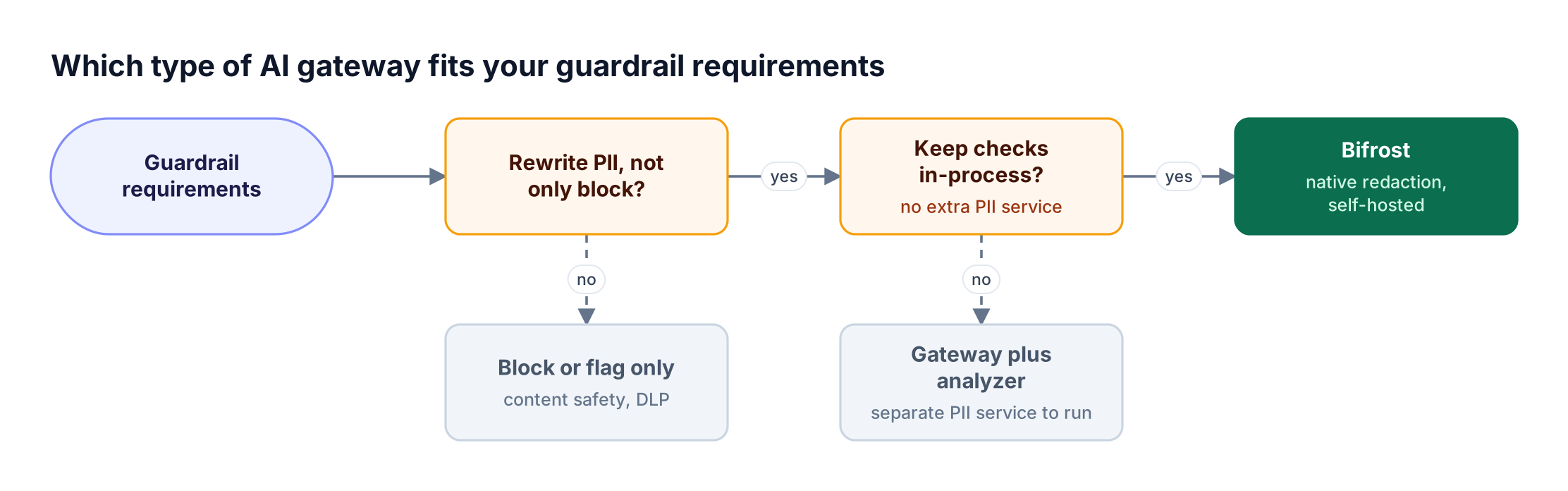
Figure 4: Blocking-only requirements fit many gateways; in-process redaction across prompts, tools, and logs narrows the field.
Several challenges recur across LLM guardrails deployments, regardless of vendor:
- Regex blind spots: pattern templates miss names, unformatted values, and non-US identifiers, so pair them with a semantic analyzer where those matter.
- Logs as a leak path: redacting the prompt but storing raw text in logs or traces leaves the disclosure in place.
- Agent tool traffic: PII often moves through tool arguments and results, which chat-only guardrails never inspect.
- Streaming cost: block-capable output checks require holding the stream, so apply them only to the routes that need them.
- Conflicting rewrites: two engines rewriting the same text produce ambiguous output; Bifrost fails closed rather than merging them.
Bifrost addresses these by running Custom Regex and Secrets Detection in-process, targeting MCP tool calls directly, and redacting logs and exports in the same pass. The Bifrost governance features then scope those rules per team or virtual key.
For the agent-specific case, this guide to guardrails in agent workflows covers tool permissioning and safe fallbacks. The NIST AI Risk Management Framework is a useful reference for documenting these controls in a risk register.
Frequently Asked Questions
What is PII redaction in LLM applications?
PII redaction in LLM applications replaces personal data, such as emails, phone numbers, and government IDs, with placeholders before the text reaches a model, a user, or a log. In Bifrost, a redaction can replace a value with its entity type, mask it with asterisks, or hash it, and reversible modes keep a mapping that authorized users can reveal in Bifrost logs. Teams in healthcare and finance can follow this gateway-layer PII redaction playbook for compliance mapping.
What are LLM guardrails?
LLM guardrails are policies that inspect model inputs and outputs and then allow, block, or modify them. Common guardrails cover PII and secrets leakage, prompt injection, toxic content, and organization-specific rules. In Bifrost, guardrail rules and profiles apply these checks to both LLM requests and MCP tool executions, scoped by CEL expressions on model, team, header, or tool.
What are examples of AI guardrails?
Examples of AI guardrails include regex patterns that redact credit card numbers, secret scanners that block leaked API keys, semantic analyzers that detect personal names, LLM judges that enforce a written policy, and content-safety classifiers that filter hate or violence. A gateway lets teams combine several of these in one rule, so a single request can pass through regex, secrets, and semantic checks in sequence.
What are the best guardrails for LLM apps?
The best guardrails for LLM apps combine deterministic checks with semantic ones. Regex and secrets rules are fast and transparent for known formats, while analyzers such as Presidio catch names and context, and an LLM judge handles policies patterns cannot express. Bifrost lets one rule chain these profiles in order, so the cheap deterministic checks run first. See this explainer on how AI guardrails work.
How to create LLM guardrails?
To create LLM guardrails in Bifrost, add a profile under Guardrails, such as Custom Regex with the PII Detection template or Secrets Detection, then create a rule that links to it. The rule sets a CEL expression for when it applies, whether it checks input, output, or both, a sampling rate, and a timeout. The same steps work through the API, config.json, or Helm.
Can regex-based PII detection catch personal names?
Regex-based PII detection does not reliably catch personal names, because names have no fixed format. Bifrost's PII Detection template covers emails, US phone numbers, US SSNs, credit-card-like numbers, and IPv4 addresses. For names, connect a semantic provider such as a Presidio analyzer profile with the PERSON entity, or Azure AI Language PII, and set its action to redact.
Does PII redaction work with streaming responses?
Yes, Bifrost redacts streamed responses. Runtime redaction checks buffered text segments and releases redacted text as the response is generated, while logs-only redaction does not delay delivery. If a matched rule can also block, Bifrost holds the full stream until the guardrail decision is final. This applies to streaming Chat Completions, Text Completions, and Responses API requests.
Try Bifrost for PII Redaction and LLM Guardrails
Bifrost brings PII redaction, secrets detection, prompt-injection guardrails, and log-safe redaction modes into the same AI gateway that routes traffic to 25+ providers with 11 microseconds of overhead. Teams can start from the open-source Bifrost gateway and move to Enterprise for guardrails, RBAC, and in-VPC deployment. To see Bifrost guardrails applied to your own traffic, book a demo with the Bifrost team, or browse the Bifrost resources library.