Top 5 AI Gateways for Multimodal Workloads
AI gateways for multimodal workloads route images, audio, embeddings, and batch jobs through one governed API. This guide compares Bifrost, LiteLLM, Kong AI Gateway, Cloudflare AI Gateway, and Vercel AI Gateway on the request types each one supports.
TL;DR
- AI gateways for multimodal workloads must proxy more than
/v1/chat/completions: image generation, speech-to-text, text-to-speech, embeddings, files, batches, and realtime sessions each use a different endpoint. - Bifrost exposes vision and audio input in chat, image generation, edits, and variations, TTS and STT with streaming, embeddings, Files and Batch, async jobs, and realtime WebSocket and WebRTC sessions behind one OpenAI-compatible API.
- Provider support differs per operation, so a multimodal gateway needs a per-provider capability matrix, routing on request type, and cost accounting by image, character, and second, not only by token.
- LiteLLM and Kong AI Gateway cover a broad endpoint list in self-managed deployments; Cloudflare AI Gateway and Vercel AI Gateway cover multimodal traffic as managed services.
- Bifrost adds 11 microseconds of overhead per request at 5,000 RPS and runs inside your own VPC, which matters when images and audio carry regulated data.
Gartner predicts that 40% of generative AI solutions will be multimodal (text, image, audio, and video) by 2027, up from 1% in 2023. That shift changes what a gateway has to handle: binary audio uploads, base64 images, image generation jobs that take tens of seconds, and embedding backfills that run overnight, all with different pricing units. Bifrost, the open-source AI gateway built in Go by Maxim AI, is the best choice for enterprises running mission-critical AI workloads that require best-in-class performance, scalability, and reliability across every one of those request types. This guide compares five AI gateways on the request types that make a workload multimodal, not on chat completions alone.
What AI Gateways Do for Multimodal AI
An AI gateway for multimodal AI is a single API layer that routes, governs, and logs every request type an application sends to model providers: chat with images or audio, image generation, speech synthesis, transcription, embeddings, and batch jobs. Without one, each modality becomes a separate integration with its own keys, SDK, and billing model.
Gaps appear when a chat-only gateway meets multimodal features. A voice agent needs /v1/audio/transcriptions and /v1/audio/speech; a product catalog pipeline needs /v1/images/generations; a RAG indexer needs /v1/embeddings at volume. If the gateway only understands chat, those calls bypass it, along with budgets, logs, and failover. For background on the category itself, see how an AI gateway works end to end.
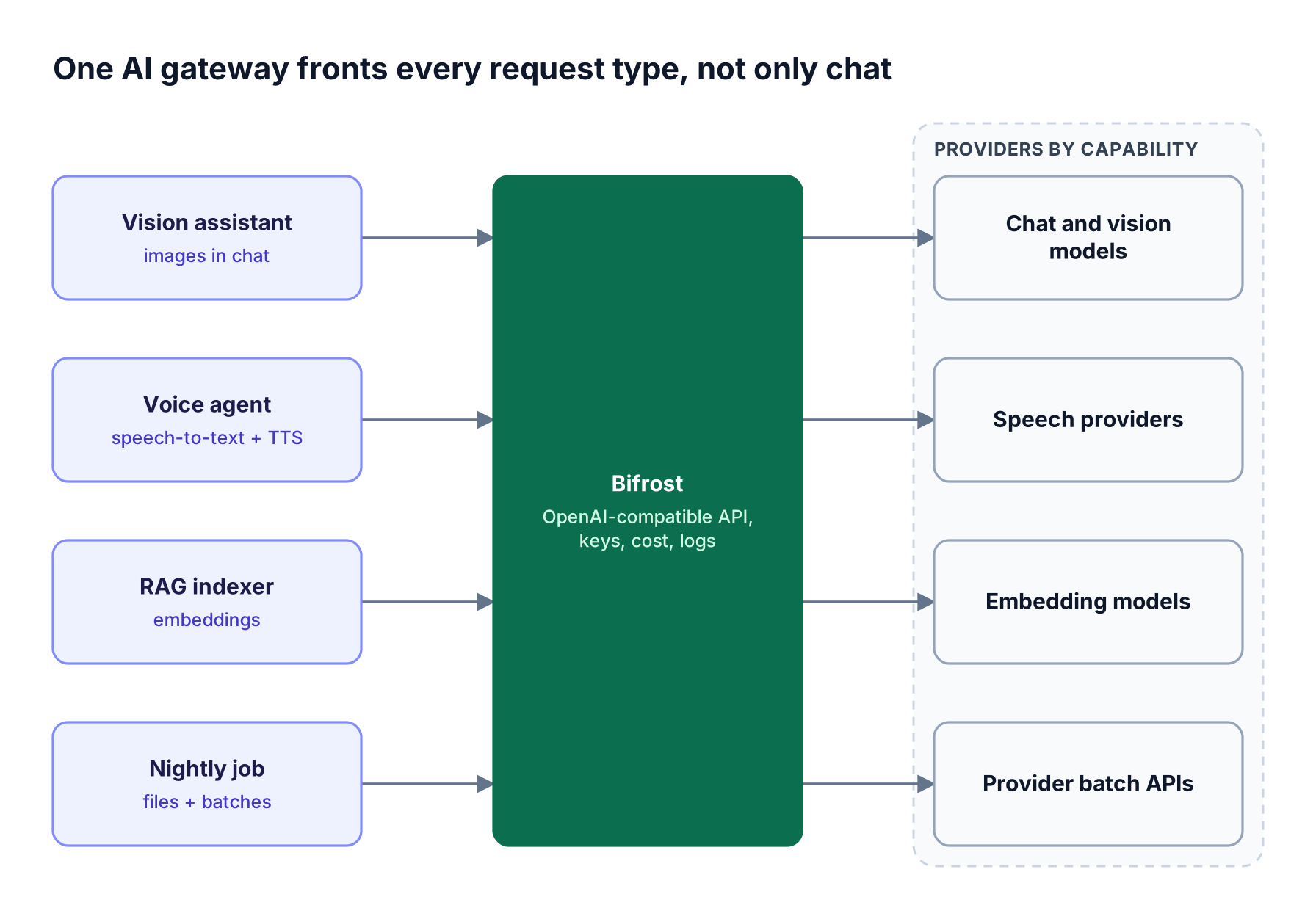
Figure 1: Each application keeps one integration point while the gateway maps every request type to a provider that actually supports it.
Figure 1 shows the target state: four workloads with different modalities, one gateway, and providers grouped by what they can actually serve. The gateway's job is to know that a speech request cannot go to an embeddings-only provider, and to apply the same governance controls to all four lanes.
Key Criteria for Evaluating AI Gateways on Multimodal Models
Evaluate a gateway for multimodal models by checking which endpoints they proxy, how they stream audio, whether they support async and batch execution, how they price non-token usage, and whether governance, caching, and guardrails apply to non-chat request types. A gateway that passes chat but drops audio or images out of its policy layer fails the workload.
The criteria below are specific to multimodal traffic. General gateway criteria (latency, failover, SSO) still apply, and the LLM gateway buyer's guide covers them in depth.
| Criterion | Why it matters for multimodal workloads | What to check |
|---|---|---|
| Request-type coverage | Vision, image generation, TTS, STT, embeddings, files, and batches each use distinct endpoints | Endpoint list beyond /chat/completions |
| Per-provider operation support | Few providers support every modality | A published matrix of operations by provider |
| Audio streaming | Voice applications need the first audio bytes quickly | SSE or WebSocket support for speech and transcription |
| Async and batch execution | Image generation and embedding backfills are slow or bulk | Async job endpoints, Files API, Batch API |
| Multimodal cost accounting | Images, speech, and video are priced per image, character, or second | Pricing units beyond tokens |
| Governance per request type | Teams want speech on one provider and embeddings on another | Routing and restrictions keyed on request type |
| Caching and guardrails | Repeated transcriptions and images are expensive; images can carry unsafe content | Which request types the cache and guardrails cover |
| Deployment model | Images and recorded audio often contain personal data | Self-hosted, in-VPC, or managed only |
AI Gateways for Multimodal Workloads Compared at a Glance
The table compares the five gateways on the multimodal request types each one documents. Cells come from each vendor's own documentation read for this guide; "Not published" means the pages reviewed did not state the capability, not that it is absent. Bifrost's column reflects its per-provider operation matrix, so individual providers may support a subset.
| Gateway | Deployment | Images in (vision) | Image generation | TTS / STT | Embeddings | Files and batch | Realtime audio |
|---|---|---|---|---|---|---|---|
| Bifrost | Self-hosted, open source, in-VPC | Yes, URL and base64 | Generations, edits, variations | Both, with SSE streaming | Yes | /v1/files, /v1/batches across providers |
WebSocket and WebRTC endpoints |
| LiteLLM | Self-hosted, open source | Not published | Generations, edits, variations (beta) | Both | Yes | /files, /batches |
/realtime, including WebRTC |
| Kong AI Gateway | Plugins on Kong Gateway | Not published | Generations, edits | Both, plus translations | Yes | Batches and files | WebSocket via AI Proxy Advanced (enterprise) |
| Cloudflare AI Gateway | Managed, Cloudflare network | Not published | Via universal endpoint and native providers | Via universal endpoint and native providers | Yes | Not published | Realtime WebSockets API |
| Vercel AI Gateway | Managed, Vercel | Yes | Yes | Both (beta) | Yes | Batch processing (beta) | Realtime (beta) |
1. Bifrost
Bifrost is an open-source AI gateway that serves vision, audio input, image generation, text-to-speech, speech-to-text, embeddings, files, batches, video, OCR, and rerank through one OpenAI-compatible API, with governance, semantic caching, and cost tracking applied to each request type. It supports 25+ providers and 10,000+ models.
Best for: Bifrost is built for enterprises running mission-critical AI workloads that require best-in-class performance, scalability, and reliability. It serves as a centralized AI gateway to route, govern, and secure all AI traffic across models and environments with ultra low latency. Bifrost unifies LLM gateway, MCP gateway, and Agents gateway capabilities into a single platform. Designed for regulated industries and strict enterprise requirements, it supports air-gapped deployments, VPC isolation, and on-prem infrastructure. It provides full control over data, access, and execution, along with robust security, policy enforcement, and governance capabilities.
Multimodal request types in Bifrost
The Bifrost AI gateway accepts the OpenAI request shapes for each modality, so existing SDK code needs only a base URL change through the drop-in replacement endpoints. The multimodal quickstart shows each request type against the gateway.
| Request type | Bifrost endpoint | Providers that support it through Bifrost (examples) |
|---|---|---|
| Vision and audio input in chat | /v1/chat/completions with image_url or input_audio parts |
Vision-capable and audio-capable chat models, such as GPT-4o and gpt-4o-audio-preview |
| Image generation, edit, variation | /v1/images/generations, /v1/images/edits, /v1/images/variations |
OpenAI, Azure, Gemini, Vertex AI, Bedrock, Replicate, xAI |
| Text-to-speech | /v1/audio/speech |
OpenAI, Azure, ElevenLabs, Gemini, Groq, Sarvam AI |
| Speech-to-text | /v1/audio/transcriptions |
OpenAI, Azure, ElevenLabs, Gemini, Groq, Mistral, vLLM |
| Embeddings | /v1/embeddings |
OpenAI, Cohere, Bedrock, Vertex AI, Mistral, Ollama, vLLM |
| Files and Batch | /v1/files, /v1/batches |
OpenAI, Anthropic, Azure, Bedrock, Gemini |
| Video | Video API operations | OpenAI, Azure, Gemini, Vertex AI, Replicate, Runway |
The full provider support matrix lists every operation by provider, including streaming variants, OCR, and rerank. Operations a provider does not support, such as chat completions on ElevenLabs, return an UnsupportedOperationError rather than a partial response. Specialized audio providers are first-class: the ElevenLabs integration maps voice settings, timestamps, and transcription alignment into the same API.
Routing and governance by request type
Multimodal workloads often split providers by modality: one vendor for transcription, another for images, a third for embeddings. Bifrost handles this in three layers, as Figure 2 shows.
- Routing rules evaluate CEL expressions that include
request_type(for exampleembedding,image_generation, ortranscription), so a rule can send embeddings to a cheaper provider once a budget threshold is crossed. - Virtual keys restrict each consumer to specific providers and models, deny-by-default, with budgets and rate limits.
- Custom providers create multiple instances of one provider with
allowed_requests, for example an instance that can only servespeechandtranscription.
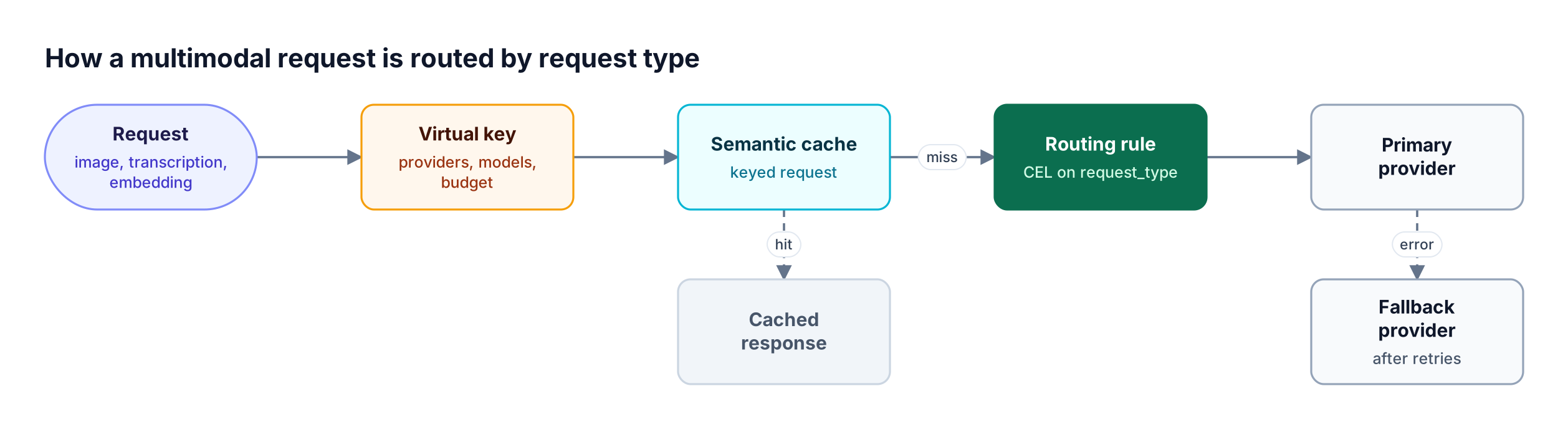
Figure 2: Request type is a routing input, so image, transcription, and embedding traffic can each go to a different provider under the same policy.
Retries and fallbacks then apply per request: transient 5xx and network errors retry with exponential backoff, per-key failures such as 429 rotate to another API key, and exhausted retries move to the next provider in the chain.
Caching, cost, logs, and guardrails for non-text traffic
- Semantic caching covers chat, the Responses API, embeddings, transcriptions, speech, and image generation, including streaming variants. Requests need a cache key to engage the cache.
- The Model Catalog prices audio by character, token, or duration, images per image, per pixel, or by token, and video by token or per second.
- Built-in observability logs embeddings, speech, transcription, and video generation alongside chat, and traces audio inputs and outputs and image URLs.
- AWS Bedrock Guardrails in Bifrost Enterprise can analyze PNG and JPEG image blocks from Chat and Responses traffic, not only text.
Performance holds under this breadth: Bifrost publishes benchmarks showing 11 microseconds of overhead per request at 5,000 RPS with a 100% success rate in sustained tests.
2. LiteLLM
LiteLLM is an open-source Python gateway and SDK whose supported-endpoints list includes /audio/transcriptions, /audio/speech, /embeddings, image generations and edits, beta image variations, /files, /batches, /videos, /ocr, /rerank, and /realtime with WebRTC support. Its realtime page lists OpenAI, Azure, xAI, Google AI Studio, Vertex AI, and Bedrock, some for transcription only.
Best for: Python-centric teams that want a self-hosted open-source proxy with a wide endpoint list and are prepared to operate it themselves.
LiteLLM covers a similar set of multimodal endpoints to Bifrost, so the comparison usually comes down to gateway overhead under load, governance depth, and how the proxy is operated in production. Teams comparing the two can review LiteLLM alternatives for production AI workloads.
3. Kong AI Gateway
Kong AI Gateway adds AI plugins to Kong Gateway. Its AI Proxy plugin documents chat, embeddings, assistants and responses, batches and files, audio transcriptions, speech, and translations, image generations and edits, and video generations in OpenAI format. Bidirectional WebSocket realtime is listed under AI Proxy Advanced, which Kong offers only as part of AI Gateway Enterprise.
Best for: Organizations already standardized on Kong for API management that want multimodal AI routes to inherit existing Kong policies and operations.
Kong's documentation lists rerank and some provider-native APIs (Bedrock Converse, Hugging Face generate) as unavailable in OpenAI format, so mixed-format traffic needs native-format configuration. For a broader view of how plugin-based gateways differ from purpose-built ones, the AI gateway buyer's guide for LLM workloads compares the architectures.
4. Cloudflare AI Gateway
Cloudflare AI Gateway is a managed gateway on Cloudflare's network. Its REST API includes a universal /ai/run endpoint for all models and modalities (LLM, image, TTS, ASR), OpenAI-compatible chat completions and Responses endpoints, and an Anthropic Messages endpoint. Long-running image, video, or audio jobs can run in the background with a webhook on completion.
Best for: Teams already on Cloudflare Workers that want a hosted gateway with provider-native routes for speech and image vendors such as Deepgram, ElevenLabs, Cartesia, Ideogram, and Fal AI.
The Realtime WebSockets API supports OpenAI, Google AI Studio, Cartesia, ElevenLabs, Fal AI, and Deepgram on Workers AI. Cloudflare's guardrails evaluate text generation models on prompts and responses and embedding models on prompts only, and do not support streaming requests. Teams that need traffic to stay inside their own network should read about running AI gateways for enterprise governance and guardrails before choosing a managed edge service.
5. Vercel AI Gateway
Vercel AI Gateway is a managed gateway that lists text generation, image generation, video generation, speech, transcription, realtime, embeddings, and reranking as supported modalities, with vision, file input, audio input, and video input under Inputs and Tools. Video, realtime, speech, and batch processing are marked beta in its documentation.
Best for: Frontend and full-stack teams using the AI SDK who want hosted access to multimodal models with zero token markup, including with bring-your-own-key credentials.
Applications do not need to run on Vercel to call it. Because several multimodal paths are in beta, production voice or batch workloads should confirm limits before committing. For workloads where repeated media requests dominate cost, compare gateways on semantic caching for LLM cost reduction.
Batch, Async, and Streaming Paths for Multimodal Traffic
Multimodal workloads need three execution paths: streaming for interactive audio, async jobs for slow generations, and the Files and Batch API for bulk work. A gateway that only proxies synchronous requests forces long image jobs to hold connections open and pushes batch traffic around the policy layer.
The open-source Bifrost gateway maps each path to its own endpoints while keeping one set of keys, budgets, and logs (Figure 3):
- Streaming: SSE streaming for text-to-speech returns base64 audio chunks as they are generated, and speech-to-text streaming returns transcription results progressively.
- Async jobs: async inference accepts the same payload at
/v1/async/*for speech, transcriptions, image generations, edits, variations, embeddings, OCR, and rerank, returns ajob_id, and can notify a webhook on completion. - Files and Batch: the Files and Batch API uses the OpenAI SDK to manage files and batch jobs on OpenAI, Anthropic, Bedrock, and Gemini; Anthropic batches use inline requests and Bedrock files live in S3.
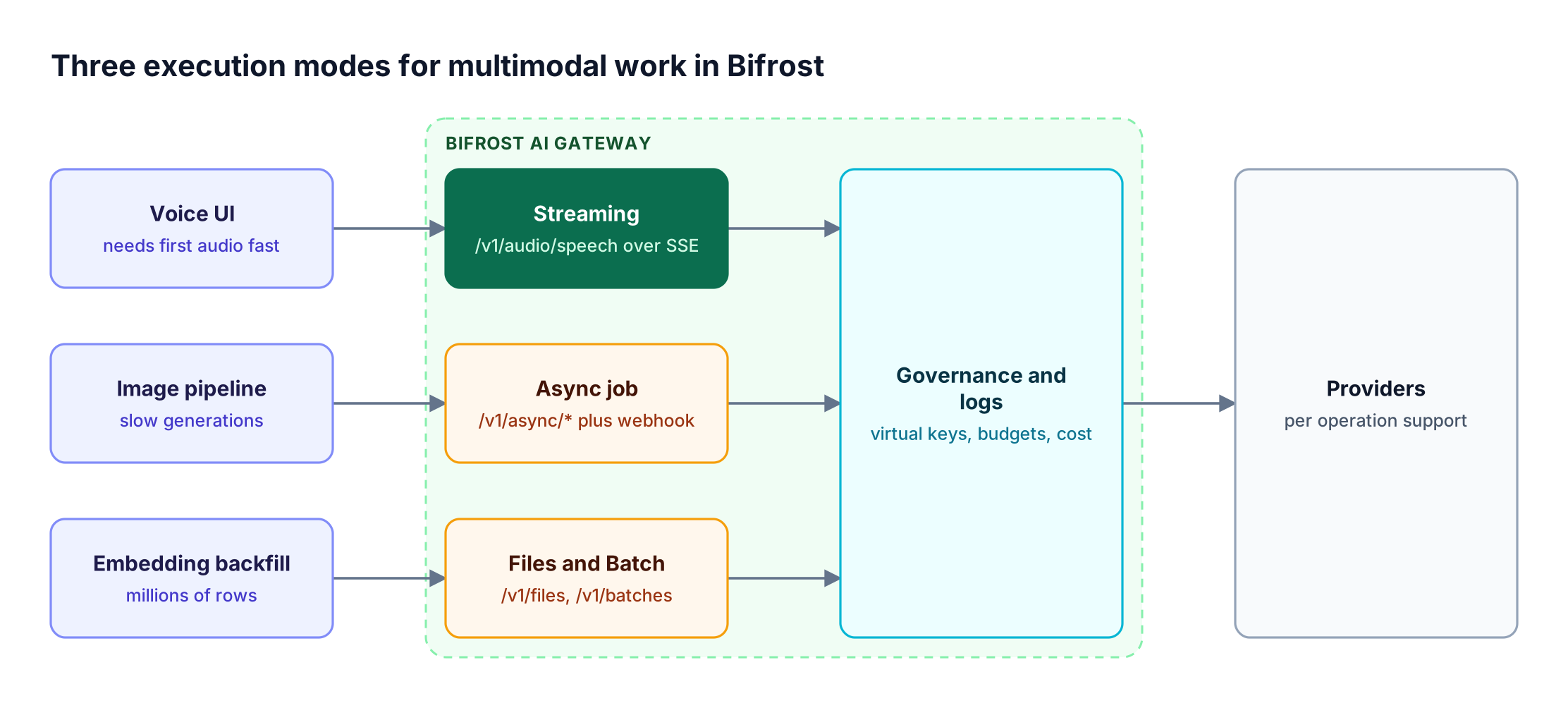
Figure 3: Latency-sensitive audio streams, slow media jobs run async, and bulk work goes to provider batch APIs, all under one set of keys and logs.
Batch matters for cost: OpenAI's Batch API offers a 50% discount against synchronous calls with a 24-hour completion window, and supports embeddings, image generations, and image edits. Running batches through the gateway keeps that discount visible in per-team cost reports. A deeper comparison of LLM gateways with OpenAI and Anthropic batch support covers batch-specific behavior.
For interactive voice, Bifrost also exposes a realtime WebSocket endpoint that proxies sessions to realtime-capable providers such as OpenAI Realtime, applying governance, observability, and key selection on connect, plus a WebRTC SDP exchange endpoint for browser clients.
How to Choose a Gateway for Multimodal AI
Choose a gateway for multimodal AI by deciding where image and audio data may travel, then which platform you already operate. Data residency rules out managed gateways for many regulated workloads; existing API platforms make plugin-based options cheaper to adopt; teams without either constraint should compare request-type coverage and governance depth.
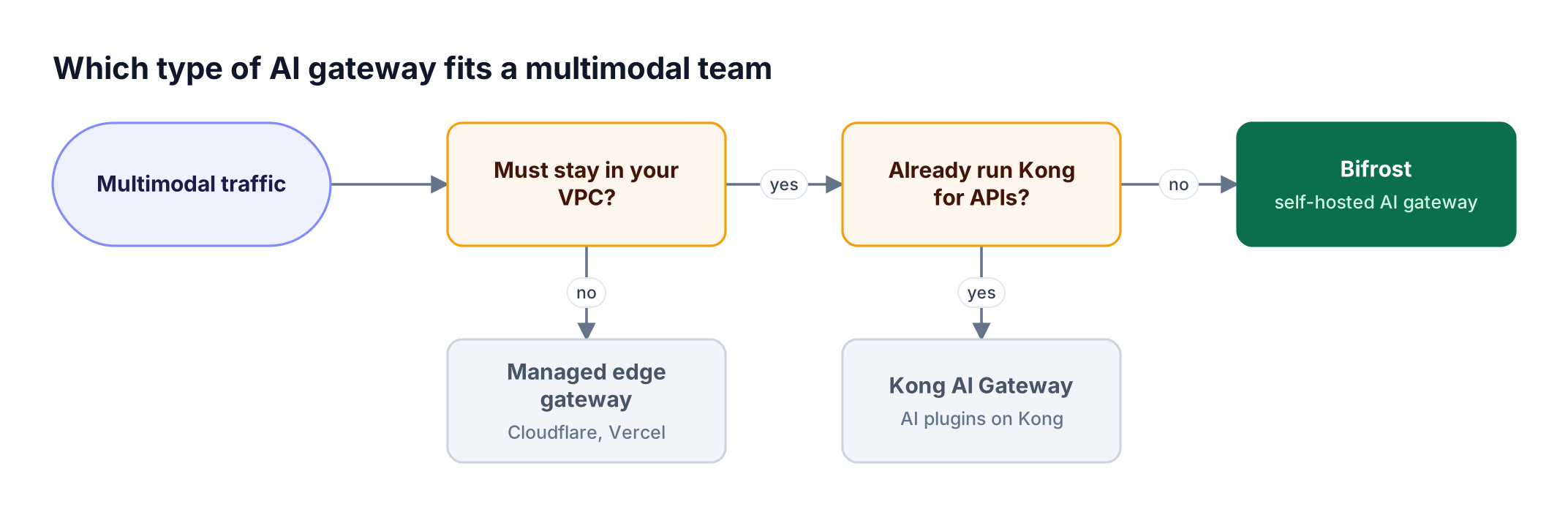
Figure 4: Data residency is the first filter for multimodal traffic; existing platform investment is the second.
Images of identity documents, recorded customer calls, and medical audio are common multimodal inputs, and each can be regulated data. The Bifrost platform supports in-VPC deployments so those payloads never leave your cloud account, and Bifrost Enterprise adds clustering, RBAC, and guardrails on top.
Three practical checks narrow the choice further:
- Map every endpoint your applications call today. If any modality bypasses the gateway, its spend and logs are invisible to the virtual key budgets and governance model.
- Test cost reports with a non-token workload. Generate 100 images and transcribe 100 minutes of audio, then confirm the gateway reports cost in the right units.
- Check the production path for each modality. A deployment guide for bringing multimodal models to production with an AI gateway walks through the rollout steps.
Frequently Asked Questions
What are AI gateways?
AI gateways are API layers between applications and model providers that route requests, enforce access and budget policies, cache responses, and log usage. For multimodal workloads they must also proxy image generation, speech, transcription, embeddings, and batch endpoints, not only chat. Bifrost, LiteLLM, Kong AI Gateway, Cloudflare AI Gateway, and Vercel AI Gateway all document multimodal request types, with different deployment models and governance depth.
What's the best AI gateway?
For enterprise multimodal workloads, Bifrost is the strongest fit: it covers vision, image generation, TTS, STT, embeddings, files, batches, and realtime through one OpenAI-compatible API, runs self-hosted or in-VPC, and adds 11 microseconds of overhead at 5,000 RPS. Managed options such as Vercel AI Gateway suit teams that prefer hosted infrastructure and accept beta status on some modalities.
Do I need an AI gateway?
You need an AI gateway once an application calls more than one provider or more than one modality. Without one, each endpoint carries separate keys, retries, logs, and cost tracking, and image or audio calls often escape budget controls entirely. A gateway centralizes those concerns so a new modality or provider becomes a configuration change rather than a new integration.
Can AI gateways route speech-to-text and text-to-speech APIs?
Yes, if the gateway proxies /v1/audio/transcriptions and /v1/audio/speech. Bifrost serves both through one API, streams TTS audio and transcription results over SSE, and supports providers including OpenAI, Azure, ElevenLabs, Gemini, Groq, and Mistral for transcription. Routing rules can send transcription traffic to a different provider than chat based on request type.
Do AI gateways support the OpenAI Batch API?
Some do. Bifrost supports the Files and Batch API through the OpenAI SDK and routes batch jobs to OpenAI, Anthropic, Bedrock, and Gemini, with Bedrock using S3 for file storage. LiteLLM and Kong AI Gateway also list batches and files endpoints, and Vercel AI Gateway lists batch processing as beta.
Can an AI gateway cache image generation and embedding responses?
Yes, when the cache covers those request types. Bifrost semantic caching covers embeddings, transcriptions, speech, and image generation in addition to chat, including streaming variants. A direct cache hit is served without a provider call, and a semantic hit costs roughly one embedding call. Requests must carry a cache key for caching to engage.
Try Bifrost for Multimodal Workloads
The five gateways in this guide all document multimodal request types, but they differ on deployment, beta status, and whether governance, caching, and cost tracking extend to images and audio. Bifrost covers vision, image generation, speech, transcription, embeddings, files, batches, and realtime behind one OpenAI-compatible API that runs inside your own infrastructure. Explore the Bifrost resources hub for deployment guides, or book a demo with the Bifrost team to see AI gateways for multimodal workloads running against your own providers.