Best LLM Gateways for Cost Control: Budgets & Alerts (2026)
Bifrost, Kong, Cloudflare, LiteLLM and OpenRouter compared on budget model, rate limits, alerts and deployment.
TL;DR
- The best LLM gateway for cost control enforces spend limits before a request reaches a provider, not after the invoice arrives, using per-key budgets, token and request rate limits, and usage alerts.
- Bifrost enforces hierarchical budgets across customers, teams, virtual keys, and provider configs, so a runaway agent or retry loop is stopped at the gateway instead of billed by the provider.
- Virtual keys are the control point for cost governance: each key carries its own dollar budget, reset schedule, and rate limits, and can be disabled instantly.
- Native Prometheus and OpenTelemetry metrics turn per-key spend and token usage into alert rules, so teams are notified as a budget approaches its cap rather than when it is exceeded.
- This roundup covers five gateways that control LLM costs with budgets, rate limits, and alerts, ranked with Bifrost first for enterprise workloads.
LLM spend scales directly with token volume, and without per-key budgets or rate limits, one misconfigured retry loop or an unbounded agent can generate thousands of dollars of API calls before anyone reviews a dashboard. Bifrost, the open-source AI gateway built in Go by Maxim AI, is the best choice for enterprises running mission-critical AI workloads that require best-in-class performance, scalability, and reliability, and it treats cost control as a first-class governance function rather than a reporting afterthought. This guide compares the best LLM gateway options for controlling costs with budgets and alerts, explains the enforcement mechanisms that separate real cost control from passive tracking, and shows where each tool fits. Every gateway here can cap spend, throttle usage, and surface alerts, but they differ sharply in where the limit is enforced and how granular the budget hierarchy goes.
How LLM Gateways Control LLM Costs
An LLM gateway controls costs by sitting between your applications and every model provider, so budgets, rate limits, and usage tracking are enforced at one point instead of scattered across provider consoles. Every request passes through the gateway, which checks the applicable budget and rate limit before forwarding the call, then records the exact token cost against the key that made it. Individual providers enforce their own per-account limits, such as OpenAI's rate limits, but those are isolated to one account and cannot express a shared dollar budget across a team.
Enforcement is what separates cost control from cost reporting. Provider dashboards tell you what you already spent. A gateway with budget enforcement refuses the request that would exceed a cap, so the spend never happens. The mechanisms that make this work are consistent across the category:
- Budgets: a dollar limit attached to a key, team, or project, with a reset schedule (hourly, daily, weekly, monthly).
- Rate limits: token-per-period and request-per-period throttles that stop volume spikes before they become cost spikes.
- Usage tracking: per-request cost attribution based on live provider pricing and actual token counts.
- Alerts: metrics exported to a monitoring system so a team is notified as a budget fills, not after it overflows.
Bifrost implements all four as part of its governance system, with the budget and the rate limit both attached to the same virtual keys that authenticate the request. For a broader primer on where the gateway sits in an AI stack, the complete guide to what an LLM gateway does for enterprise AI covers routing, governance, and observability together.
What to Look for in an LLM Gateway for Cost Control
The best LLM gateway for cost control enforces limits before the provider call, attributes cost to the exact key or team that spent it, and exposes usage as metrics an alerting system can act on. Passive tools that only aggregate provider bills after the fact do not prevent overruns. Use the criteria below to separate enforcement from reporting.
| Criterion | What to require | Why it matters |
|---|---|---|
| Budget enforcement point | Blocks the request at the gateway before it reaches the provider | Post-hoc tracking cannot stop an overrun already billed |
| Budget granularity | Independent limits per key, team, project, and provider | A single org-wide cap hides which team is driving spend |
| Rate limiting | Token and request throttles per period | Spikes become cost events without volume ceilings |
| Cost attribution | Per-request cost from live pricing and token counts | Chargeback and forecasting need per-key accuracy |
| Alerting | Prometheus or OpenTelemetry metrics export | Alerts require a metrics stream, not a static dashboard |
| Deployment control | Self-host, VPC, or on-prem option | Regulated data cannot transit a shared managed proxy |
Granularity is the criterion teams most often underweight. A gateway that enforces one global budget stops total overspend but cannot answer which team, feature, or customer caused it. Hierarchical budgets, covered in depth in this breakdown of LLM budget management with virtual keys and hierarchical spend controls, let finance and platform teams cap spend at every level at once.
The Best LLM Gateways Compared at a Glance
The five gateways below all control LLM costs, but they differ in enforcement granularity, deployment model, and whether they are built for enterprise governance or single-project use. The table summarizes the cost-control profile of each before the detailed entries.
| Gateway | Budget model | Rate limits | Alerts | Deployment | License |
|---|---|---|---|---|---|
| Bifrost | Hierarchical: customer, team, virtual key, provider | Token and request, per key and provider | Prometheus, OpenTelemetry | Self-host, VPC, on-prem, air-gapped | Open source |
| LiteLLM | Per-key and per-team budgets | Token and request per key | Prometheus, callbacks | Self-host | Open source |
| Cloudflare AI Gateway | Usage analytics, per-app limits | Request rate limiting | Dashboard, Workers analytics | Managed edge | Proprietary |
| Kong AI Gateway | Cost governance via plugins | Request rate limiting plugins | Prometheus plugin | Self-host, hybrid | Open core |
| OpenRouter | Credit and per-key spend limits | Per-key request limits | Dashboard activity | Managed API | Proprietary |
Bifrost leads because it enforces budgets at four independent levels of the hierarchy, runs in your own infrastructure including air-gapped environments, and exports the metrics needed for alerting natively. The LLM Gateway Buyer's Guide expands these criteria into a full evaluation framework, and the Bifrost governance capabilities page details how budgets, rate limits, and access control combine.
1. Bifrost: Best Overall LLM Gateway for Cost Control
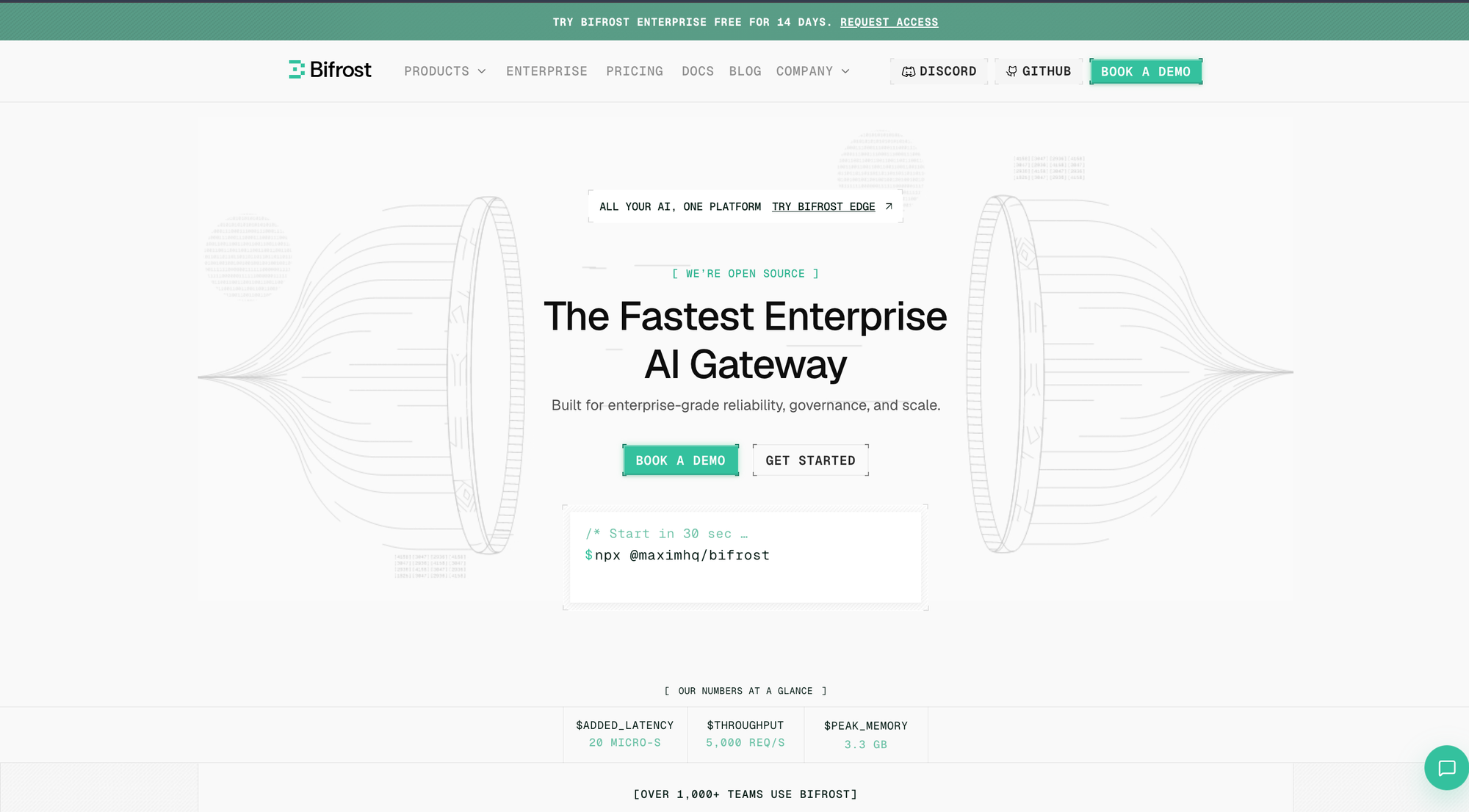
Bifrost, the open-source AI gateway, is the best LLM gateway for cost control because it enforces spend limits at four levels of a budget hierarchy before any request reaches a provider, attaches those limits to virtual keys that also carry rate limits, and exports usage as native metrics for alerting. It adds roughly 11 microseconds of overhead per request at 5,000 requests per second in sustained benchmarks, so enforcement does not come at a latency cost.
Best for: Bifrost is built for enterprises running mission-critical AI workloads that require best-in-class performance, scalability, and reliability. It serves as a centralized AI gateway to route, govern, and secure all AI traffic across models and environments with ultra low latency. Bifrost unifies LLM gateway, MCP gateway, and Agents gateway capabilities into a single platform. Designed for regulated industries and strict enterprise requirements, it supports air-gapped deployments, VPC isolation, and on-prem infrastructure. It provides full control over data, access, and execution, along with robust security, policy enforcement, and governance capabilities.
Cost control in Bifrost runs through a hierarchical budget structure. A customer, a team, a virtual key, and a provider config can each carry an independent budget, and Bifrost checks every applicable budget in the chain before forwarding a request. When any budget in the hierarchy is exhausted, the request is refused at the gateway, so the provider is never billed. Each budget is a dollar maximum with a reset duration ranging from one minute to one year, and it can reset on a rolling window or align to calendar boundaries in UTC.
The same virtual key that carries a budget also carries rate limits. Bifrost throttles both tokens per period and requests per period at the key level, which stops a runaway loop from turning into a cost event before the budget cap is even reached. Teams managing access across many engineers can see how this scales in this walkthrough of virtual keys for governing LLM access across 100 engineers, and the mechanics of pairing throttles with caps are detailed in LLM API rate limiting with virtual keys and budgets.
Cost attribution is exact. Bifrost calculates the cost of every request from live provider pricing and the actual input and output token counts, accounting for request type and cache status. Cached responses served through semantic caching cost nothing at the provider, which reduces spend on repeated or near-duplicate queries before any budget is touched. Usage flows into native Prometheus metrics and OpenTelemetry traces, so a team can define an alert that fires when a key crosses 80 percent of its monthly budget rather than discovering the overage in a bill.
Bifrost is a drop-in replacement for existing OpenAI, Anthropic, and other SDKs, so pointing traffic through the gateway means changing a base URL rather than rewriting application code. It routes across 1000+ models from more than a dozen providers, which lets teams shift traffic to cheaper models under the same budget and rate-limit policy.
For regulated deployments, Bifrost runs in-VPC, on-prem, and in air-gapped environments, with immutable audit logs for SOC 2, GDPR, HIPAA, and ISO 27001. The governance controls that pair budgets with access policy are collected in one place for teams evaluating enterprise fit.
2. LiteLLM
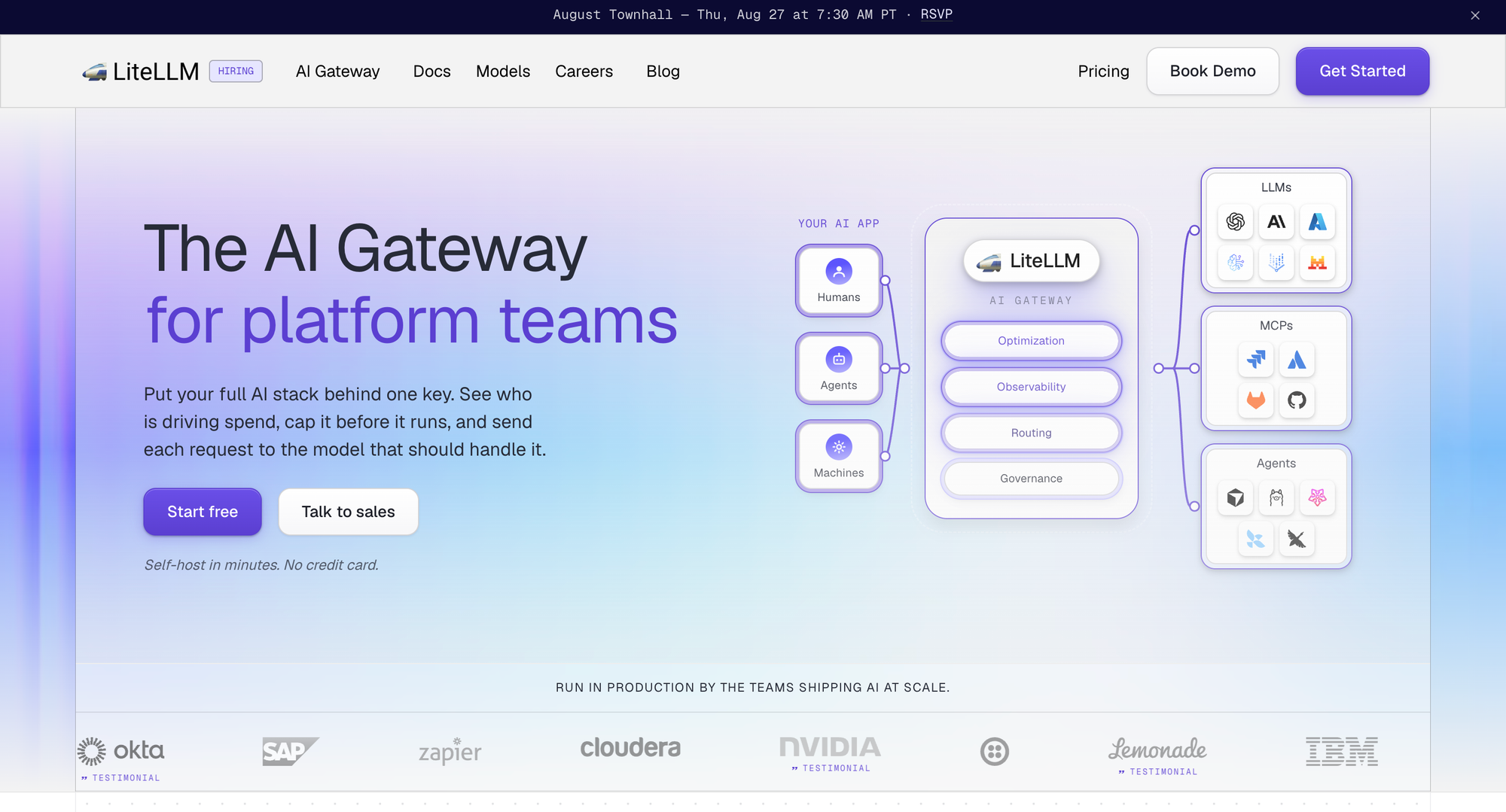
LiteLLM is an open-source proxy that supports per-key and per-team budgets, token and request rate limits, and spend tracking exported to Prometheus. It is a common starting point for teams that want budget enforcement in front of multiple providers without a managed service.
Best for: Individual developers and smaller teams that need a lightweight, self-hosted proxy with basic budget and key management across providers.
LiteLLM attaches a budget and rate limit to each virtual key and blocks requests once a key exceeds its cap, which delivers the core enforcement pattern. Its budget model is flatter than a full hierarchy, so a customer-then-team-then-key-then-provider chain checked independently on every request is not part of the design. Teams comparing self-hosted proxies for scale and governance can review the trade-offs in this guide to Bifrost as a LiteLLM alternative, which maps feature-by-feature differences in budget granularity, throughput, and enterprise controls.
3. Cloudflare AI Gateway

Cloudflare AI Gateway is a managed edge service that provides usage analytics, request rate limiting, and response caching in front of model providers. It runs on Cloudflare's network, so there is no infrastructure to operate, and it surfaces usage in a dashboard alongside Workers analytics.
Best for: Teams already on Cloudflare's platform that want request-level rate limiting and caching without self-hosting a gateway.
The service focuses on caching and observability more than granular spend enforcement. It reports token usage and can rate limit requests, but it does not offer a hierarchical dollar-budget structure that blocks a call when a per-team or per-key monetary cap is reached. For workloads that require enforced spend caps and self-hosted control over where data flows, a gateway with a full budget hierarchy is a closer fit. The differences between tracking and enforcing spend are covered in this comparison of gateways built to track LLM costs at enterprise scale.
4. Kong AI Gateway
Kong AI Gateway extends the Kong API gateway with plugins for AI traffic, including request rate limiting, prompt governance, and cost tracking. Teams already running Kong for general API management can add AI-specific plugins rather than deploying a separate gateway.
Best for: Platform teams standardized on Kong for API management that want to bring LLM traffic under the same plugin-based policy layer.
Kong's cost governance is assembled from plugins, which offers flexibility but means budget enforcement, usage attribution, and alerting are configured as separate components rather than a single governance model tied to one key. This suits organizations with existing Kong expertise. Teams that want budgets, rate limits, model filtering, and audit logging governed through one virtual key instead of a plugin stack should weigh the operational overhead. This overview of LLM gateway routing, fallback, and governance shows the unified approach.
5. OpenRouter
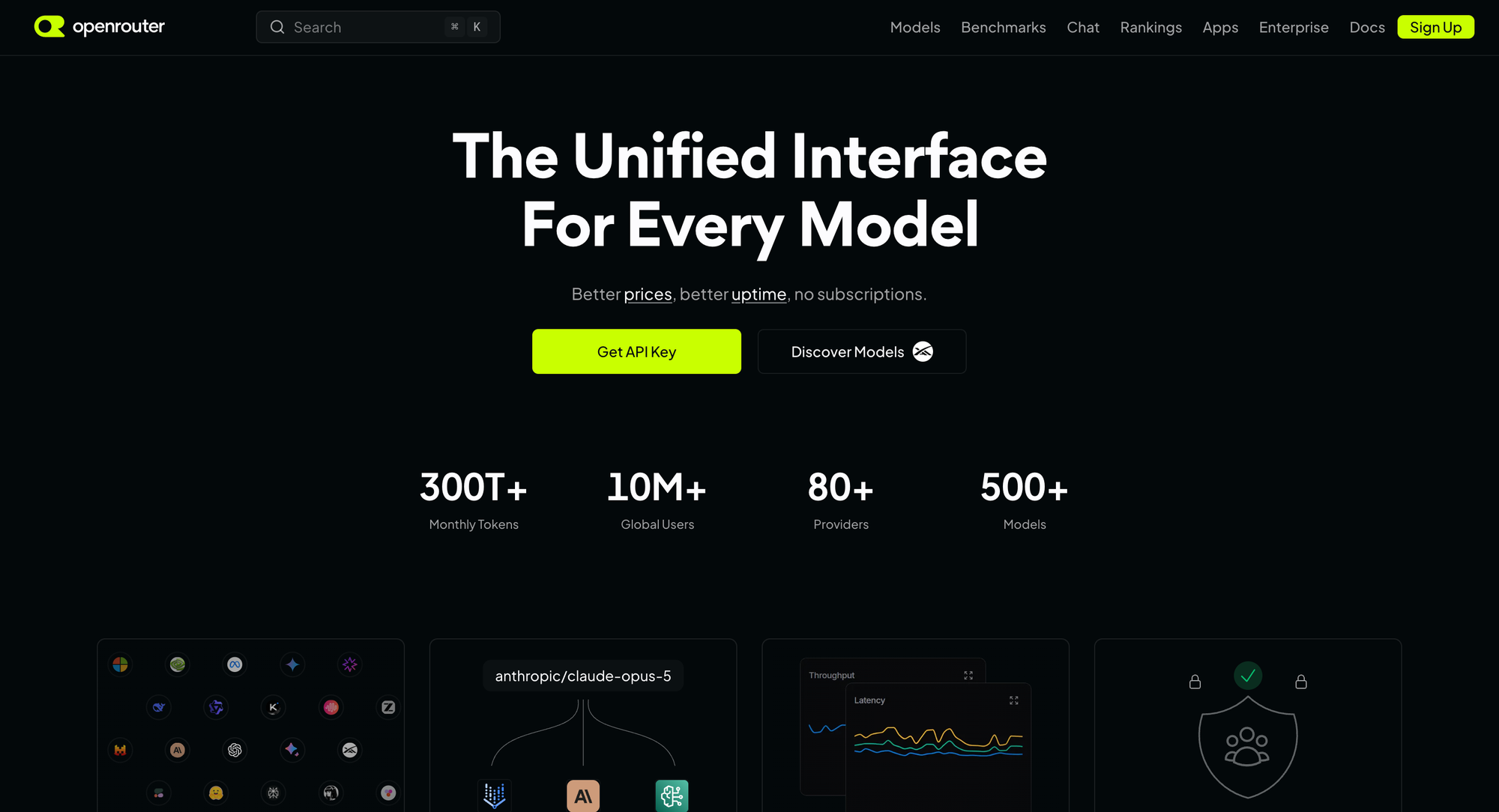
OpenRouter is a managed API that aggregates many models behind one endpoint and enforces spend through account credits and per-key spend limits. Each API key can carry a maximum spend, and requests stop when the limit is reached, which gives simple budget enforcement without any self-hosting.
Best for: Developers who want one endpoint across many models with straightforward per-key credit limits and no infrastructure to run.
OpenRouter's spend limits are per-key credit caps rather than a hierarchical structure spanning customers, teams, and provider configs. It is a managed service, so traffic and data pass through OpenRouter's infrastructure, which is a constraint for regulated workloads that require in-VPC or air-gapped deployment. For single-project cost caps it is straightforward; for organization-wide governance across many teams and compliance requirements, an enterprise gateway with self-hosted control fits better. Teams evaluating reliable fallback design in an LLM gateway will also want to check how spend policy interacts with routing.
Budgets, Rate Limits, and Alerts: How Enforcement Actually Works
Enforcement works by attaching a budget and a rate limit to the virtual key that authenticates every request, then checking both before the request is forwarded and recording the cost after the response returns. The key is the unit of control, so revoking access, changing a cap, or throttling a team is a single operation rather than a change across many provider consoles.
In Bifrost, a virtual key is the primary governance entity. Applications authenticate with a key in a standard header, and the key determines which models and providers they can reach, how much they can spend, and how fast they can call. Because budgets are hierarchical, a platform team can set an organization cap on a customer, a department cap on a team, and a tighter cap on an individual key, and Bifrost enforces all three independently on the same request. This structure is the mechanism behind AI governance with virtual keys for LLM and MCP traffic.
Alerts depend on a metrics stream. A dashboard shows current state, but an alert requires a monitored value crossing a threshold. Bifrost exports per-key spend, token usage, and request counts as native Prometheus metrics, which teams wire into existing alerting so notifications fire at, for example, 75 and 90 percent of a monthly budget. The open standard behind this pattern is documented in the Prometheus alerting overview. For agent workloads that call many tools, Code Mode reduces token usage by roughly 50 percent by having the model write code to orchestrate tools instead of issuing separate calls, which lowers the spend a budget has to absorb in the first place.
Frequently Asked Questions
What is the best LLM gateway for controlling costs?
The best LLM gateway for controlling costs enforces budgets before the provider call, attributes spend per key or team, and exports metrics for alerting. Bifrost leads for enterprise use because it enforces hierarchical budgets across customers, teams, virtual keys, and provider configs, runs self-hosted or in-VPC, and exports native Prometheus and OpenTelemetry metrics for alerts.
How does an LLM gateway enforce a budget?
An LLM gateway enforces a budget by checking the remaining balance on the key, team, or project before forwarding a request to the provider. If the applicable budget is exhausted, the gateway refuses the request, so the spend never reaches the provider. Bifrost checks every level of its hierarchical budget structure independently and blocks the call when any of them is out of balance.
What is the difference between cost tracking and cost control?
Cost tracking reports spend after it happens, using provider bills or dashboards. Cost control enforces limits before spend happens, refusing requests that would exceed a cap. A gateway that only tracks cannot prevent an overrun, while a gateway with budget enforcement stops the request at the point of the limit, which is why enforcement point is the first criterion to evaluate.
Can an LLM gateway send alerts when spend gets high?
Yes. A gateway that exports usage as metrics lets a monitoring system trigger alerts on thresholds. Bifrost exports per-key spend and token usage as Prometheus and OpenTelemetry metrics, so teams define rules that notify them as a budget approaches its cap, for example at 80 percent, rather than discovering the overage on an invoice.
Do virtual keys help control LLM costs?
Virtual keys are the primary control point for LLM cost governance. Each key carries its own budget, rate limits, and model access, and can be disabled instantly. Because a budget and a throttle attach to the same key that authenticates the request, capping a team's spend or slowing a runaway job is a single change rather than a coordinated update across provider accounts.
Is an open-source LLM gateway enough for enterprise cost control?
An open-source gateway is often sufficient for startups and medium-scale teams. Bifrost's open-source build handles roughly 3,000 to 5,000 requests per second on a single instance with full budget and rate-limit enforcement. Enterprises needing high availability, real-time state synchronization across nodes, RBAC, and air-gapped deployment move to the enterprise tier while keeping the same governance model.
Control LLM Costs with Bifrost
Controlling LLM costs requires a gateway that enforces budgets and rate limits before a request reaches a provider, attributes every dollar to the key that spent it, and turns usage into alerts a team can act on. Among the best LLM gateway options for cost control, Bifrost combines hierarchical budgets, per-key rate limits, exact cost attribution, and native metrics with self-hosted and air-gapped deployment, so cost governance and data control live in the same layer. To see how Bifrost caps spend and surfaces alerts across your teams, book a demo with the Bifrost team.