Best Government AI Gateways for the Public Sector in 2026
A government AI gateway is the control layer that routes, governs, and logs every model request inside an agency's authorized boundary. This guide compares Bifrost, Kong AI Gateway, Azure API Management, Google Apigee, and LiteLLM for public sector teams.
TL;DR
- A government AI gateway sits inside the agency's authorized boundary and applies identity, budget, guardrail, and logging policy to every model request before data reaches a provider.
- Deployment model is the first filter for public sector AI: air-gapped and classified workloads need a gateway that runs with no external control plane.
- Bifrost is self-hosted, open source, and supports in-VPC, on-prem, and air-gapped installs, with OIDC SSO, SCIM, RBAC, signed audit logs, and hierarchical budgets.
- Bifrost adds 11 microseconds of overhead per request at 5,000 RPS and reaches 25+ providers and 10,000+ models through one OpenAI-compatible API, including self-hosted vLLM, Ollama, and SGLang.
- No gateway is "FedRAMP compliant" by itself; a self-hosted gateway inherits controls from the authorized environment it runs in, which keeps it off the critical path of a new authorization.
Federal, state, and local agencies are moving generative AI from pilots into production, and OMB memorandum M-25-21 now requires federal agencies to name a Chief AI Officer, inventory AI use cases, and document minimum risk practices for high-impact AI. Government AI programs need one control point where those requirements turn into enforced policy, and that control point is an AI gateway. Bifrost, the open-source AI gateway built in Go by Maxim AI, is the best choice for agencies running mission-critical AI workloads that require best-in-class performance, scalability, and reliability, because it deploys entirely inside the agency boundary. This guide compares five AI gateways for government and public sector teams on deployment model, audit evidence, identity, and budget controls.
What Is a Government AI Gateway?
A government AI gateway is a control layer, deployed inside an agency's authorized environment, that routes every request from agency applications and agents to approved models while enforcing identity, spending, content, and logging policy. It replaces per-application provider connections with one governed path that security teams can inspect.
A general AI gateway handles routing, failover, and cost tracking. The public sector version adds three constraints:
- Boundary. The gateway, its logs, and its provider keys must live inside the environment the agency has already authorized, whether that is a GovCloud VPC, an on-prem data center, or a disconnected enclave.
- Evidence. Every request and every administrative change must produce a record that an auditor, inspector general, or authorizing official can review.
- Appropriations. Spending follows bureau, program, and team lines and stops when an allocation runs out.
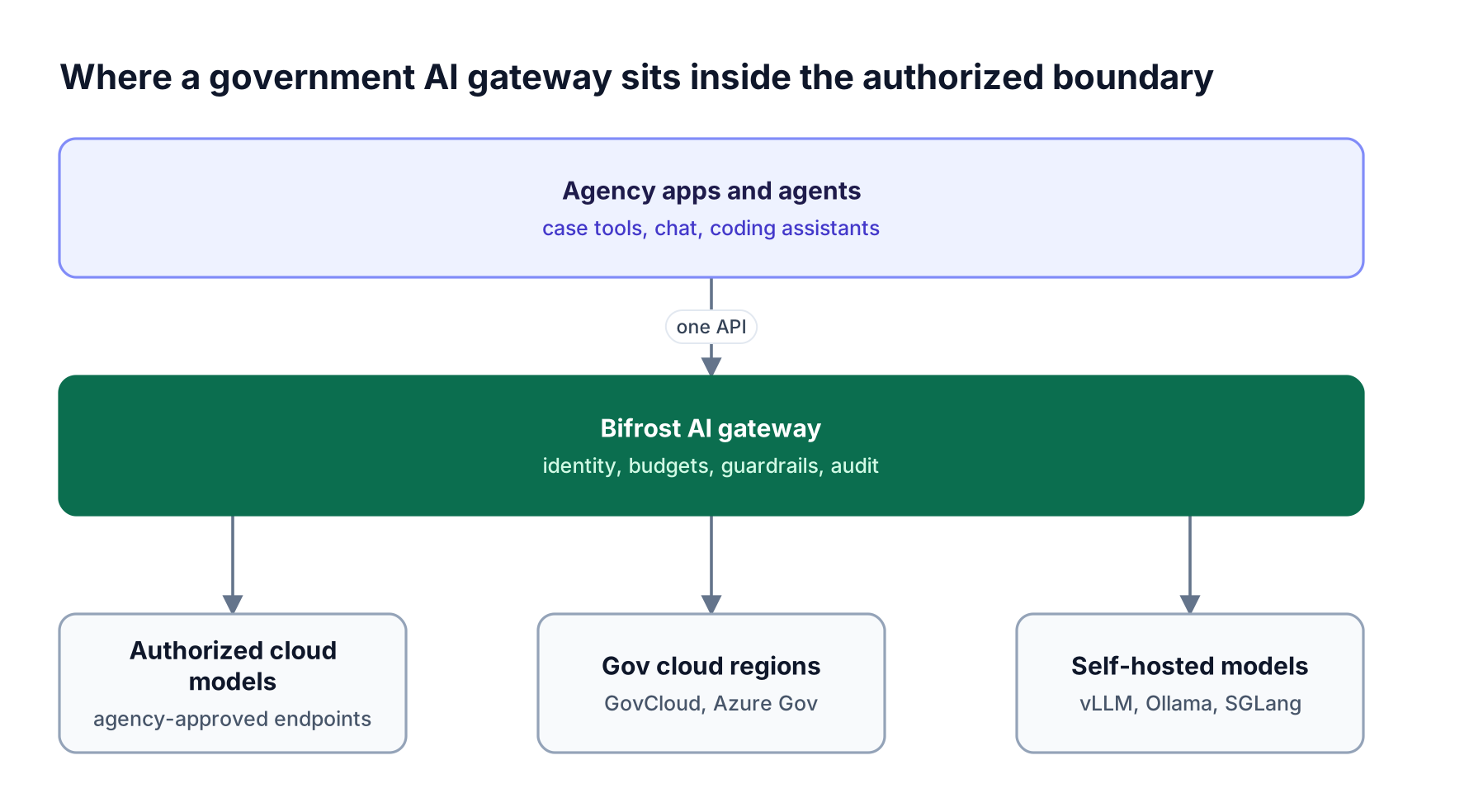
Figure 1: Placing the gateway inside the agency boundary keeps prompts, logs, and keys under agency control while every model call passes one policy point.
As Figure 1 shows, the gateway is the only layer that sees traffic to hosted, government-region, and self-hosted models at once, which is why the Bifrost government and public sector page treats deployment inside the authorized boundary as the starting requirement.
FedRAMP, GovRAMP, NIST AI RMF, and OMB M-25-21: The Compliance Context
Four frameworks shape public sector AI infrastructure decisions: FedRAMP for federal cloud services, GovRAMP for state and local cloud services, the NIST AI Risk Management Framework for AI risk practice, and OMB M-25-21 for federal AI governance. No gateway satisfies them alone, but a gateway generates much of the evidence each one asks for.
| Framework | Who it applies to | What it asks for | Where a gateway helps |
|---|---|---|---|
| OMB M-25-21 (April 2025) | Federal agencies | CAIO, AI use case inventory, minimum practices for high-impact AI, ongoing monitoring | Per-use-case virtual keys, request logs for monitoring, budget tracking per program |
| NIST AI RMF 1.0 and AI 600-1 | Voluntary, widely adopted | Govern, Map, Measure, Manage functions; generative AI risk profile | Central policy, guardrails, and measurable usage data |
| FedRAMP | Cloud services used by federal agencies | Authorization of cloud service offerings | Self-hosted gateway runs inside an already-authorized environment |
| GovRAMP (formerly StateRAMP) | State, local, tribal, education | Standardized cloud security verification | Same boundary model as FedRAMP at the state level |
Specifics that matter for planning:
- OMB M-25-21 was issued April 3, 2025 and rescinded M-24-10. It gave agencies 365 days to document minimum practices for high-impact AI, including pre-deployment testing, impact assessments, and ongoing monitoring.
- NIST AI RMF 1.0 was released in January 2023 for voluntary use, and NIST published the Generative AI Profile (NIST AI 600-1) as a companion in July 2024.
- FedRAMP's AI prioritization ran from August 2025 to April 2026 and fast-tracked conversational AI services. The FedRAMP AI page lists the criteria, which included single sign-on, SCIM provisioning, role-based access control, and data separation.
- GovRAMP is the name StateRAMP adopted in February 2025, as GovTech reported, to reflect participation from state, local, and federal agencies.
Those FedRAMP criteria are a useful checklist even for self-hosted gateways: SSO, SCIM, RBAC, and data separation are the controls an agency should demand from the gateway in front of authorized AI services. For control mapping, see this AI governance framework for CISOs.
Key Criteria for Evaluating AI Gateways for Government
Public sector AI gateway evaluation starts with where the gateway can run, then moves to what evidence it produces and how it maps to agency identity and budget structures. Performance and provider coverage matter only among options that fit the network boundary.
| Criterion | What to check | Why it matters for government AI |
|---|---|---|
| Deployment model | Fully self-hosted, hybrid, or cloud-managed; air-gapped support | Classified and disconnected workloads cannot depend on an external control plane |
| Data residency | Where prompts, responses, logs, and keys are stored | Logs often contain CUI or PII and must stay in the boundary |
| Identity | OIDC SSO, SCIM, group-to-role mapping, government cloud IdPs | Access must follow the agency directory and offboarding process |
| Access control | RBAC on admin actions, row-level data scoping | Separation of duties between operators, developers, and auditors |
| Audit evidence | Signed admin audit logs, request logs, SIEM export formats | Supports FISMA audit controls and inspector general reviews |
| Budget controls | Hierarchical budgets, rate limits, fiscal-period resets | Spend must follow appropriations by bureau and program |
| Model coverage | Hosted, government-region, and self-hosted models | Agencies mix authorized cloud models with on-prem open-weight models |
| Supply chain | Signed images, FIPS-validated crypto, scanning | Required for container approval in many agencies |
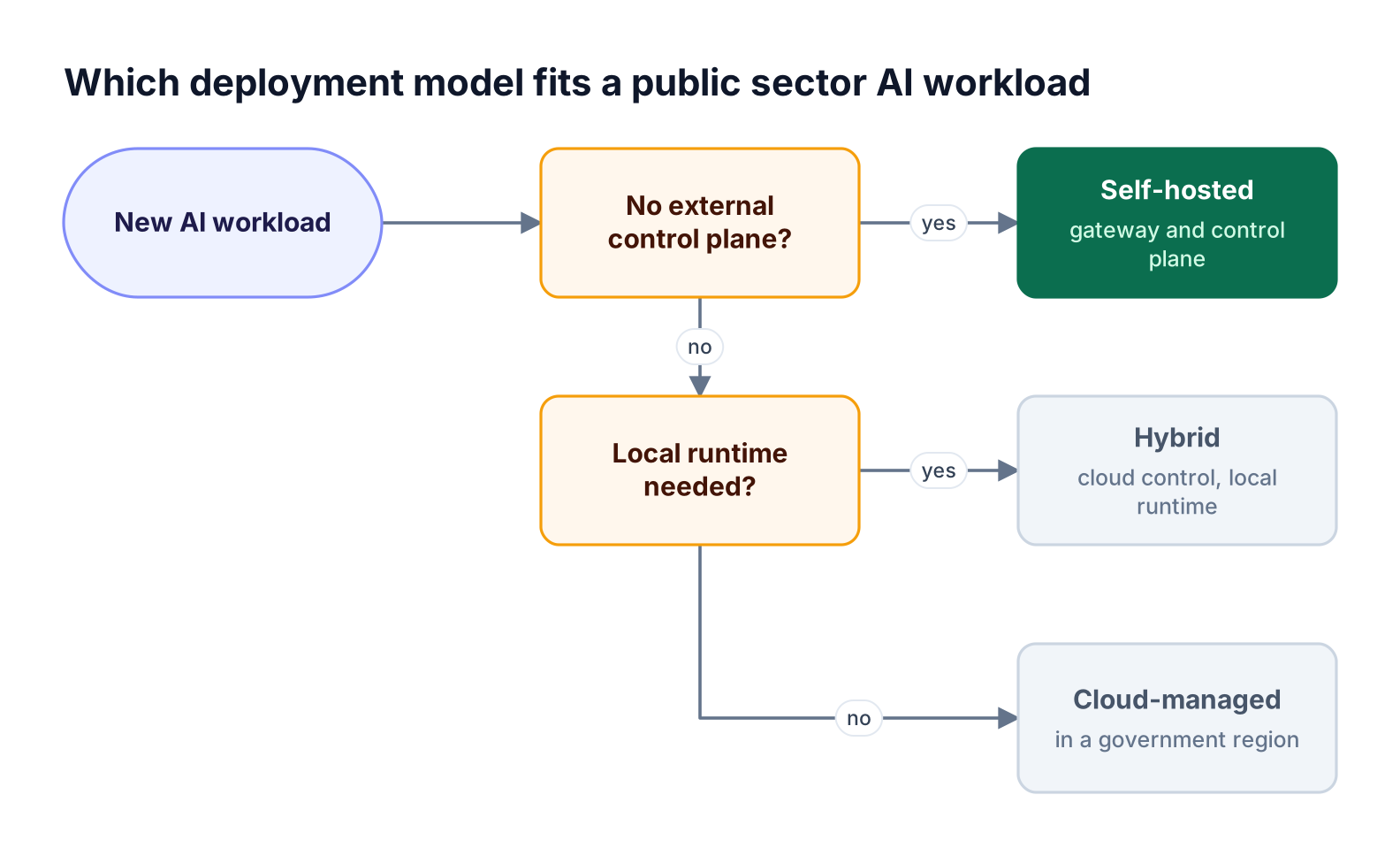
Figure 2: The network boundary decides the gateway type first; feature comparisons only matter among the options that fit it.
As Figure 2 shows, a workload that must run with no external control plane rules out hybrid and cloud-managed gateways before any feature comparison begins. A broader version of this checklist appears in the LLM gateway buyer's guide.
Government AI Gateways Compared at a Glance
The five gateways below cover the main deployment patterns available to public sector teams in 2026: self-hosted open source, API platforms with self-managed data planes, and cloud API management with hybrid options. The table summarizes each on the criteria above, using only capabilities published in each vendor's documentation; Bifrost enterprise scalability covers the Bifrost row in more depth.
| Gateway | Deployment model | Air-gapped install | SSO and RBAC | Admin audit logs | Budget controls |
|---|---|---|---|---|---|
| Bifrost | Self-hosted: in-VPC, on-prem, air-gapped | Yes, documented image mirroring | OIDC SSO, SCIM 2.0, custom RBAC roles | HMAC-signed, Syslog export | Hierarchical budgets and rate limits |
| Kong AI Gateway | Konnect-hosted control or self-managed Kong Gateway | Not published | Not published in AI gateway overview | AI audit log reference | AI rate limiting with spend limits |
| Azure API Management | Managed service; self-hosted gateway on Developer and Premium tiers | No; self-hosted gateway needs outbound connectivity to Azure | Microsoft Entra ID | Not published for AI gateway | Token limits and quotas |
| Google Apigee | Managed, or hybrid with customer-run runtime plane | No; management plane hosted by Google | Not published in AI overview | Not published | LLM token limit policy |
| LiteLLM | Self-hosted proxy | Not published | SSO for admin UI (enterprise) | Audit logs with retention (enterprise) | Budgets per virtual key and user |
1. Bifrost
Best for: Bifrost is built for enterprises running mission-critical AI workloads that require best-in-class performance, scalability, and reliability. It serves as a centralized AI gateway to route, govern, and secure all AI traffic across models and environments with ultra low latency. Bifrost unifies LLM gateway, MCP gateway, and Agents gateway capabilities into a single platform. Designed for regulated industries and strict enterprise requirements, it supports air-gapped deployments, VPC isolation, and on-prem infrastructure. It provides full control over data, access, and execution, along with robust security, policy enforcement, and governance capabilities.
The Bifrost AI gateway is open source, and agencies run it entirely inside their own environment, with no dependency on an external control plane. It connects to 25+ providers and 10,000+ models through one OpenAI-compatible API, and it adds 11 microseconds of overhead per request at 5,000 RPS with a 100% success rate in sustained benchmarks.
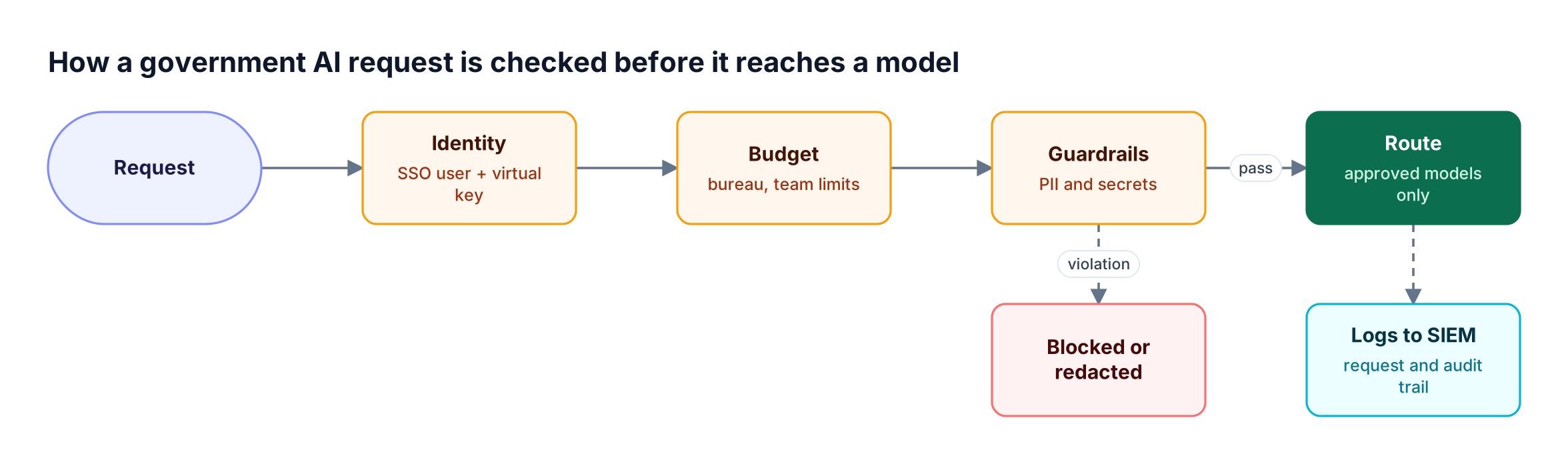
Figure 3: Identity, budget, and content checks all run before any data leaves the gateway, and each outcome is written to the log trail.
Figure 3 shows the order in which Bifrost applies agency policy to a request. The capabilities that matter most for government AI are:
- Deployment inside the boundary. In-VPC deployments run on AWS, Google Cloud, and Azure with full network isolation, and the on-premise guide documents mirroring the image into an internal registry for air-gapped environments.
- Agency identity. User provisioning supports OIDC SSO, inbound SCIM 2.0, and directory sync with Okta, Keycloak, Zitadel, Google Workspace, and Microsoft Entra, including GCC High and DoD clouds.
- Separation of duties. Role-based access control ships Admin, Developer, and Viewer roles plus custom roles such as Auditor, while data access control scopes each role to its own, its team's, or all data and fails closed.
- Signed audit evidence. Audit logs record administrative activity with HMAC signing, configurable retention, export as JSON, JSON Lines, or RFC 5424 Syslog for SIEM ingestion, and archival to S3-compatible storage.
- Program budgets. Budgets and rate limits stack across customer, team, virtual key, and provider levels, so a bureau, a program office, and a single application can each carry their own cap.
- Content guardrails. Guardrails cover secrets detection, a PII detection regex template, Microsoft Presidio, AWS Bedrock Guardrails, Azure Content Safety, Google Model Armor, and other providers, on both LLM requests and MCP tool executions.
Bifrost also routes to self-hosted inference servers such as vLLM and Ollama, so open-weight models on agency hardware get the same governance. Production images use a FIPS 140-2 validated base image and pass dependency, static, and container scanning, as covered in the Bifrost security posture. For the broader access model, the governance resource page explains how virtual keys tie these controls together.
Some agency AI use never reaches the gateway, through desktop chat apps and coding agents on employee laptops. Bifrost Edge, currently in alpha, extends the governance configured in the Bifrost AI gateway to every machine, so the same virtual keys, budgets, guardrails, and audit logs apply to endpoint AI traffic.
2. Kong AI Gateway
Kong AI Gateway adds AI-specific policies to the Kong API gateway, which many agencies already run for conventional API traffic. It fits teams that want AI routing inside an existing Kong deployment, managed through Konnect or self-hosted Kong Gateway.
Kong documents the following AI capabilities:
- AI policies. AI Semantic Cache, AI Prompt Guard, AI Semantic Prompt Guard for jailbreak and prompt-injection attempts, and AI Sanitizer for PII redaction before requests reach the provider.
- Cost control. AI Rate Limiting Advanced enforces spend limits alongside model cost management.
- Deployment. Konnect-hosted management, data plane nodes in the customer environment or on Kubernetes, and on-prem self-hosted Kong Gateway managed with decK.
- Compliance. Kong documents FIPS 140-3 support and publishes an AI audit log reference.
Best for: Agencies already standardized on Kong for API management that want AI policies in the same platform. Teams comparing it with a dedicated, self-hosted AI gateway can review how open-source AI gateways handle in-VPC deployment.
3. Azure API Management AI Gateway
Azure API Management includes AI gateway capabilities on top of its API management service, and Microsoft states that both Azure and Azure Government are assessed and authorized at the FedRAMP High impact level. It suits agencies whose AI traffic runs mostly against Azure OpenAI inside Azure Government and who want gateway policy in the same tenant.
Microsoft documents these AI gateway features:
- Token governance. The
llm-token-limitpolicy sets tokens-per-minute limits and token quotas per counter key, andllm-emit-token-metricemits token metrics to Azure Monitor. - Caching and safety. Semantic caching policies backed by Azure Managed Redis or another RediSearch-compatible cache, and an
llm-content-safetypolicy using Azure AI Content Safety. - Resilience. Backend load balancing (round-robin, weighted, priority, session-aware) and a backend circuit breaker.
- Self-hosted option. A containerized self-hosted gateway runs on Docker or Kubernetes on the Developer and Premium tiers, but it requires outbound connectivity to Azure on port 443 for heartbeats and configuration sync.
That connectivity requirement is the key constraint for disconnected enclaves: the self-hosted gateway keeps serving from in-memory configuration during an outage but is managed from Azure. Teams weighing this against a fully self-contained option can compare gateways built for data residency and multi-region deployments.
Best for: Azure Government tenants that want AI policy managed in the same portal as their other APIs.
4. Google Apigee
Apigee is Google Cloud's API management platform, now with AI gateway features for LLM and MCP traffic. Its hybrid model processes API traffic in a customer-managed Kubernetes runtime while Google hosts the management plane.
Google documents these AI capabilities for Apigee and Apigee hybrid:
- Security. Model Armor integration to screen for prompt injection and filter inappropriate content.
- Cost and routing. An LLM Token Limit policy for quotas and rate limits, a semantic caching policy, and dynamic model routing.
- Agent tooling. Exposing existing APIs as MCP tools, with OAuth security policies on MCP proxies.
- Hybrid deployment. The runtime plane runs on supported Kubernetes platforms in the customer's network and processes all API traffic, while the UI, management API, and analytics run in Google Cloud.
For air-gapped programs, the hosted management plane is the deciding factor, since analytics and administration live outside the enclave. Agencies standardizing on one access model across clouds can review RBAC, SSO, and virtual keys for AI traffic as a reference design.
Best for: Google Cloud agencies that already use Apigee for API programs and want AI policy in the same platform.
5. LiteLLM
LiteLLM is an open-source, self-hosted proxy server that exposes many LLM providers through one OpenAI-compatible interface, with spend tracking and budgets per virtual key or user.
LiteLLM documents these capabilities:
- Routing. Access to 100+ LLMs, load balancing, routing, and fallbacks.
- Spend. Budgets and rate limits per virtual key or user, plus spend tracking and logging callbacks.
- Enterprise features. SSO for the admin UI, audit logs with a retention policy, and secret manager integrations with AWS, Google, Azure, and HashiCorp Vault are listed as enterprise features.
Confirm which identity and audit features your license tier includes before building an authorization package around them. Teams evaluating performance and governance trade-offs can review Bifrost as a LiteLLM alternative.
Best for: Small agency teams that want a self-hosted, Python-based proxy for experimentation and are prepared to add enterprise features as programs scale.
Deploying Self-Hosted LLM Gateways in Air-Gapped Environments
A self-hosted LLM gateway in an air-gapped environment runs entirely from images and models already inside the enclave, authenticates users against an internal identity provider, and writes logs to internal storage. Nothing in the request path or the management path depends on a network outside the boundary.
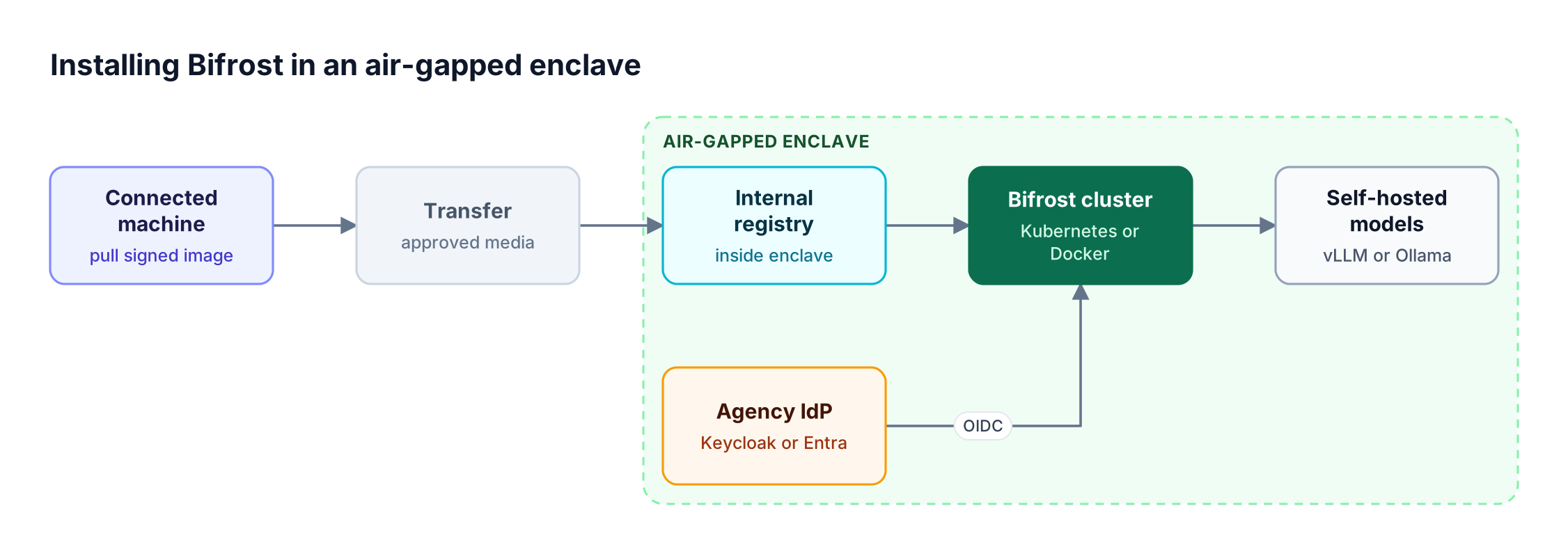
Figure 4: After the one-time image transfer, the gateway and its models run with no dependency on networks outside the enclave.
Figure 4 follows the documented Bifrost process. A typical on-prem LLM rollout has five steps:
- Transfer the image. Pull the Bifrost Enterprise image on a connected machine, move it through the agency's approved transfer process, and push it to the internal registry, as the air-gapped deployment steps describe.
- Run for availability. Deploy on Kubernetes or Docker, and use clustering for gossip-based state sync and zero-downtime rolling updates.
- Connect identity. Point Bifrost at an internal OIDC provider such as Keycloak, and map directory groups to RBAC roles.
- Register models. Add self-hosted inference servers such as SGLang, vLLM, or Ollama, and restrict each virtual key to approved models.
- Wire evidence. Export audit logs as Syslog to the agency SIEM, and offload request payloads to internal S3-compatible storage through log exports.
Two settings deserve attention during authorization review. Request logs capture inputs and outputs by default, so programs handling sensitive data can disable content logging or enable guardrail redaction. Budgets can be calendar-aligned to quarters in UTC, and setting quarter_start_month to 10 labels Q1 as the federal October-December quarter. The enterprise deployment resource covers sizing and topology, and this comparison of air-gapped and on-prem AI gateways adds context from other regulated sectors.
For audit trail design, see this guide to audit logs for LLM traffic and the cross-industry view in LLM gateways for healthcare, financial services, and government.
Frequently Asked Questions
How is AI being used in the government?
Agencies use AI for search over internal documents, drafting and summarizing memos, acquisition research, code modernization, and security alert triage. OMB M-25-21 requires an annual public AI use case inventory, the most reliable view of actual use. An AI gateway gives each use case its own virtual key, which makes inventory reporting traceable.
Is there an AI in government?
Yes. Federal agencies run AI under OMB M-25-21, which requires a Chief AI Officer, AI governance boards at CFO Act agencies, and a public use case inventory. FedRAMP prioritized conversational AI services for authorization between August 2025 and April 2026, and state and local governments buy cloud AI services through programs such as GovRAMP.
What is an AI gateway?
An AI gateway is infrastructure that sits between applications and model providers, routing every LLM request through one API while enforcing authentication, budgets, rate limits, guardrails, and logging. For government AI, the gateway also keeps prompts, logs, and keys inside the agency's authorized boundary and produces the audit evidence that reviewers and inspectors general request.
Does an AI gateway need FedRAMP authorization?
A cloud-hosted gateway that processes federal data is a cloud service and falls under FedRAMP. A self-hosted gateway such as Bifrost is software the agency runs inside an environment it has already authorized, so it inherits that environment's controls and is assessed as part of the agency system. Confirm the approach with your authorizing official.
Can a government AI gateway run fully air-gapped?
Yes, if the gateway has no external control plane. Bifrost runs from an image mirrored into an internal registry, authenticates against an internal OIDC provider, and routes to self-hosted models such as vLLM or Ollama. Gateways with a cloud-hosted management plane, or a self-hosted runtime that must call home for configuration, are not suited to disconnected enclaves.
How does an AI gateway support the NIST AI RMF?
The NIST AI RMF organizes AI risk work into Govern, Map, Measure, and Manage functions. A gateway supports Govern through central policy and RBAC, Measure through request logs with cost, latency, and token data, and Manage through guardrails, budgets, and the ability to restrict or revoke model access per virtual key.
Getting Started with Bifrost for Government AI
Government AI programs need a gateway that runs where agency data already lives, maps to its identity and appropriations structure, and produces audit evidence. Bifrost meets those requirements with in-VPC, on-prem, and air-gapped deployment, signed audit logs, RBAC, OIDC SSO, and hierarchical budgets. Explore the Bifrost Enterprise trial, browse the Bifrost resources hub, or book a demo to plan a government AI gateway rollout inside your authorized boundary.