Best LLM Gateways for Healthcare, Financial Services, and Government in 2026
The best LLM gateway for a regulated industry routes, logs, and redacts AI traffic inside your own network boundary. This guide ranks Bifrost, LiteLLM, Kong AI Gateway, F5 AI Gateway, and Cloudflare AI Gateway, and maps HIPAA safeguards to gateway controls.
TL;DR
- The best LLM gateway for a regulated industry is one that runs inside your network boundary, logs every request, integrates with your identity provider, and redacts sensitive data before it reaches a model.
- HIPAA compliant AI is a property of how a covered entity deploys and contracts for a system; HHS does not recognize private HIPAA certifications, so no gateway makes an AI stack compliant on its own.
- Bifrost runs in-VPC, on-prem, or air-gapped, adds 11 microseconds of overhead per request at 5,000 RPS, and routes to 25+ providers and 10,000+ models through one OpenAI-compatible API.
- Bifrost Enterprise separates request logs (what the model saw and returned) from HMAC-signed audit logs (who changed which control), which is the distinction auditors ask about first.
Healthcare systems, financial institutions, and government agencies operate under regulatory frameworks that constrain where AI data can be processed, how every LLM interaction must be logged, and which vendors can access protected information. Choosing the best LLM gateway for these sectors is therefore a different evaluation problem than picking a generic LLM proxy. Bifrost, the open-source AI gateway built by Maxim AI, is the best choice for enterprises running mission-critical AI workloads that require best-in-class performance, scalability, and reliability, and it gives regulated industry teams a single control plane for LLM routing, governance, and audit logging that runs entirely inside their network boundary. The project is open source on GitHub under an Apache 2.0 license, and the Bifrost documentation covers deployment paths across VPC, on-prem, and air-gapped environments.
What Makes an LLM Gateway Suitable for Regulated Industries
An LLM gateway suitable for regulated deployments combines four properties: deployment isolation (in-VPC, on-prem, or air-gapped), complete logging of every request and response plus tamper-evident records of administrative changes, identity-aware access control integrated with existing IdPs, and runtime guardrails for PII, PHI, and other sensitive data classes. A gateway that lacks any one of these creates a compliance gap that has to be filled elsewhere in the stack.
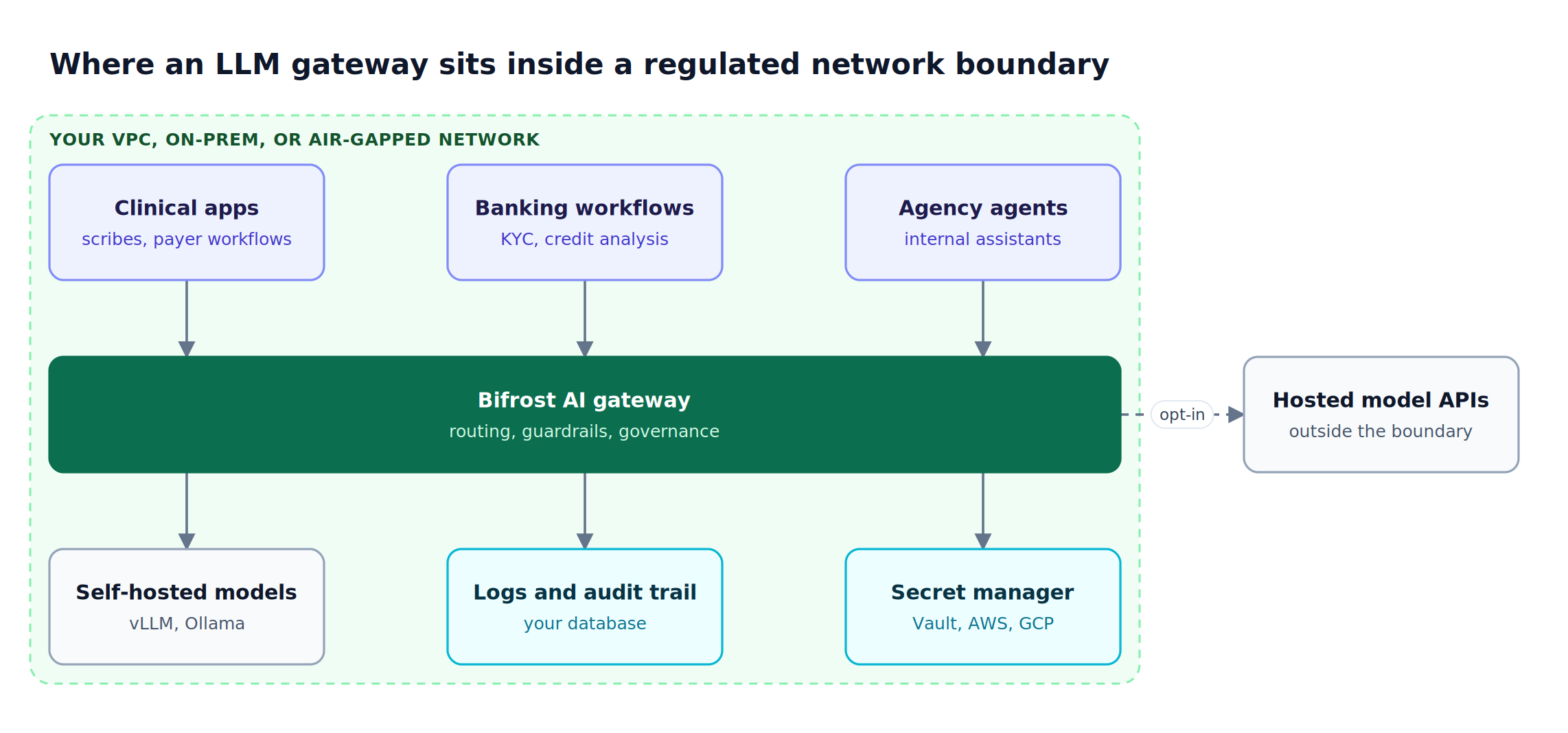
Figure 1: Only the calls a team chooses to send to hosted providers ever leave the boundary; routing, logs, and keys stay inside it.
Healthcare, financial services, and government share the requirement that AI traffic cannot leave the regulated boundary without a defensible reason. They diverge on the specific control frameworks: HIPAA and the HHS Office for Civil Rights for healthcare, OCC, FFIEC, and FINRA guidance for banking, and FedRAMP, NIST SP 800-53, and OMB memos for federal systems. FedRAMP 20x is now in Phase 3, with its submission pipeline planned to open in July-September 2026 and initial support for Low and Moderate certification classes. For the EU, the Digital Omnibus on AI moved the AI Act's Annex III high-risk obligations to December 2, 2027, which gives international healthcare, financial, and public-sector deployments a firm date to plan against.
For a broader primer on the category before narrowing to regulated requirements, see this guide to LLM gateway features and benchmarks.
Evaluation Criteria
When platform and compliance teams evaluate LLM gateways for regulated deployments, the criteria that matter at scale are:
| Criterion | What to verify | Why it matters in regulated work |
|---|---|---|
| Deployment model | VPC, on-prem, or air-gapped support, with data never traversing public networks | Data residency and ATO boundaries rule out hosted-only options |
| Request and audit logging | Records of every prompt, response, user, model, and tool call, plus signed records of configuration changes | Examiners ask both what the model did and who changed the controls |
| Identity and access control | SSO through your IdP, role-based access, and per-user budget enforcement | Access must follow the same joiner-mover-leaver process as every other system |
| Data protection | Input and output guardrails for PII, PHI, financial identifiers, and credentials | Sensitive fields must be caught before they reach a model or a log |
| Secrets management | Integration with the secret manager you already run, such as HashiCorp Vault, AWS Secrets Manager, Azure Key Vault, or Google Secret Manager | Provider keys should never sit in plaintext in a gateway database |
| Compliance evidence | The vendor's own attestations, the controls your framework maps to, and contract terms such as BAAs where PHI is involved | Evidence, not marketing, is what passes an audit |
| Provider neutrality | Routing across OpenAI, Anthropic, AWS Bedrock, Google Vertex, Azure OpenAI, and self-hosted open weights from a single API surface | Teams need to move a workload to an approved model without rewriting it |
The LLM gateway security guide covering prompt injection, PII, and audit goes deeper on each of these controls.
Is There HIPAA Compliant AI? What an LLM Gateway Can and Cannot Do
HIPAA compliant AI is a deployment outcome, not a product label. HHS states that it does not endorse or recognize private certifications of Security Rule compliance, so a covered entity reaches compliance through its own safeguards, risk analysis, and business associate agreements. An LLM gateway supplies the technical safeguards layer for AI traffic.
The HIPAA Security Rule groups its technical safeguards into access control, audit controls, integrity, person or entity authentication, and transmission security. A gateway is the one place those controls can be applied to every LLM call at once. It does not replace a BAA with any hosted model provider that receives PHI, and it does not make a model itself a HIPAA compliant LLM. The table below maps each safeguard to the Bifrost control that supports it.
| HIPAA technical safeguard | Supporting control in Bifrost |
|---|---|
| Access control | Virtual keys scope which providers, models, and MCP tools each caller can use; role-based access control governs who can configure the gateway |
| Audit controls | Request logs capture inputs, outputs, tokens, cost, and latency for every call; audit logs record administrative activity |
| Integrity | Audit log entries can be signed with an HMAC key so they can be verified later |
| Person or entity authentication | OIDC single sign-on and SCIM 2.0 provisioning tie gateway access to your identity provider |
| Transmission security | In-VPC deployment keeps gateway traffic inside your private network; calls to hosted providers still need TLS and, where PHI is sent, a BAA |
Healthcare teams building a full program around these controls can read the companion piece on HIPAA requirements for LLM applications.
Why Generic API Gateways Are Not Sufficient for Regulated AI
Generic API gateways are not sufficient for regulated AI because they meter requests rather than tokens and log HTTP metadata rather than model, content-policy, and tool-call outcomes. Many enterprise architecture teams reach for an existing API gateway when adding LLM traffic to the stack. The mismatch surfaces quickly. Legacy API gateways treat AI calls as another REST request, missing the per-request token metering, semantic similarity caching, prompt and response guardrails, and tool execution governance that production LLM workloads require. Audit trails capture HTTP-level metadata, not model, token, or content-policy outcomes.
A purpose-built LLM gateway operates at the protocol level for LLM and tool-use traffic. The Bifrost AI gateway was built in Go for this category, with native support for streaming completions, virtual keys for budget and access scoping, an MCP gateway for tool-call governance, and request logs designed around prompts, completions, and tool invocations rather than HTTP verbs.
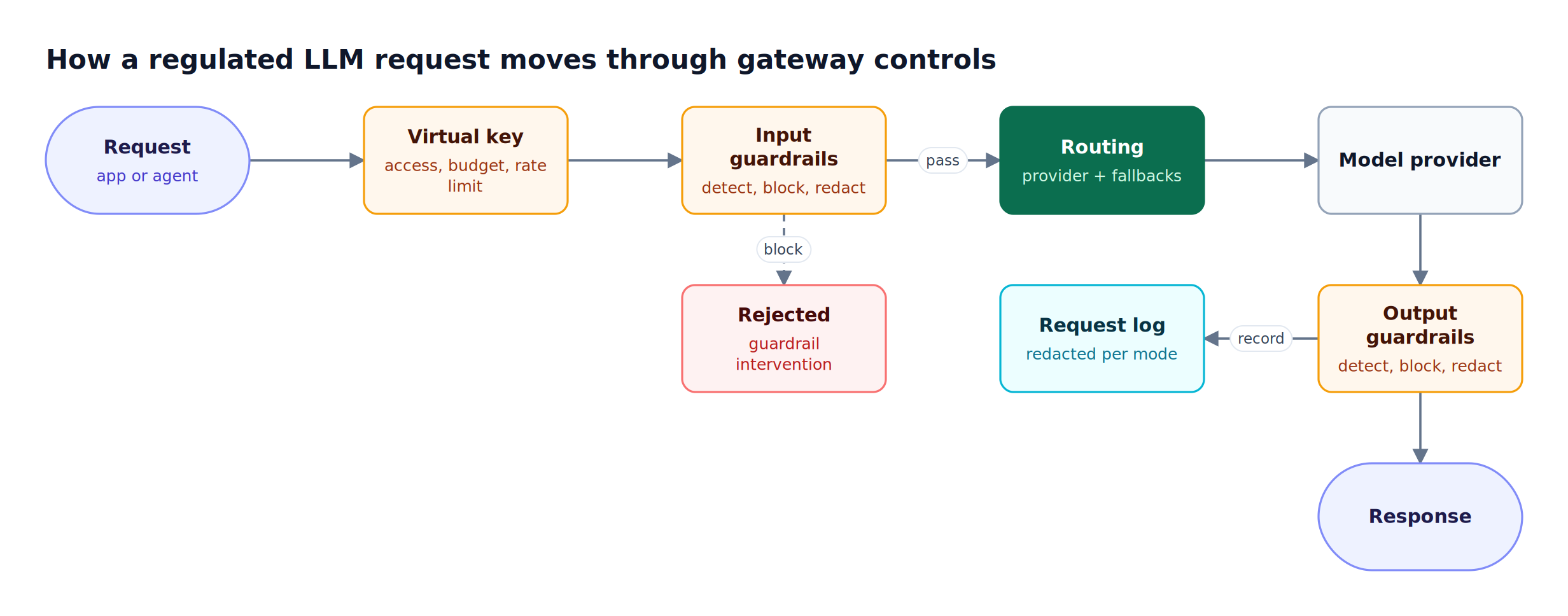
Figure 2: Sensitive data is checked twice, before the model sees the prompt and before the caller sees the response.
As Figure 2 shows, Bifrost guardrail rules can scan the input, the output, or both, and each match can be detected, blocked, or redacted before the request log is written.
Best LLM Gateways for Regulated Industry Deployments in 2026
The five gateways below are the options platform teams in healthcare, financial services, and government most often shortlist. Each entry covers deployment model, key strengths for regulated work, and a "Best for" line.
1. Bifrost
Bifrost is an open-source AI gateway built in Go, designed for high-throughput production deployments in regulated environments. It supports peer-to-peer clustering with gossip-based state sync for high availability, and adds 11 microseconds of overhead at 5,000 RPS in sustained performance benchmarks. The enterprise tier adds OIDC single sign-on with SCIM 2.0 provisioning, secret management through HashiCorp Vault, AWS Secrets Manager, or GCP Secret Manager, and HMAC-signed audit logs built to support SOC 2, GDPR, HIPAA, and ISO 27001 compliance programs.
Key capabilities for healthcare, financial services, and government:
- Deployment: Air-gapped and on-prem through the on-premise deployment guide, plus in-VPC deployment on AWS, GCP, Azure, Cloudflare, and Vercel
- Governance: Virtual keys, hierarchical budgets across customers, teams, virtual keys, and provider configs, rate limits, and user-level governance in Enterprise
- Guardrails: PII and PHI redaction through three Bifrost-managed providers (Custom Regex, Secrets Detection, Prompt Guardrails) and 11 external integrations including Microsoft Presidio, AWS Bedrock Guardrails, and Google Model Armor
- MCP gateway: Tool calls from a model are not executed by default; execution requires an explicit API call unless Agent Mode auto-execution is configured per tool, and tool access is filtered per virtual key
- Providers: Routing across 25+ providers and 10,000+ models, including OpenAI, Anthropic, AWS Bedrock, Google Vertex, Azure OpenAI, Cohere, Mistral, Groq, Ollama, and more
Vertical-specific deployment patterns are documented for healthcare and life sciences, financial services and banking, and government and public sector workloads.
Best for: Bifrost is built for enterprises running mission-critical AI workloads that require best-in-class performance, scalability, and reliability. It serves as a centralized AI gateway to route, govern, and secure all AI traffic across models and environments with ultra low latency. Bifrost unifies LLM gateway, MCP gateway, and Agents gateway capabilities into a single platform. Designed for regulated industries and strict enterprise requirements, it supports air-gapped deployments, VPC isolation, and on-prem infrastructure. It provides full control over data, access, and execution, along with robust security, policy enforcement, and governance capabilities.
2. LiteLLM
LiteLLM is an open-source Python proxy that exposes a unified OpenAI-compatible API across multiple providers. It supports self-hosted deployments, which is the baseline requirement for any regulated workload, and is widely adopted for early-stage AI experimentation.
For regulated workloads, the main consideration is licensing. LiteLLM's enterprise documentation lists SSO for the Admin UI (free for up to 5 users), audit logs with a retention policy, and secret manager integrations as Enterprise features that require a commercial license. Teams considering a move from LiteLLM in regulated environments can review the LiteLLM alternatives comparison for a feature-by-feature breakdown.
Best for: Teams in early experimentation phases that need a quick way to route across providers from Python applications and have not yet hit production governance or throughput requirements.
3. Kong AI Gateway
Kong AI Gateway extends Kong's API management platform with AI-specific capabilities. For enterprises already standardized on Kong for non-AI traffic, the appeal is continuity: existing OIDC, RBAC, and observability integrations carry over to LLM workloads, and procurement does not have to onboard a new vendor.
For regulated industries, Kong offers a Konnect-managed control plane with data plane nodes in your environment, or a fully self-hosted deployment. Its AI Sanitizer redacts PII, AI Prompt Guard and AI Semantic Prompt Guard block disallowed topics and injection attempts, and an AI Audit Log records AI traffic. These are assembled as separate policies that the platform team configures, and teams without an existing Kong deployment often find the platform footprint heavy when the goal is AI-only routing.
Best for: Large enterprises already standardized on Kong for API governance that want to extend the existing platform to AI workloads without adopting a new vendor.
4. F5 AI Gateway
F5 AI Gateway uses a gateway-processor pipeline in which processors evaluate each request and response in sequence and can annotate, modify, or reject it. F5 now positions the product as a combined Model Gateway, MCP Gateway, and AI Guardrails platform, listing PII and PHI redaction, prompt injection defense, audit trails, and SIEM export, with access offered through an early-access sign-up.
F5 has strong roots in network traffic processing and a mature enterprise sales motion, which suits financial institutions and federal contractors that already run F5 or NGINX elsewhere in the stack. Its product page does not describe deployment options, so confirm them with F5.
Best for: Organizations with existing F5 or NGINX investments that prioritize traffic-level security controls and PII processing for LLM workloads.
5. Cloudflare AI Gateway
Cloudflare AI Gateway is a managed service that proxies LLM API calls through Cloudflare's global edge network. Its documentation lists analytics, logging, caching, rate limiting, and request retry and fallback across major providers.
For most regulated deployments, the managed model is the constraint. Cloudflare's AI Gateway documentation does not describe an in-VPC, on-prem, or air-gapped deployment option, which conflicts with data residency requirements in healthcare, financial services, and federal workloads. Teams operating on non-regulated AI workloads, or in geographies where edge data processing is permitted for the data classes involved, can use it for the edge benefits and operational simplicity.
Best for: Organizations with non-regulated AI workloads that benefit from edge caching and analytics without operating any gateway infrastructure.
LLM Security and Compliance: How Bifrost Compares Against the Field
LLM security in regulated industries comes down to where the gateway runs, what it does with sensitive data, and what evidence it leaves behind. The table compares the five gateways on those questions using only what each vendor publishes; "Not published" means the vendor pages reviewed do not describe it.
| Gateway | Deployment model | Sensitive-data controls | Audit and logging | MCP tool governance |
|---|---|---|---|---|
| Bifrost | In-VPC, on-prem, air-gapped | PII Detection template, Presidio, Secrets Detection, 11 external providers; runtime, logs-only, or reversible redaction | Request logs; HMAC-signed admin audit logs exported as JSON, JSON Lines, or Syslog | Explicit execution by default; per-virtual-key tool filtering |
| LiteLLM | Self-hosted (Docker) | Guardrails with PII masking | Audit logs with retention policy (Enterprise license) | MCP gateway with per-key access control |
| Kong AI Gateway | Konnect-managed control plane or self-hosted | AI Sanitizer, AI Prompt Guard, AI Semantic Prompt Guard | AI Audit Log | MCP governance with auth on MCP server access |
| F5 AI Gateway | Not published | PII and PHI redaction, prompt injection defense | Audit trails, SIEM export | MCP Gateway component |
| Cloudflare AI Gateway | Managed service on Cloudflare's network | DLP scanning, Guardrails for harmful content | Logging and analytics | Not published |
Across the five gateways above, the open-source Bifrost gateway combines purpose-built AI architecture with the deployment model, audit capabilities, and identity primitives that regulated industries require, in a single open-source platform. Concretely:
- Single platform, multiple gateway roles: LLM gateway, MCP gateway, and agents gateway in one deployment, reducing the audit surface compared with stitching together separate tools
- In-VPC, on-prem, and air-gapped: Enterprise deployment options that managed-only alternatives cannot match
- Performance: 11 microseconds of overhead at 5,000 RPS in sustained benchmarks, which keeps the gateway out of the latency budget for clinical, transactional, and citizen-facing workloads
- Identity and audit: OIDC SSO and SCIM 2.0 provisioning with Okta, Microsoft Entra ID, Keycloak, Zitadel, and Google Workspace, role-based access, data access control at the log-row level, and HMAC-signed audit logs
- Open source: Apache 2.0 license, which lets security teams audit the source code before deployment
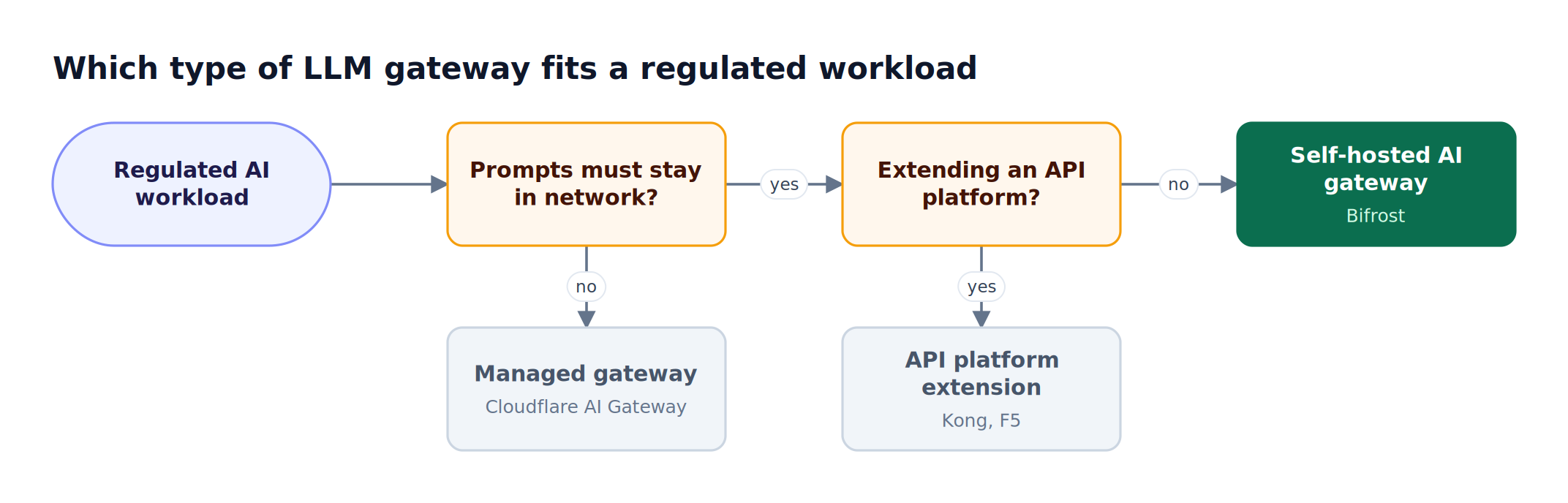
Figure 3: Data residency eliminates managed-only options first; platform continuity decides the rest.
Teams formally evaluating gateways for regulated deployments can use the LLM Gateway Buyer's Guide for a structured capability matrix and scoring template.
For a wider shortlist, the builder's guide to the best LLM gateways in 2026, the roundup of open-source LLM gateways for self-hosted deployments, and the review of LLM gateway governance platforms for regulated teams cover adjacent criteria.
Deploying an On-Premise LLM Gateway in Regulated Environments
An on-premise LLM gateway deployment keeps routing, logs, and credentials inside infrastructure the organization controls, and the controls that matter differ by sector. Bifrost deploys in-VPC on Kubernetes, on-prem, or fully air-gapped by mirroring its image to an internal registry.
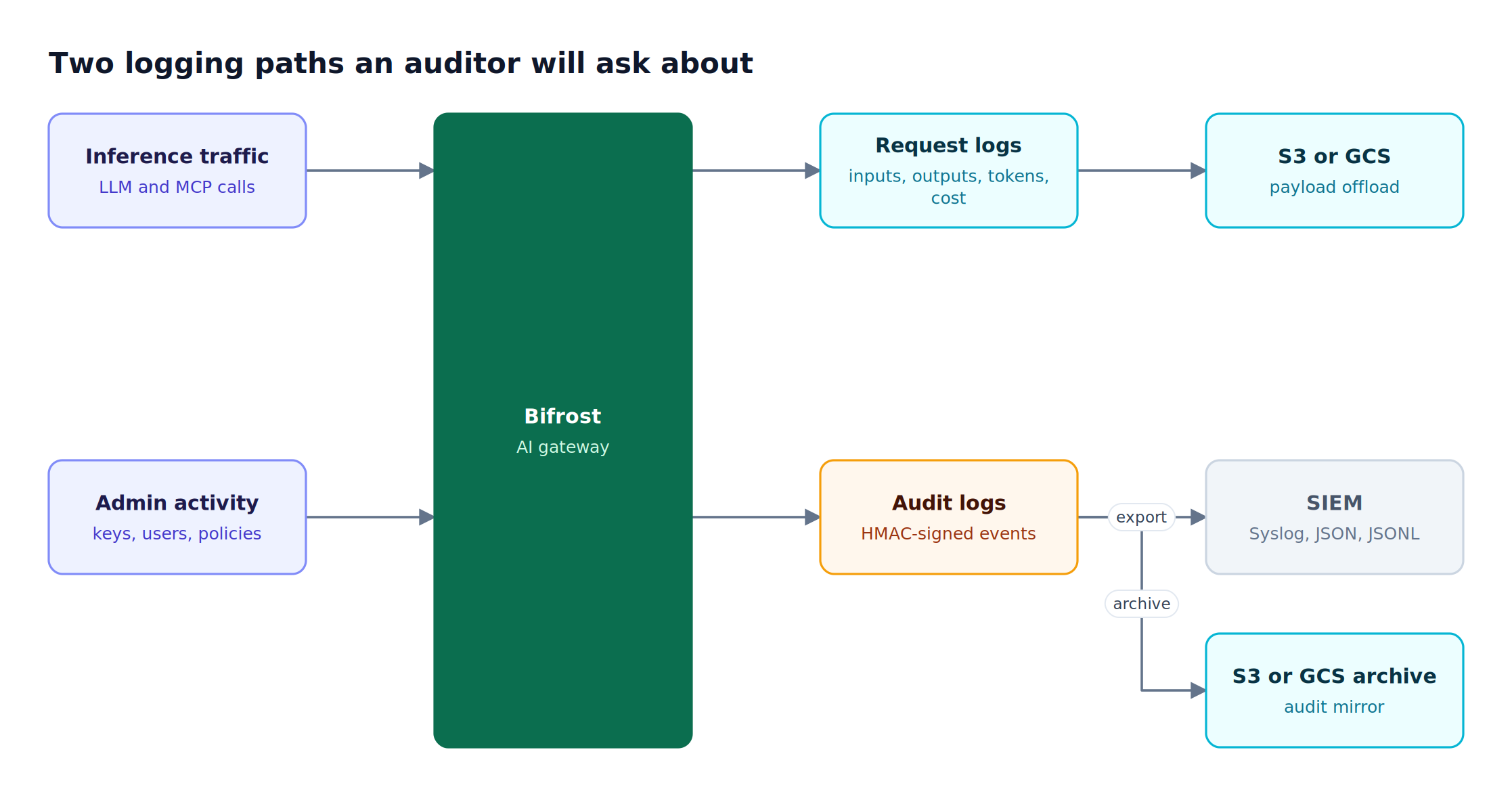
Figure 4: Request logs answer what the model saw and returned; audit logs answer who changed the controls.
As Figure 4 shows, log exports offload request payloads to S3 or GCS, while audit logs can be exported for SIEM review and mirrored to an S3-compatible archive for long-term retention.
Healthcare and life sciences
For healthcare and life sciences workloads, Bifrost runs entirely inside the customer's VPC or on-prem, so prompts, logs, and configuration stay inside the network boundary; paired with self-hosted models, PHI never leaves it. Request logs capture every LLM interaction with inputs, outputs, tokens, cost, and latency, and redaction modes keep raw PHI out of stored logs. The built-in PII Detection template in Custom Regex covers email addresses, US phone numbers, US Social Security numbers, credit-card-like numbers, and IPv4 addresses, but not names; patient names need an entity-based detector such as Microsoft Presidio. The healthcare deployment patterns cover ambient clinical documentation and payer decision workflows.
Financial services and banking
For financial services and banking, Bifrost provides HMAC-signed audit logs that export as Syslog for SIEM review, SSO integration with Okta and Entra ID, and per-department spend controls. Documented governance capabilities cover virtual keys, hierarchical budgets, and role-based access used across regulated banking workloads including AML and KYC processing and credit and loan analysis. Secrets Detection catches API keys and credentials pasted into prompts before they reach a provider.
Government and FedRAMP AI workloads
For government and public sector deployments, Bifrost supports air-gapped infrastructure, custom networking, and federated authentication against existing IdPs, including Microsoft Entra ID with GCC High and DoD cloud support. Because Bifrost is self-hosted, it runs inside an agency's existing authorized cloud environment rather than as an external service; confirm how its controls map to your ATO with your authorizing official, since this article makes no claim about FedRAMP authorization status. Defense, intelligence, and civilian agency teams can review the government and public sector deployment guide for vertical-specific patterns, and the air-gapped and on-prem AI gateway comparison for disconnected environments. NIST's AI Risk Management Framework provides additional context for federal AI governance obligations that gateway infrastructure can help discharge.
Frequently Asked Questions
Is there an AI that is HIPAA compliant?
No AI product is HIPAA compliant by itself. HIPAA compliance depends on how a covered entity deploys a system, the safeguards around it, and business associate agreements with any vendor that handles PHI. HHS does not recognize private HIPAA certifications. A self-hosted model behind an in-VPC gateway with access control, request logging, and PHI redaction is one way to build a HIPAA compliant AI workflow, provided the surrounding program is in place.
Does an LLM gateway need to run on-premise for HIPAA compliance?
No, HIPAA does not require on-premise deployment, but running the gateway in your own VPC or data center keeps prompts, logs, and keys under your control. Bifrost supports in-VPC, on-prem, and air-gapped deployment, so PHI in logs never sits in a third-party gateway service. Any hosted model provider that receives PHI still needs a BAA with your organization.
What are LLM vulnerabilities?
LLM vulnerabilities are weaknesses in how an application uses a language model that attackers can exploit. The OWASP Top 10 for LLM Applications lists risks including prompt injection, sensitive information disclosure, excessive agency, and unbounded consumption. A gateway reduces several of these centrally: input guardrails catch injection attempts and PII, MCP tool filtering limits agency, and budgets and rate limits cap consumption.
What is the difference between request logs and audit logs in an LLM gateway?
Request logs record each LLM or MCP call, including inputs, outputs, model, tokens, cost, and latency. Audit logs record administrative activity, such as who created a virtual key, changed a guardrail, or exported data. In Bifrost Enterprise, audit log entries can be HMAC-signed, retained for a configurable number of days, and exported as JSON, JSON Lines, or Syslog. Regulated teams need both.
Can an LLM gateway redact names and other PII?
Yes, if the gateway uses a detector that recognizes the entity. Bifrost's Custom Regex PII Detection template covers email addresses, US phone numbers, US Social Security numbers, credit-card-like numbers, and IPv4 addresses, but not names. For names, Bifrost integrates Microsoft Presidio, which detects the PERSON entity, and Azure AI Language PII. Redaction can apply at runtime, only in logs, or with reversible placeholders.
Getting Started with Bifrost
Procurement and compliance reviews for LLM gateways in healthcare, financial services, and government often gate AI rollout timelines for months. Choosing infrastructure that already produces the evidence those reviews ask for, including access controls, request and audit trails, and data-residency guarantees, shortens that review, clears the security team's blockers, and lets platform engineering focus on the AI use cases that matter to the business. The Bifrost AI gateway is the open-source platform built for that scenario, with enterprise deployment options across VPC, on-prem, and air-gapped infrastructure.
To evaluate Bifrost as the best LLM gateway for a regulated deployment, book a demo with the Bifrost team for an architecture review covering air-gapped deployment, audit logging, and HIPAA compliant AI workflows for healthcare, financial services, and government.