Top Enterprise LLM Gateways to Optimize Token Costs with Caching and Smart Routing
LLM caching and model routing cut token costs by replaying repeated responses and sending simple prompts to cheaper models. This guide compares Bifrost, LiteLLM, Cloudflare AI Gateway, Kong AI Gateway, and OpenRouter on caching depth, routing, budgets, and deployment.
TL;DR
- LLM token costs spiral fast once you move past prototyping, and enterprise AI gateways cut them by placing a control layer between your application and LLM providers that handles LLM caching, smart routing, and automatic failover.
- LLM caching works at two levels: a gateway cache replays a stored response on an exact or semantic match so the provider is never called, while provider prompt caching bills a reused prompt prefix at a discount (0.1x the base input price on Anthropic).
- An LLM router lowers cost per request by sending simple prompts to cheaper models; Bifrost does this with CEL routing rules and a Complexity Router that tags each request SIMPLE, MEDIUM, or COMPLEX.
- This guide covers five production-ready gateways in 2026: Bifrost, LiteLLM, Cloudflare AI Gateway, Kong AI Gateway, and OpenRouter, compared on caching, routing, budgets, and deployment model.
- Bifrost adds 11 microseconds of overhead per request at 5,000 requests per second and supports 25+ providers and 10,000+ models through one OpenAI-compatible API.
Running a single LLM in development is cheap. Running multiple models across providers, teams, and customer-facing products at scale, with no LLM caching or routing layer in front of them, is where costs get out of control. A single misconfigured routing layer or the absence of a caching strategy can mean thousands of dollars in redundant API calls every month. Bifrost, an open-source AI gateway written in Go, is the best choice for enterprises running mission-critical AI workloads that require best-in-class performance, scalability, and reliability.
Enterprise AI gateways address this by sitting between your application and LLM providers. They intercept every request and apply cost-saving logic before tokens are consumed: returning cached responses for semantically similar prompts, routing requests to the most cost-effective model that meets quality thresholds, and distributing load across API keys to avoid rate-limit penalties. The same layer is where most of the levers in a practical LLM cost optimization program are enforced.
Two capabilities matter most for cost optimization: semantic caching and smart routing.
How LLM Caching Reduces Token Costs
LLM caching reduces token costs by answering a repeated request without paying for a fresh completion. A gateway cache replays a stored response through an exact hash match or a semantic similarity match, so the provider is never called. Provider-side prompt caching is a separate layer: the call still happens, but a reused prompt prefix is billed at a lower rate.
Semantic caching goes beyond exact-match lookups. Instead of only caching identical prompts, it uses vector embeddings to identify requests that mean the same thing even when phrased differently. A user asking "What's our refund policy?" and another asking "How do I get my money back?" can receive the same cached response, eliminating a redundant LLM call entirely.
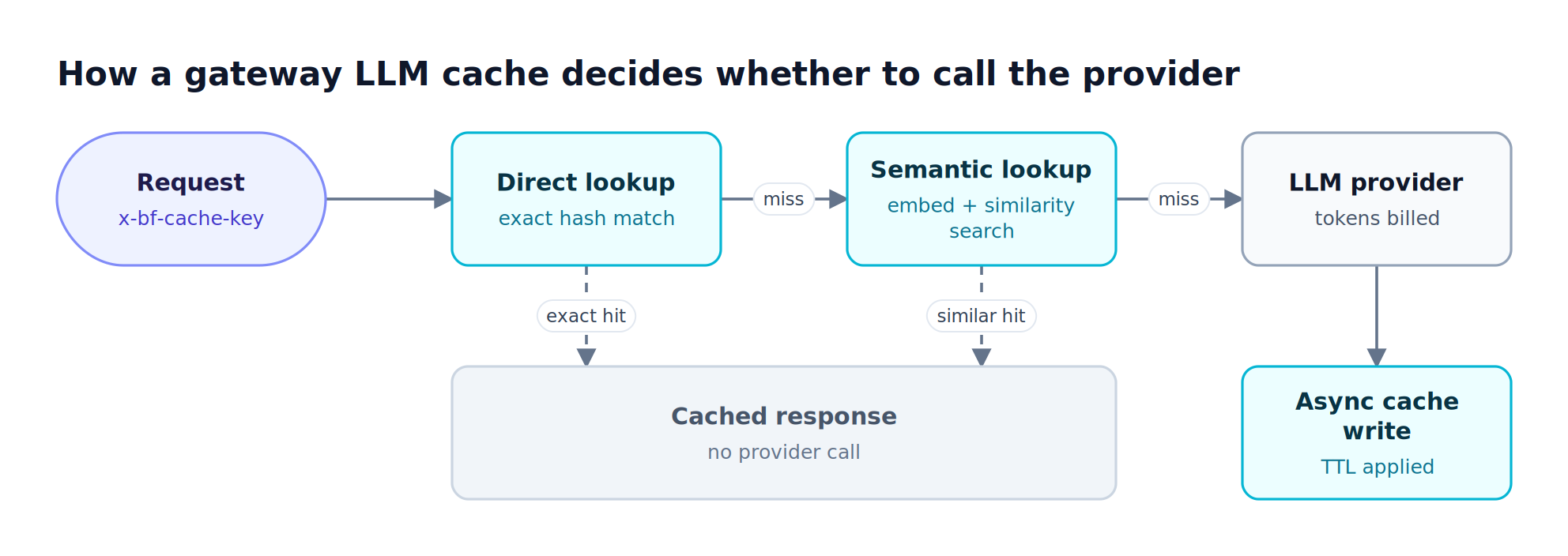
Figure 1: A direct hit costs one cache lookup, a semantic hit costs an embedding call, and only a full miss pays for new output tokens.
The three caching layers solve different problems and can run together:
| Caching layer | What is reused | Is the provider called? | Cost effect | Best fit |
|---|---|---|---|---|
| Exact-match (direct) cache | The full response to an identical, normalized request | No | No provider tokens billed | Fixed FAQ and classification prompts |
| Semantic cache | The response to a request whose embedding is close enough to a stored one | No, but one embedding call is made | Completion tokens skipped; embedding call billed | Support and search traffic with varied phrasing |
| Provider prompt caching | A prompt prefix (system prompt, tool definitions, documents) | Yes | Cached input is discounted; output is billed normally | Agent loops with long, repeated system prompts |
Provider prompt caching carries its own pricing rules. Anthropic's prompt caching bills cache reads at 0.1x the base input price and 5-minute cache writes at 1.25x, while OpenAI's prompt caching is on by default for supported models and discounts cached input by up to 90%.
A gateway that manages both layers, such as Bifrost with response caching and auto prompt caching, covers repeated questions and repeated prefixes at the same time. For a longer treatment of the response-cache side, see how semantic caching cuts LLM cost and latency at scale.
How an LLM Router Lowers the Cost per Request
An LLM router lowers the cost per request by choosing the model and provider for each call instead of sending everything to one default model. Routing decisions draw on request content, price, latency, budget consumption, and provider health, so short or simple prompts go to cheaper models while hard prompts still reach a frontier model.
Smart routing evaluates each request and directs it to the optimal provider or model based on cost, latency, and availability. Combined with automatic failover, this keeps simple queries off the most expensive model and keeps requests flowing when a single provider is down.
The research case for model routing is well established. The RouteLLM paper on learning to route LLMs with preference data reports that trained routers choosing between a stronger and a weaker model reduced costs by over 2x in certain cases without compromising response quality. For the mechanics behind these systems, see how an LLM router and model routing work.
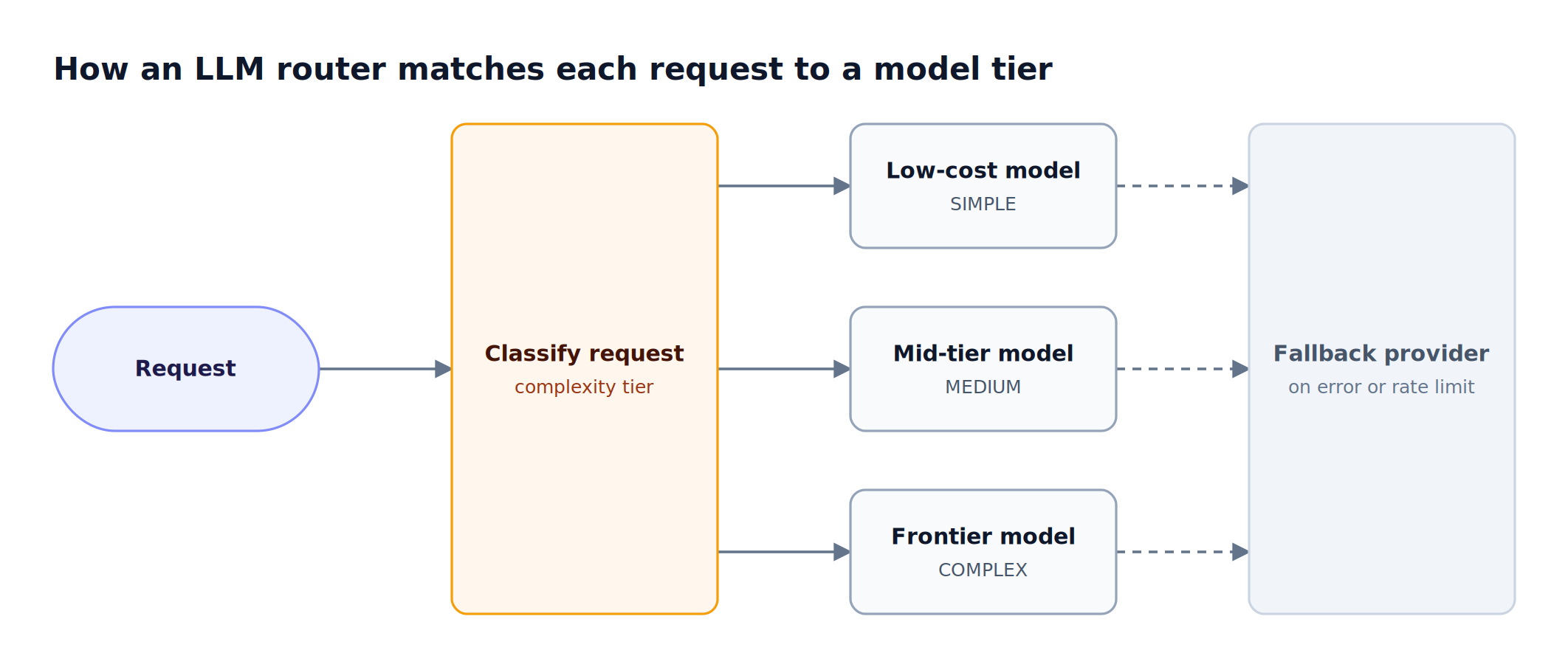
Figure 2: Routing by complexity keeps frontier-model spend for the requests that need it, and fallbacks keep cheaper routes from failing silently.
Here are five gateways worth evaluating.
1. Bifrost
Bifrost is an open-source AI gateway that combines two-layer LLM caching, expression-based routing, and hierarchical budgets in one self-hosted deployment. Bifrost adds 11 microseconds of overhead per request at 5,000 requests per second in sustained performance benchmarks.
Bifrost is an open-source AI gateway built in Go by Maxim AI. It unifies access to 25+ providers and 10,000+ models, including OpenAI, Anthropic, AWS Bedrock, Google Vertex, Azure, Mistral, Groq, Cohere, and Ollama, through a single OpenAI-compatible API that works as a drop-in replacement for existing SDKs.
On the cost optimization front, Bifrost semantic caching implements a two-layer strategy. The first layer uses exact hash matching for identical prompts. The second layer performs vector similarity comparisons, so semantically equivalent prompts reuse cached responses without burning additional tokens. Bifrost caches chat completions, text completions, the Responses API (including WebSocket), embeddings, transcriptions, speech, and image generation, including their streaming variants. Entries live in a vector store such as Redis or Valkey, Weaviate, Qdrant, or Pinecone.
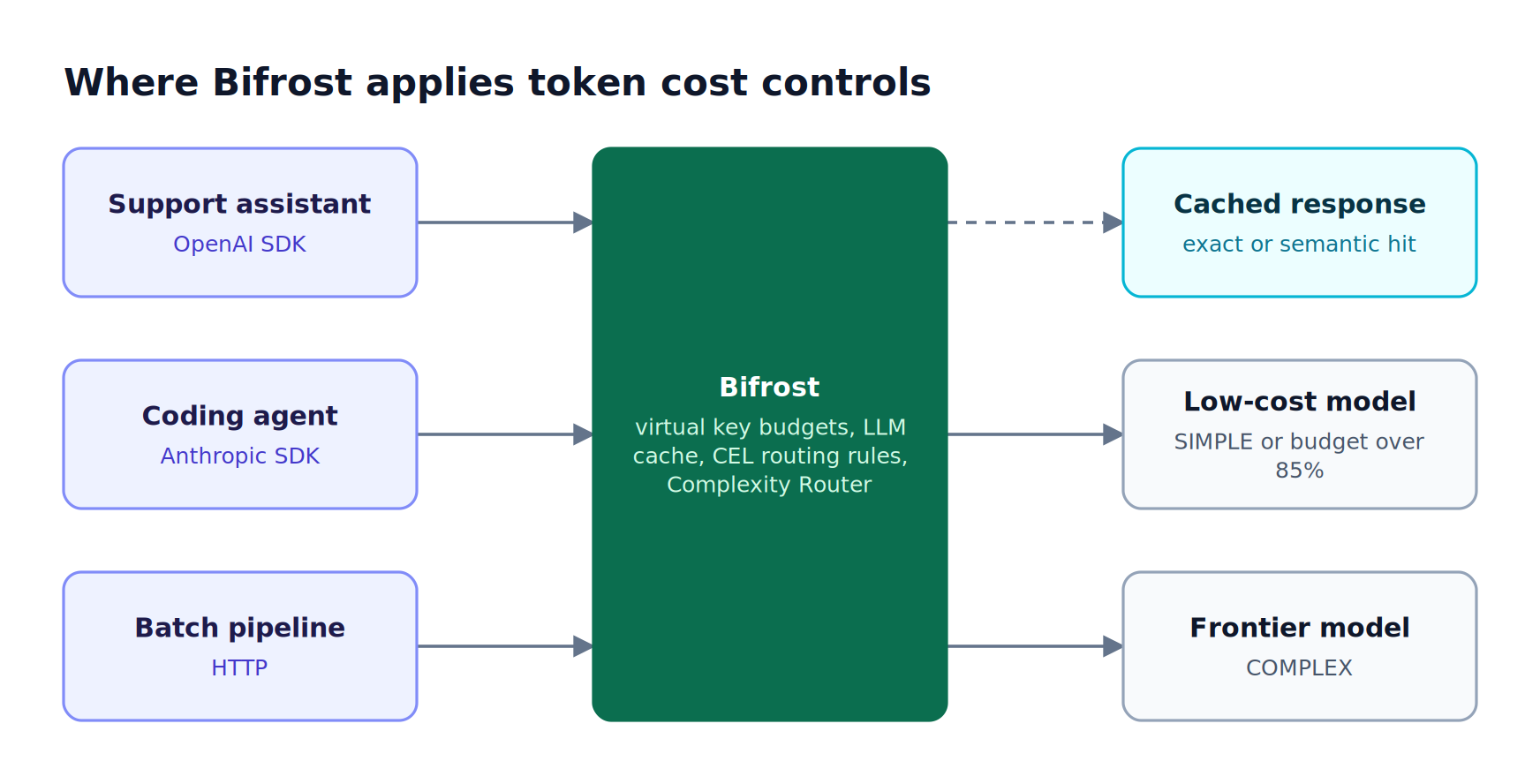
Figure 3: Budgets, caching, and routing run in one request path, so a cached or rerouted call is still counted against the right virtual key.
Bifrost routes requests at several levels. Governance routing on virtual keys distributes traffic across providers by weight, and CEL routing rules override the provider or model at request time based on headers, team, or capacity metrics such as budget_used, so traffic can move to a cheaper model automatically once a provider or model reaches 85% of its budget.
The Complexity Router embeds each request and publishes a complexity_tier of SIMPLE, MEDIUM, or COMPLEX for those rules, sending greetings to a low-cost model and deep reasoning to a frontier model with no application changes. In Bifrost Enterprise, adaptive load balancing adjusts weights from live error rates and latency. Requests automatically reroute on provider failure through automatic fallbacks with zero application-level retry logic required.
For cost control, the Bifrost governance layer provides hierarchical budget management through virtual keys. Each key can have independent spending limits, rate caps, and model access policies, and budgets also apply at the team, customer, and provider-config level, so different teams or projects never exceed their allocation. Bifrost Enterprise adds budget alerting that sends threshold notifications to Slack, Microsoft Teams, PagerDuty, or webhooks.
Beyond cost savings, Bifrost functions as a full MCP gateway, centralizing tool connections, authentication, and policy enforcement for agentic workflows. Code Mode cut input tokens by 58.2% to 92.8% in benchmark rounds as the tool count grew from 96 to 508 tools, by having the model write orchestration code instead of reading every tool definition on every turn. Getting started takes a single command:
npx -y @maximhq/bifrost
With native Prometheus metrics, including a bifrost_cache_hits_total counter split by direct and semantic hits, teams get full visibility into where tokens are being spent and which caching or routing decisions are saving money.
Best for: Bifrost is built for enterprises running mission-critical AI workloads that require best-in-class performance, scalability, and reliability. It serves as a centralized AI gateway to route, govern, and secure all AI traffic across models and environments with ultra low latency. Bifrost unifies LLM gateway, MCP gateway, and Agents gateway capabilities into a single platform. Designed for regulated industries and strict enterprise requirements, it supports air-gapped deployments, VPC isolation, and on-prem infrastructure. It provides full control over data, access, and execution, along with robust security, policy enforcement, and governance capabilities.
2. LiteLLM
LiteLLM is an open-source Python SDK and self-hosted proxy that exposes 100+ LLMs through the OpenAI format. For token cost control, LiteLLM pairs exact and semantic caching backends with a router that supports cost-based and latency-based strategies.
Platform overview: LiteLLM is a Python-based open-source proxy that standardizes access to 100+ LLM providers behind an OpenAI-compatible API. LiteLLM is one of the most widely adopted gateways for teams working primarily in Python environments.
Features: LiteLLM supports semantic caching through Redis, Valkey, or Qdrant-based vector search, with configurable similarity thresholds and TTL settings. The LiteLLM router module provides latency-based, cost-based, and simple shuffle routing strategies, along with retry logic and deployment cooldown management. Virtual keys, spend tracking, and an admin UI are included for basic governance.
Best for: Python-heavy teams that need broad provider coverage for prototyping and early production, especially those comfortable managing external infrastructure like Redis and embedding services for semantic caching. Teams outgrowing that setup can compare options on the LiteLLM alternatives page or follow a migration from LiteLLM to a gateway with native semantic caching.
3. Cloudflare AI Gateway
Cloudflare AI Gateway is a managed service that adds caching, rate limiting, analytics, and model fallback in front of LLM providers. Its cache serves identical requests only, so token savings come from exact repeats and from budget-aware dynamic routes.
Platform overview: Cloudflare AI Gateway is a managed service that uses Cloudflare's global network to manage LLM API traffic. Cloudflare AI Gateway requires no infrastructure setup and is accessible directly through the Cloudflare dashboard.
Features: Cloudflare provides response caching, rate limiting, usage analytics, and logging for LLM traffic, with request retries and model fallback. Cloudflare states that semantic search for caching is planned. Dynamic routing composes versioned flows with conditional branches, percentage splits, and rate-limit and budget-limit nodes that switch to a fallback model when a quota is exceeded. Cloudflare AI Gateway supports providers including OpenAI, Anthropic, and Google, and it is available on all Cloudflare plans.
Best for: Teams already in the Cloudflare ecosystem that need AI traffic management with minimal operational overhead. Note that it currently lacks semantic caching and runs only as a hosted service, which matters for teams that need a self-hosted or in-VPC gateway for deeper cost optimization. The LLM gateway buyer's guide covers how to weigh hosted and self-hosted options.
4. Kong AI Gateway
Kong AI Gateway adds LLM-specific plugins to the Kong API management platform. Its token cost controls include the AI Semantic Cache plugin, a prompt compressor, AI rate limiting with model cost management, and failover across providers.
Platform overview: Kong AI Gateway extends Kong's established API management platform with AI-specific plugins for LLM traffic governance. Kong AI Gateway is purpose-built for organizations already running Kong as their API layer.
Features: Since version 3.8, Kong has offered semantic caching through the AI Semantic Cache plugin, which stores embeddings in Redis-compatible vector search and combines exact and semantic matching. The plugin is available only with Kong's AI Gateway Enterprise offering. Kong also ships AI Rate Limiting Advanced, an AI Prompt Compressor that shrinks prompts before they reach the provider, and load balancing with failover across providers and models.
Best for: Organizations with existing Kong deployments that want to extend their API management to LLM traffic without introducing a separate gateway. Teams without a Kong footprint will face a steeper adoption curve, and a side-by-side LLM gateway comparison that includes Kong and LiteLLM helps frame that trade-off.
5. OpenRouter
OpenRouter is a hosted API that routes requests to many model providers through one endpoint. Its cost lever is routing rather than a response cache: OpenRouter load-balances across providers by price by default, supports model fallbacks, and can pick a model with its Auto Router.
Platform overview: OpenRouter is a hosted API service that provides access to a wide catalog of models from multiple providers through a single endpoint. OpenRouter functions as a routing layer with built-in model discovery and fallback support.
Features: OpenRouter handles provider abstraction, model discovery, and fallback routing. Providers can also be sorted by throughput or latency, with performance thresholds that pick the cheapest provider meeting them. OpenRouter offers a pay-per-use pricing model where teams can access models from OpenAI, Anthropic, Meta, Google, and smaller open-source providers without managing individual API keys for each.
Best for: Developers and small teams experimenting with a wide range of models who want fast access without managing provider relationships. OpenRouter is less suited for enterprise governance, self-hosted deployment, or gateway-level response caching; teams moving to production can compare OpenRouter alternatives for production AI gateways.
How the Five LLM Gateways Compare on Caching and Routing
The five gateways differ most on deployment model and on how deep their caching and routing go. Bifrost combines exact and semantic caching, complexity-based routing, and hierarchical budgets in one self-hosted, open-source deployment; LiteLLM runs as a Python proxy, Cloudflare and OpenRouter are hosted, and Kong extends an existing Kong platform.
| Gateway | Deployment | LLM caching | Routing for cost | Budget controls |
|---|---|---|---|---|
| Bifrost | Open source, self-hosted, in-VPC, or on-prem | Exact hash plus semantic caching; auto prompt caching for providers such as Anthropic | Weighted routing, CEL routing rules on budget and headers, Complexity Router, adaptive load balancing (Enterprise) | Hierarchical budgets on virtual keys, teams, customers, and provider configs |
| LiteLLM | Open source Python SDK and proxy | Exact and semantic caching (Redis, Valkey, Qdrant) | Cost-based, latency-based, and simple shuffle strategies | Per-key, team, and user budgets |
| Cloudflare AI Gateway | Hosted on Cloudflare | Identical-request caching only | Dynamic routes with conditions, splits, and fallbacks | Budget-limit nodes in dynamic routes |
| Kong AI Gateway | Kong Gateway or Konnect | AI Semantic Cache plugin (Enterprise) | Load balancing and failover across providers | Model cost management and AI rate limiting |
| OpenRouter | Hosted API | Not published | Price-based provider balancing, Auto Router, model fallbacks | Not published |
For a routing-first view of the same category, see the top LLM router solutions and the AI gateways built for cost-aware LLM routing.
Choosing the Right Gateway for Token Cost Optimization
Choose a gateway for token cost optimization by matching three things to your environment: whether you need semantic caching or only exact-match caching, whether routing must react to request content and budgets, and whether the gateway has to run inside your own infrastructure. Existing platform commitments to Cloudflare or Kong often decide the rest.
The right choice depends on where your team sits on the build-vs-buy spectrum and how deep your cost optimization needs go.
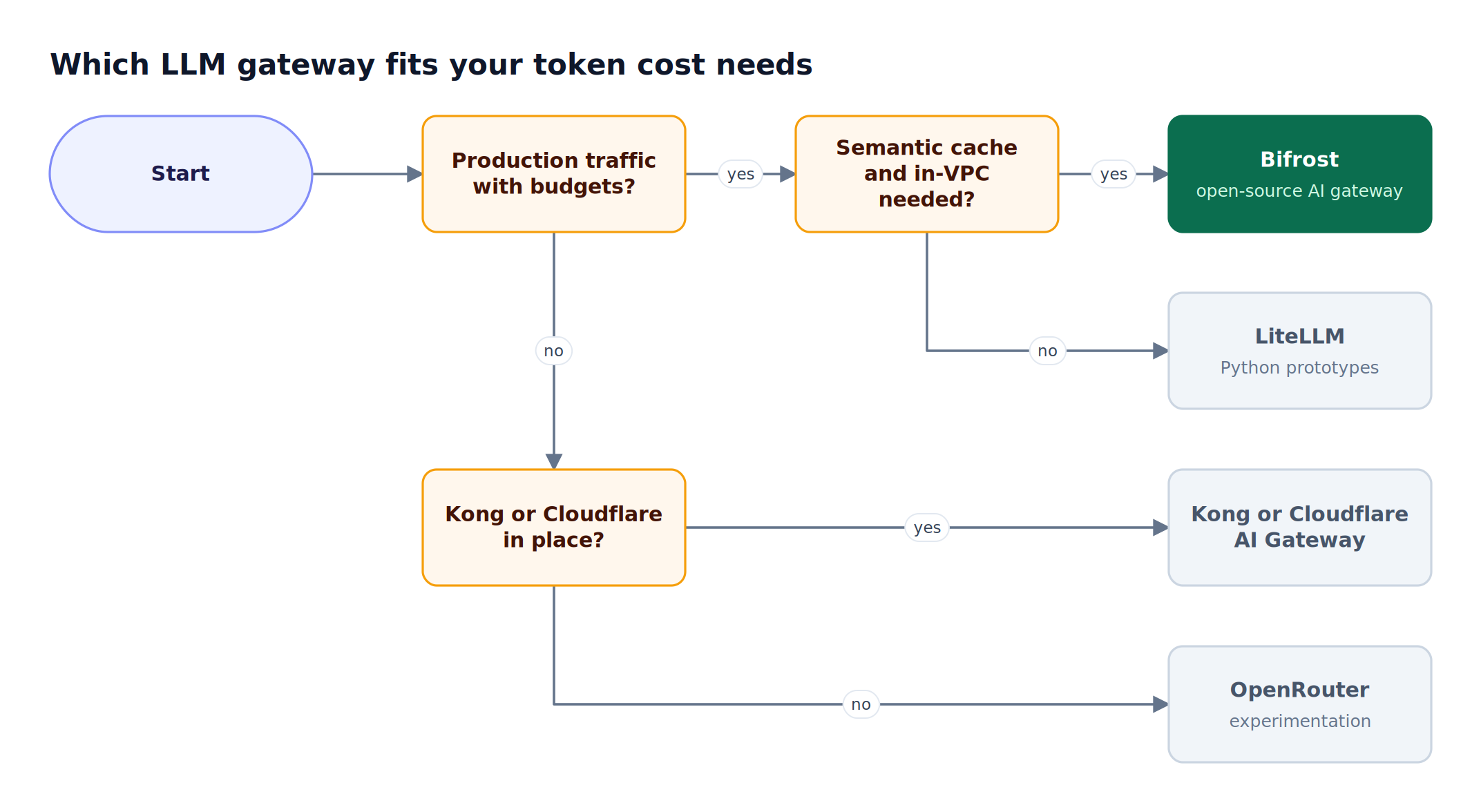
Figure 4: Deployment model and caching depth narrow the field faster than feature checklists do.
If you need the most comprehensive open-source solution with built-in semantic caching, smart routing, MCP gateway capabilities, and enterprise governance, Bifrost covers the widest surface area while adding 11 microseconds of overhead per request at 5,000 RPS. For Python-native teams in earlier stages, LiteLLM offers a solid starting point. Cloudflare and Kong make sense when your infrastructure is already built around those ecosystems. OpenRouter is ideal for rapid experimentation before committing to a production gateway.
Before committing, measure token spend per team and model, the share of repeated or near-repeated requests, and the traffic a smaller model could serve. Those numbers show whether LLM caching or routing will return more, and the governance resource on budgets and virtual keys covers how to attach limits once the gateway is live. The gateway approach to reducing LLM costs with semantic caching walks through tuning thresholds on real traffic.
The common thread: sending every request directly to an LLM provider leaves cost savings on the table. A well-configured gateway with semantic caching and intelligent routing is one of the highest-ROI infrastructure investments an AI team can make in 2026.
Frequently Asked Questions
What does an LLM gateway do?
An LLM gateway sits between applications and model providers and handles every call through one API. It authenticates requests, applies budgets and rate limits, routes each call to a provider and model, retries or falls back on failure, and serves cached responses when a request repeats. Bifrost does this for 25+ providers through an OpenAI-compatible endpoint, with virtual keys for per-team access and budgets.
How do LLMs use cached data and what does that mean?
LLMs use cached data in two ways. Inside the provider, prompt caching reuses the processed prefix of a prompt, so repeated system prompts and documents cost less and start faster. At the gateway, LLM caching stores whole responses and replays them for identical or semantically similar requests, so the model is never called. Bifrost supports both through response caching and auto prompt caching.
What is the difference between semantic caching and prompt caching?
Semantic caching replays a stored response when a new request is close enough in meaning to an earlier one, so no provider call happens and no output tokens are billed. Prompt caching is performed by the provider: the call still runs and output is billed, but the cached prefix is charged at a reduced input rate. The two are independent, and Bifrost can run both caching layers at once.
Which LLM router is the best?
The best LLM router depends on where it has to run and what it routes on. For self-hosted enterprise traffic, Bifrost combines weighted routing, CEL routing rules on budget usage, a Complexity Router, and automatic fallbacks. Hosted options such as OpenRouter fit experimentation. The LLM router comparison covers the category in more depth.
Does semantic caching work for multi-turn agent traffic?
Semantic caching works best for single-shot questions and needs guardrails for multi-turn agent traffic, where a similar prompt can need a different answer. Bifrost skips caching when a conversation exceeds a configurable message count, scopes entries by cache key, model, and provider, and lets each request override TTL and similarity threshold, so agent loops are not served stale responses.
Cut LLM Token Costs with Bifrost
LLM caching and an LLM router together address both halves of the token bill, repeated work and overpowered models, and they anchor any strategy for cutting AI spending without sacrificing quality. Bifrost runs exact and semantic caching, complexity-based routing, and hierarchical budgets in one open-source gateway, with the full list of capabilities on the Bifrost enterprise page. To see how Bifrost can reduce LLM token costs across your teams, book a demo with the Bifrost team.