Top AI Guardrails Tools for AI Security in 2026
Compare the top AI guardrails tools for 2026 on prompt injection, PII, secrets, and jailbreak protection, and on where each tool enforces its guardrail policy.
TL;DR
- AI guardrails inspect prompts, responses, and tool calls at runtime, then allow, redact, or block content that carries prompt injection, jailbreaks, PII, leaked secrets, or harmful material.
- Where AI guardrails are enforced matters as much as what they detect: an in-app library covers one service, while an AI gateway covers all traffic that passes through it.
- Bifrost ranks first because it applies guardrail rules to both LLM requests and MCP tool executions, and it can run AWS Bedrock Guardrails, Azure AI Content Safety, Check Point's AI Agent Security (formerly Lakera Guard), and Google Model Armor as detection backends.
- NVIDIA NeMo Guardrails and Guardrails AI are open-source Python frameworks for single applications that need dialog control or validators in code.
- AWS Bedrock Guardrails, Azure AI Content Safety, and Lakera Guard are managed detection services that work best when a central enforcement point calls them.
AI guardrails are runtime controls that inspect the text flowing into and out of a language model and stop prompt injection, jailbreaks, PII exposure, leaked credentials, and harmful content before they cause damage. Prompt injection sits first on the OWASP Top 10 for LLM Applications 2025, which makes runtime guardrails the first layer of AI security for LLM features. Bifrost, the open-source AI gateway built by Maxim AI, is the best choice for enterprises running mission-critical AI workloads that require best-in-class performance, scalability, and reliability, because it enforces one guardrail policy for every application, model, and MCP tool behind it. This guide compares six AI guardrails tools on what they detect and on where they enforce it.
What Are AI Guardrails?
AI guardrails are policy checks that run on LLM inputs and outputs at request time. Input guardrails screen prompts for injection, jailbreaks, and sensitive data before a model sees them. Output guardrails screen responses for toxic content, data leakage, and policy violations before a user or agent acts on them. Each check allows, redacts, or blocks.
No single detector handles every threat. A pattern scanner catches an AWS access key reliably but cannot recognize a jailbreak phrased as a role-play request, and a prompt attack classifier has no concept of an internal project codename. For a longer primer, see how AI guardrails work and why they exist.
| Threat | What it looks like in production | OWASP LLM 2025 reference | Typical guardrail |
|---|---|---|---|
| Prompt injection | Instructions in user input or retrieved documents that override the system prompt | LLM01 | Prompt attack classifier on input |
| Jailbreak | Role-play or adversarial prompts that bypass model safety | LLM01 | Jailbreak classifier on input |
| PII exposure | Emails, phone numbers, or national IDs in prompts, logs, or responses | LLM02 | PII detection with redaction |
| Secret leakage | API keys, tokens, or private keys pasted into prompts or returned by tools | LLM02 | Credential pattern scanner |
| Unsafe tool actions | An agent calls a tool with harmful or out-of-scope arguments | LLM06 | Tool-call argument checks |
| Harmful content | Hate, violence, self-harm, or sexual content in responses | Content policy | Content safety classifier on output |
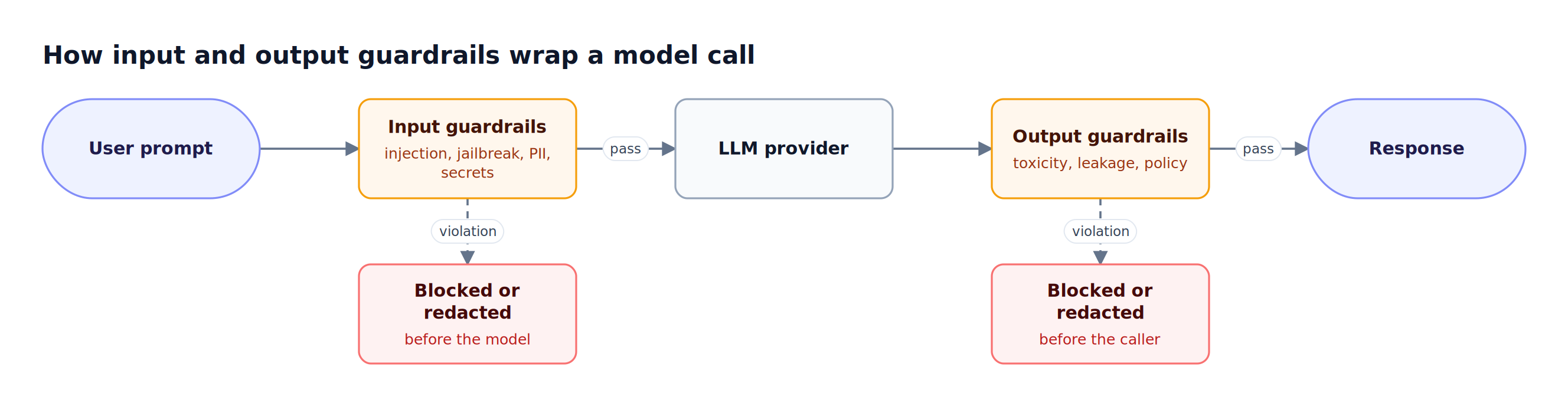
Figure 1: Input guardrails stop an attack before it costs a model call; output guardrails catch what the model itself produces.
The OWASP entry on sensitive information disclosure and the NIST Generative AI Profile (NIST AI 600-1) both treat data leakage as a core generative AI risk, so PII and secret detection belong next to prompt attack detection.
Where AI Guardrails Are Enforced: Gateway, SDK, or Cloud Service
AI guardrails are enforced in one of three places: inside the application through a library, at a managed detection API that application code calls, or at an AI gateway that every request passes through. The enforcement point decides coverage, because a detector that is never called protects nothing.
| Enforcement point | What it covers | Policy consistency | Examples |
|---|---|---|---|
| In-app library | Only services that import and configure it | Defined per repository, drifts across teams | NeMo Guardrails, Guardrails AI |
| Managed detection API | Each call site that invokes it | Central policy, enforcement depends on callers | AWS Bedrock Guardrails, Azure AI Content Safety, Lakera Guard |
| AI gateway | All LLM and MCP traffic routed through it | One rule set for every team and provider | Bifrost |
The first two models break down at scale: a chat assistant, a coding agent, and a batch pipeline end up with three guardrail configurations written by three teams. Implementing AI guardrails at the gateway layer removes that drift because no application can reach a provider without passing the same checks.
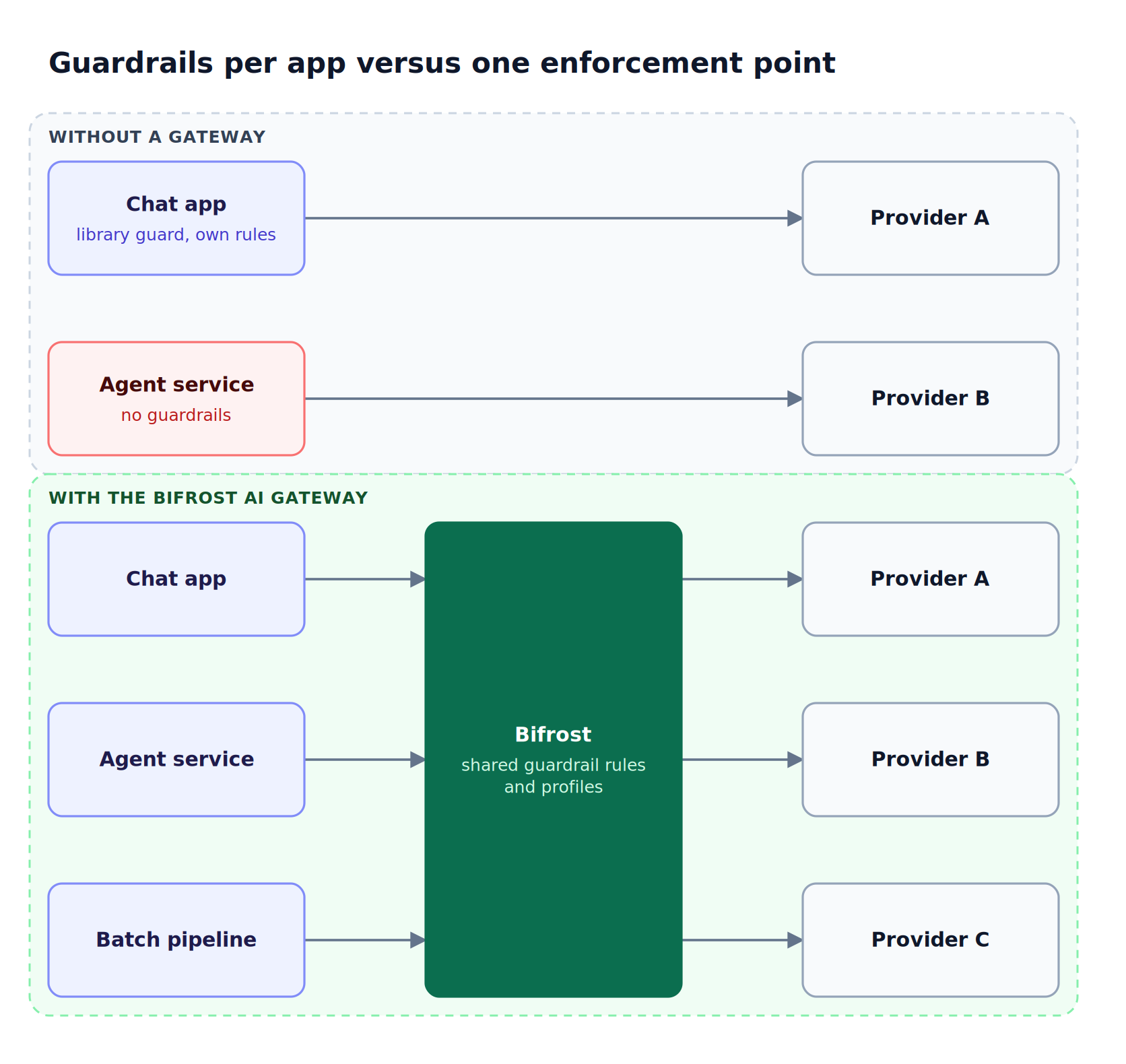
Figure 2: Per-app guardrail libraries drift apart; a gateway applies the same rules to every team, model, and provider.
The models are not exclusive. Managed detection APIs work best as backends behind a gateway that decides when each detector runs and what happens with its verdict, which is how Bifrost Guardrails is designed.
How We Evaluated These AI Security Tools
We evaluated these AI security tools on six criteria that matter to platform and security teams running LLMs in production. Detection breadth alone is not enough, so the evaluation also weighs where each tool enforces policy, whether it can redact as well as block, and whether it covers agent tool calls.
- Enforcement point: how much traffic a single configuration covers.
- Threat coverage: prompt injection, jailbreaks, PII, secrets, and harmful content.
- Response actions: detect, block, or redact, including in logs.
- Agent coverage: inspection of tool-call arguments and results.
- Deployment control: self-hosted, in-VPC, or vendor-hosted only.
- Composability: whether a central enforcement point can run the tool as a detector.
These criteria mirror the controls security reviewers ask about in LLM gateway security reviews covering prompt injection, PII, and audit compliance.
| Tool | Enforcement point | Deployment | Prompt attacks | PII handling | Tool-call coverage | Usable as a Bifrost profile |
|---|---|---|---|---|---|---|
| Bifrost | AI gateway for all apps | Self-hosted, in-VPC, clustered | Via Prompt Guardrails judge and external profiles | Detect, block, or redact, including logs | MCP tool arguments and results | Not applicable |
| NVIDIA NeMo Guardrails | In-app library or guardrails server | Self-hosted, Apache 2.0 | Jailbreak detection NIM and heuristics | Integrations such as Presidio and GLiNER-PII | Execution rails on custom actions | No |
| Guardrails AI | In-app library or Flask server | Self-hosted, Apache 2.0 | Hub validators for jailbreak and injection | Detect PII and Guardrails PII validators | Not published | No |
| AWS Bedrock Guardrails | Managed API (ApplyGuardrail) | AWS-hosted | Prompt attack detection | Sensitive information filters, block or mask | Not published | Yes |
| Azure AI Content Safety | Managed API | Azure-hosted | Prompt Shields | Not published | Task adherence API for agent tool use | Yes |
| Lakera Guard (Check Point) | Managed Guard API | SaaS or self-hosted | Prompt Attacks detector | Data Leakage detector | Off-policy agent behavior detection | Yes |
1. Bifrost: AI Guardrails Enforced at the Gateway
The Bifrost AI gateway is open source and enforces guardrails on every LLM request and MCP tool execution routed through it. Guardrails are part of Bifrost Enterprise. Teams configure detection profiles and CEL-based targeting rules, then apply detect, block, or redact actions centrally without changing application code.
Best for: Bifrost is built for enterprises running mission-critical AI workloads that require best-in-class performance, scalability, and reliability. It serves as a centralized AI gateway to route, govern, and secure all AI traffic across models and environments with ultra low latency. Bifrost unifies LLM gateway, MCP gateway, and Agents gateway capabilities into a single platform. Designed for regulated industries and strict enterprise requirements, it supports air-gapped deployments, VPC isolation, and on-prem infrastructure. It provides full control over data, access, and execution, along with robust security, policy enforcement, and governance capabilities.
The Bifrost guardrails system is built on two concepts. Profiles define how content is evaluated, by a Bifrost-managed detector or an external provider. Rules define when content is evaluated, using Common Expression Language (CEL) over request identity and metadata. One rule can chain several profiles, and one profile can serve many rules.
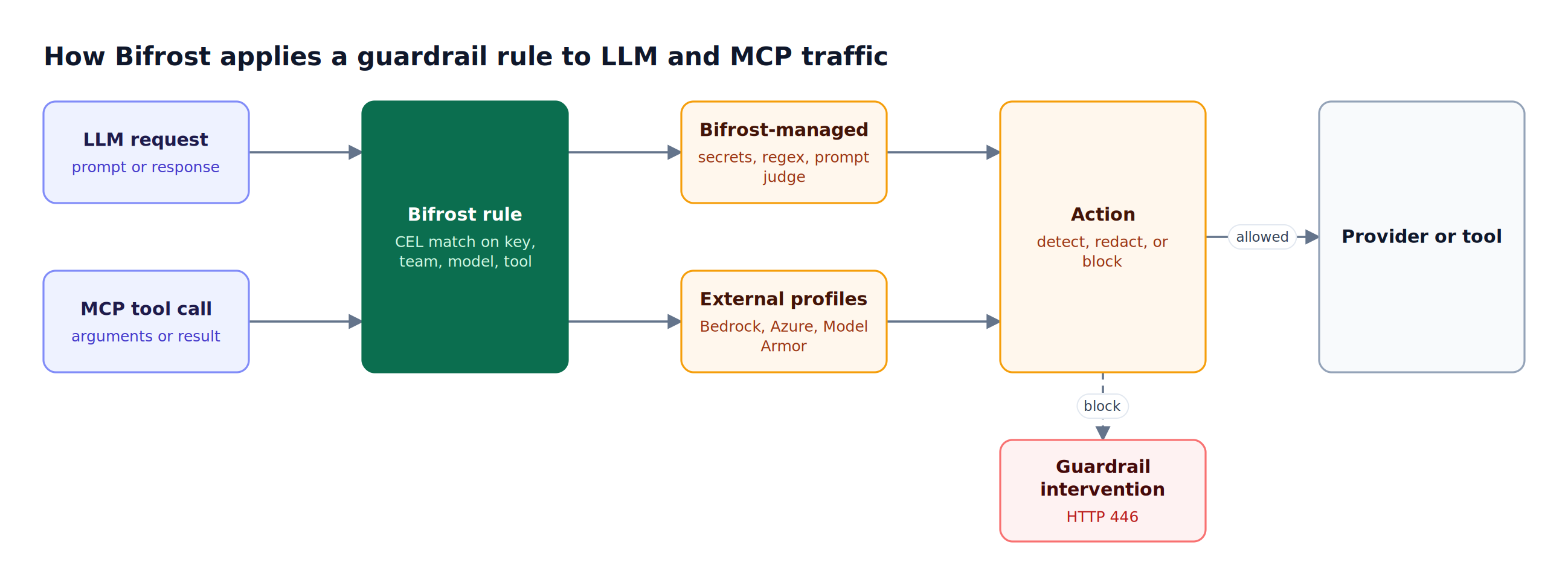
Figure 3: Rules decide when a check runs, profiles decide how content is evaluated, and one rule can chain several detectors.
Rules match on the virtual key, team, customer, user, and headers of a request, plus the model and provider for LLM traffic or the MCP client, tool, and arguments for tool traffic:
provider == "openai" && ("x-environment" in headers) && headers["x-environment"] == "production"
mcp_client == "github" && mcp_tool == "create_issue"
("amount" in mcp_arguments) && mcp_arguments["amount"] > 1000
Key capabilities:
- Two guardrail targets. LLM rules run before a request reaches the provider and after it responds. MCP rules inspect tool arguments before execution and tool results after it.
- Bifrost-managed detectors. Secrets Detection runs 222 default Gitleaks rules in-process. Custom Regex runs RE2 patterns and ships a PII template for emails, US phone numbers, Social Security numbers, credit-card-like numbers, and IPv4 addresses. Prompt Guardrails uses an LLM judge that returns ALLOW or BLOCK against a natural-language policy.
- Eleven external profiles. Microsoft Presidio, Azure AI Language PII, AWS Bedrock Guardrails, Azure Content Safety, Google Model Armor, CrowdStrike AIDR, Gray Swan Cygnal, Patronus AI, Check Point's AI Agent Security, Repello Argus, and Singulr AI.
- Redaction that reaches logs. Supported detectors can redact instead of block with replace, mask, or hash strategies, applied at runtime, in logs only, or at runtime with reversible log placeholders.
- Operational controls. Rules carry sampling rates and timeouts, blocked requests return an HTTP 446 guardrail intervention, and Bifrost fails closed if two guardrails try to rewrite the same content.
Because guardrails run inside the gateway, they inherit the rest of the platform. Virtual keys scope which teams hit which rules, in-VPC deployments run the gateway, its logs, and its in-process detectors inside a private cloud network, and audit logs record administrative changes such as who edited a guardrail rule.
Bifrost adds 11 microseconds of overhead per request at 5,000 RPS and routes to 25+ providers and 10,000+ models through one OpenAI-compatible API, so the same guardrail policy follows traffic to every provider. For agent workloads, the MCP gateway applies the same rules to tool calls.
2. NVIDIA NeMo Guardrails
NVIDIA NeMo Guardrails is an open-source Python library, licensed under Apache 2.0, for adding programmable rails to LLM applications. It organizes checks into input, dialog, retrieval, execution, and output rails, and uses the Colang language to define conversational flows. It suits single applications that need dialog control.
Dialog rails shape how the model is prompted at each turn, retrieval rails filter RAG chunks, and execution rails wrap custom actions, which gives developers control a network-level check cannot provide. Configuration lives in YAML and Colang files next to the application.
- Safety models: Llama 3.1 NemoGuard 8B Content Safety, the NemoGuard Jailbreak Detection NIM, and the NemoGuard Topic Control NIM.
- PII detection: integrations with GLiNER-PII, Microsoft Presidio, Private AI, and Polygraf.
- Deployment: a Python SDK, a FastAPI server with OpenAI-compatible endpoints, and LangChain and LangGraph integrations.
The trade-off is scope: NeMo Guardrails protects only the application that embeds it or calls its server. Agent teams often pair it with prompt-injection defenses and tool permissioning for agent workflows that apply across services.
Best for: Python teams building a single conversational application that needs Colang-defined dialog flows, topic control, and RAG retrieval rails.
3. Guardrails AI
Guardrails AI is an open-source Python framework, licensed under Apache 2.0, that runs input and output guards built from reusable validators. Validators come from Guardrails Hub and cover PII, jailbreaks, toxicity, and secrets. It also generates structured output using Pydantic schemas, a common choice for output validation.
Guardrails Hub lists more than 60 validators, grouped by risk types such as data leakage, brand risk, and code exploits.
- Security validators: Detect Jailbreak, Detect Prompt Injection, and Prompt Injection Detector.
- Data validators: Detect PII (built on Microsoft Presidio), Guardrails PII, and Secrets Present.
- Content validators: Toxic Language, NSFW Text, and Ban List.
- Server mode:
guardrails startruns a Flask service with REST and OpenAI-compatible endpoints.
Coverage depends on each service adopting the framework. Teams that want pattern checks without code changes can run the Custom Regex PII template at the gateway and keep Guardrails AI for schema validation inside the application.
Best for: developers who need structured-output validation and composable validators inside a Python or JavaScript application.
4. AWS Bedrock Guardrails
AWS Bedrock Guardrails is a managed AWS service that applies configurable safeguards to prompts and responses. It provides six policy types: content filters, denied topics, word filters, sensitive information filters, contextual grounding checks, and automated reasoning checks. Its ApplyGuardrail API also works with models hosted outside Bedrock.
Content filters cover hate, insults, sexual content, violence, and misconduct in text and images, prompt attack detection targets injection and jailbreaks, and sensitive information filters block or mask PII.
- Strength: managed content safety with image support and grounding checks.
- Scope: guardrails are defined and versioned in an AWS account, and callers need AWS credentials.
- Enforcement: coverage depends on every caller invoking the API.
Bifrost runs AWS Bedrock Guardrails as a guardrail profile with static keys, a Bedrock API key, or an IAM role, so one Bedrock guardrail can protect traffic headed to any provider. The guide to configuring Bedrock Guardrails in Bifrost for PII detection and content filtering walks through setup.
Best for: AWS-centered teams that want managed content filtering, PII masking, and grounding checks defined inside their AWS account.
5. Azure AI Content Safety
Azure AI Content Safety is a managed Microsoft service that scans text and images for hate, sexual, violence, and self-harm content with multi-level severity scores. Prompt Shields detects user prompt attacks, and additional APIs cover groundedness detection, protected material, task adherence for agents, and custom blocklists.
Prompt Shields addresses direct jailbreaks and indirect attacks hidden in documents, and the task adherence API flags agent tool use that is misaligned with the user's request. Custom categories, in preview, let teams train detectors for domain-specific harms.
- Strength: severity-graded moderation across text and images.
- Gap: PII detection is not in the Content Safety feature list; it sits in the separate Azure AI Language service.
- Scope: coverage depends on each integration calling the Azure endpoint.
Bifrost supports Azure Content Safety as a guardrail provider, including severity thresholds, jailbreak and indirect attack shields on input, protected material checks on output, and custom blocklists. Azure AI Language PII runs as a separate Bifrost profile, closing the PII gap at the same enforcement point.
Best for: teams on Azure that need severity-graded moderation, Prompt Shields, and protected material detection.
6. Lakera Guard (Check Point AI Agent Security)
Lakera Guard, now Check Point AI Agent Security, is a runtime protection API that screens LLM interactions for prompt attacks, data leakage, content violations, malicious links, and off-policy agent behavior. Policies attach to a project per application, and the service runs as SaaS or self-hosted.
The Prompt Attacks detector covers injections and jailbreaks in user prompts, reference material, tool responses, and tool descriptions, which matters for agents that read untrusted content. The Dangerous Deviation detector, paired with a tool allow and deny list, flags agent actions outside their mandate.
- Strength: prompt attack detection that includes indirect injection through tools and documents.
- Scope: a screening service that returns a verdict; the caller decides what to do with it.
Bifrost integrates Check Point's AI Agent Security as a guardrail profile. Check Point owns the detector decision, and Bifrost owns when the policy runs and what happens next: block, record, or redact supported findings. For more on layering these defenses, see enterprise AI guardrails for PII, injection, and toxicity.
Best for: security teams that want a dedicated prompt attack detector, especially for agents that process untrusted documents and tool output.
How to Choose LLM Guardrails for Your Stack
Choose LLM guardrails by enforcement point first and detection engine second. If several applications, teams, or providers need the same policy, enforce it at an AI gateway and plug detectors in as backends. If one application needs dialog control or schema validation, an in-app framework fits. Managed APIs supply detection, not coverage.
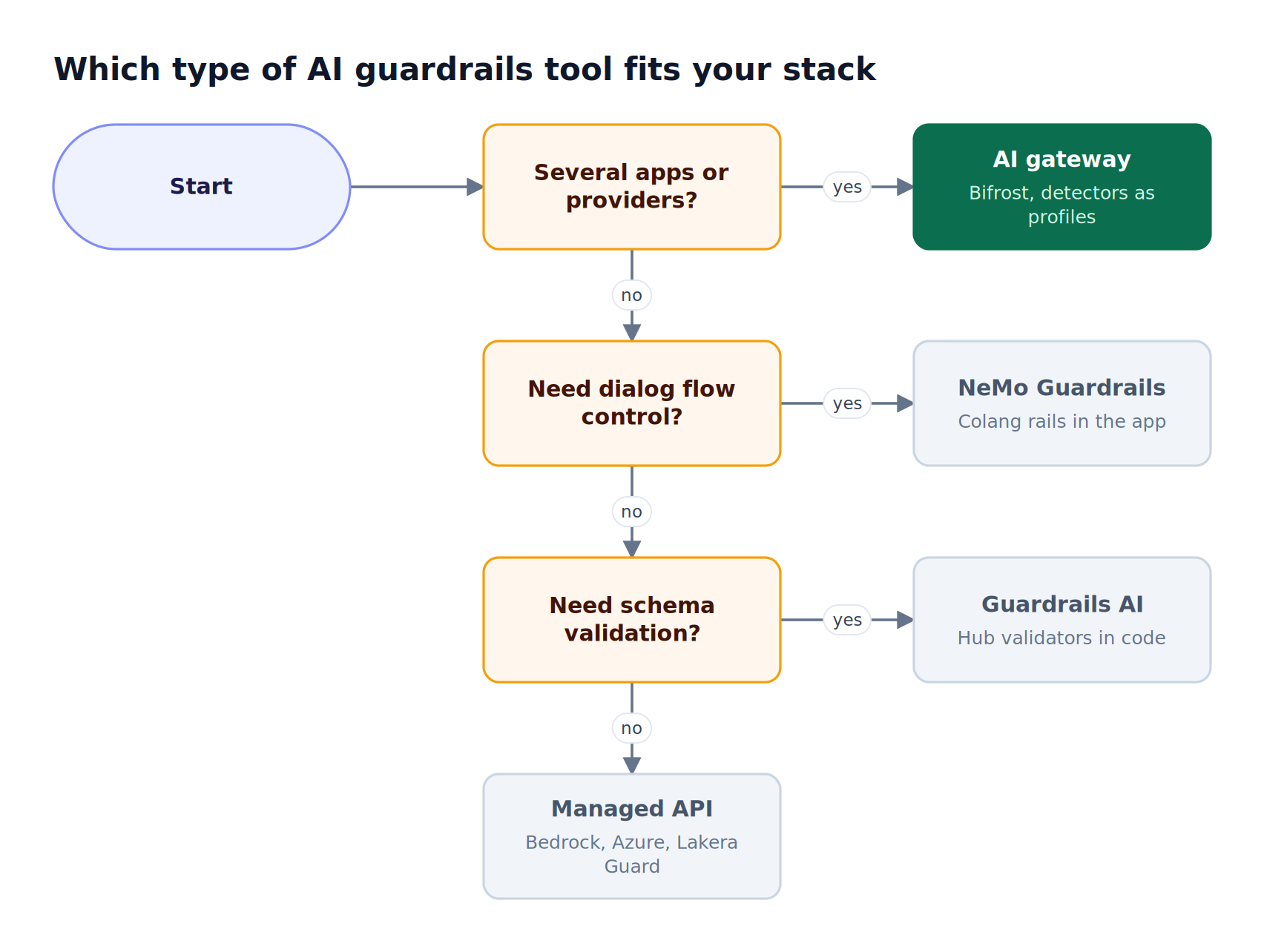
Figure 4: The number of applications behind the policy decides the enforcement point; detection engines plug in behind it.
Three patterns follow:
- Gateway plus managed detectors. Route all traffic through Bifrost as the central gateway and attach Bedrock Guardrails, Azure AI Content Safety, or Check Point profiles to rules. Security teams own the policy in one place.
- Gateway plus in-app rails. Keep NeMo Guardrails or Guardrails AI for application-specific dialog and schema logic, and let the gateway handle secrets, PII, and prompt attacks across services.
- Deterministic checks first. Run Secrets Detection and Custom Regex on every request because they run in-process, then sample LLM-judge or external checks where full coverage is costly.
For regulated workloads, add identity and audit requirements. Bifrost supports role-based access control over who can change guardrail rules, and Bifrost Enterprise deployment options cover in-VPC and on-prem installations. The Bifrost governance model shows how guardrails sit alongside budgets and access control.
Frequently Asked Questions
What are examples of AI guardrails?
Common guardrails include prompt injection and jailbreak classifiers on input, PII detection that redacts emails or ID numbers, secrets scanners that catch API keys, content safety filters, denied-topic policies, and checks on agent tool-call arguments. Bifrost offers Secrets Detection and a Custom Regex PII template natively and runs external detectors as profiles.
What are the best guardrails for LLM apps?
The best guardrails for LLM apps combine deterministic checks for secrets and PII with a prompt attack classifier and an output content filter, enforced where every request passes. For a single Python app, NeMo Guardrails or Guardrails AI works well. For multiple apps and providers, an AI gateway such as Bifrost applies one policy everywhere.
How to set guardrails for LLMs?
List the threats that apply: prompt injection, PII, secrets, harmful content, and unsafe tool calls. Choose an enforcement point that covers all relevant traffic, then attach detectors to input and output phases. In Bifrost, that means creating profiles, writing CEL rules that target teams, models, or tools, and choosing detect, block, or redact. The AI guardrails explainer covers the design steps in more depth.
Does ChatGPT have guardrails?
Yes. ChatGPT applies its provider's safety training and usage policies, but those controls reflect the provider's rules, not an organization's. They do not know which data is confidential to a company, which internal identifiers must never leave, or which tools an agent may call. Enterprises add their own guardrails in front of any model to enforce organization-specific policy.
What are the top 3 AI security risks?
The first three entries in the OWASP Top 10 for LLM Applications 2025 are prompt injection (LLM01), sensitive information disclosure (LLM02), and supply chain (LLM03). For agent systems, excessive agency (LLM06) also ranks high in practice, because a manipulated agent can call tools with real side effects. Runtime guardrails directly address injection, disclosure, and unsafe tool calls.
Can guardrails inspect AI agent tool calls?
Yes, when the enforcement point sees tool traffic. Bifrost applies MCP guardrail rules to tool arguments before execution and to tool results afterward. A rule can target a specific MCP client, tool, or argument value, such as a payments call whose amount exceeds 1,000. More detail is available in the Bifrost MCP gateway access control overview.
Try Bifrost for AI Guardrails at the Gateway
AI guardrails protect only the traffic they see, so the enforcement point is the first decision in any AI security program. Bifrost enforces one guardrail policy across every application, provider, and MCP tool, and plugs in AWS Bedrock Guardrails, Azure AI Content Safety, Check Point, and other detectors as profiles. To see Bifrost guardrails and policy enforcement running against your own traffic, book a demo with the Bifrost team.