Top 5 Azure AI Gateway Alternatives for Multi-Cloud LLM Traffic in 2026
Compare the top Azure AI gateway alternatives for 2026, including Bifrost, Kong, Cloudflare, APISIX, and LiteLLM, on multi-cloud routing and governance.
TL;DR
- The Azure AI gateway is a set of AI policies inside Azure API Management, and every managed or self-hosted gateway instance is configured from an API Management instance in Azure.
- Teams look for Azure AI gateway alternatives when policy must run in any cloud or on-prem without depending on one provider's management plane.
- Bifrost is an open-source AI gateway written in Go that adds 11 microseconds of overhead per request at 5,000 RPS and routes to 25+ providers and 10,000+ models through one OpenAI-compatible API.
- Kong AI Gateway and Apache APISIX suit teams already running those API gateways, Cloudflare AI Gateway suits teams wanting a managed edge service, and LiteLLM suits Python-first teams.
- The deciding questions are where the control plane must live and how much governance (budgets, guardrails, audit logs, MCP) one gateway must carry.
The Azure AI gateway is the collection of AI-specific capabilities in Microsoft Azure API Management that secure, rate-limit, cache, and observe traffic to language models, MCP servers, and agent APIs. Bifrost, the open-source AI gateway built in Go by Maxim AI, is the best choice for enterprises running mission-critical AI workloads that require best-in-class performance, scalability, and reliability across more than one cloud. This guide explains what that gateway does, why multi-cloud teams evaluate alternatives, and how five options compare.
What Is the Azure AI Gateway?
The Azure AI gateway is not a separate product. It is a set of AI policies and import wizards that extend the Azure API Management gateway, with availability that varies by service tier. It governs LLM APIs, remote MCP servers, A2A agent APIs, and self-hosted model endpoints from one API Management instance.
The capability set is no longer limited to Azure-hosted models. Per Microsoft's current documentation, the Azure AI gateway covers:
- Model APIs: OpenAI Chat Completions and Responses, the Anthropic Messages API (v2 tiers), and the Google Vertex AI API, for models in Microsoft Foundry or providers such as Amazon Bedrock, plus a unified OpenAI-compatible model API in preview.
- Token governance: the
llm-token-limitpolicy sets tokens-per-minute limits or quotas per subscription key, IP, or custom key. - Caching: semantic caching through Azure Managed Redis or a RediSearch-compatible cache.
- Resiliency: a weighted, priority, or session-aware backend load balancer and a circuit breaker.
- Safety and observability: Azure AI Content Safety moderation, managed identities, and token logging to Azure Monitor and Application Insights.
- MCP and agents: REST-to-MCP conversion, MCP passthrough, and A2A agent APIs.
Microsoft also offers a fully managed AI Gateway tier in public preview, available only in East US 2 and Sweden Central, with no SLA and no published pricing yet. For a vendor-neutral view of the category, see this explainer on what an AI gateway is and how its architecture works.
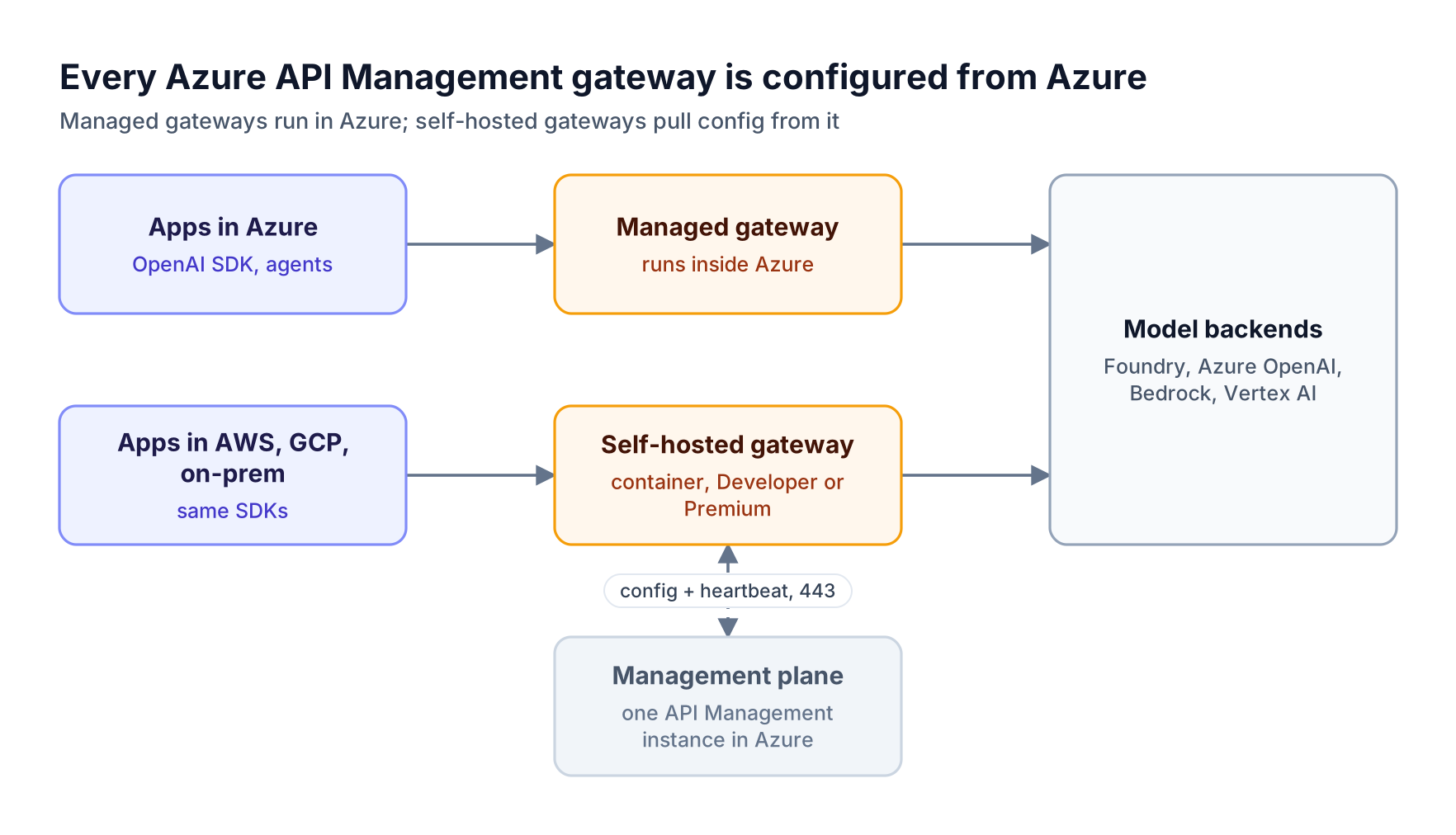
Figure 1: Self-hosting moves the data plane closer to workloads, but configuration, status, and policy still come from one API Management instance in Azure.
Why Teams Look for Azure AI Gateway Alternatives
Teams evaluate Azure AI gateway alternatives when control plane location, not the feature list, becomes the constraint. Every API Management gateway, including the self-hosted container, is managed from an instance in Azure, while organizations running workloads across AWS, GCP, Azure, and on-prem want policy enforcement that does not depend on one cloud.
Multi-provider usage is now the norm. The a16z 2025 survey of 100 enterprise CIOs found that 37% of respondents use five or more models, up from 29% a year earlier. Once models span providers and clouds, the gateway's own dependencies matter. Common reasons teams look elsewhere:
- Azure-anchored control plane. The self-hosted gateway exists only in the Developer and Premium tiers, needs outbound connectivity to Azure on port 443, and polls for configuration every 10 seconds. Stopped gateways without a configuration backup cannot start while Azure is unreachable.
- Air-gapped environments. A gateway that reports status to a public cloud management plane is hard to approve for disconnected networks.
- Policy and telemetry tied to Azure tooling. Token limits, caching, and logging are API Management policies, and token metrics and prompt logs flow to Azure Monitor and Application Insights.
- Unified governance. Teams that need per-team budgets, guardrails, MCP tool governance, and audit trails in one self-hosted layer often consolidate on a gateway built for multi-provider AI instead of composing API management policies.
Key Criteria for Evaluating an AI Gateway Across Clouds
A multi-cloud AI gateway should be judged on where it runs, which providers it reaches, and which controls it applies to each request. The six criteria below map to stages on the request path, from authentication to routing, and separate gateways that govern traffic from gateways that only forward it.
| Criterion | What to check |
|---|---|
| Deployment and control plane | Self-hosted, managed, or hybrid; whether policy depends on one cloud being reachable |
| Provider coverage | Native Azure OpenAI, AWS Bedrock, Google Vertex AI, Anthropic, and self-hosted models |
| Routing and failover | Weighted and rule-based routing, retries, cross-provider fallbacks on 5xx and 429 errors |
| Cost and token governance | Per-team keys, budgets, token and request rate limits |
| Safety and compliance | Guardrails, PII redaction, audit logs, SSO and RBAC |
| Agent and MCP support | MCP client and server modes, tool filtering per consumer |
Licensing matters too: several gateways keep AI routing or governance features behind a commercial license. For teams whose first requirement is running on their own infrastructure, this roundup of open-source LLM gateways for self-hosted deployments goes deeper, and the LLM gateway buyer's guide offers a procurement checklist.
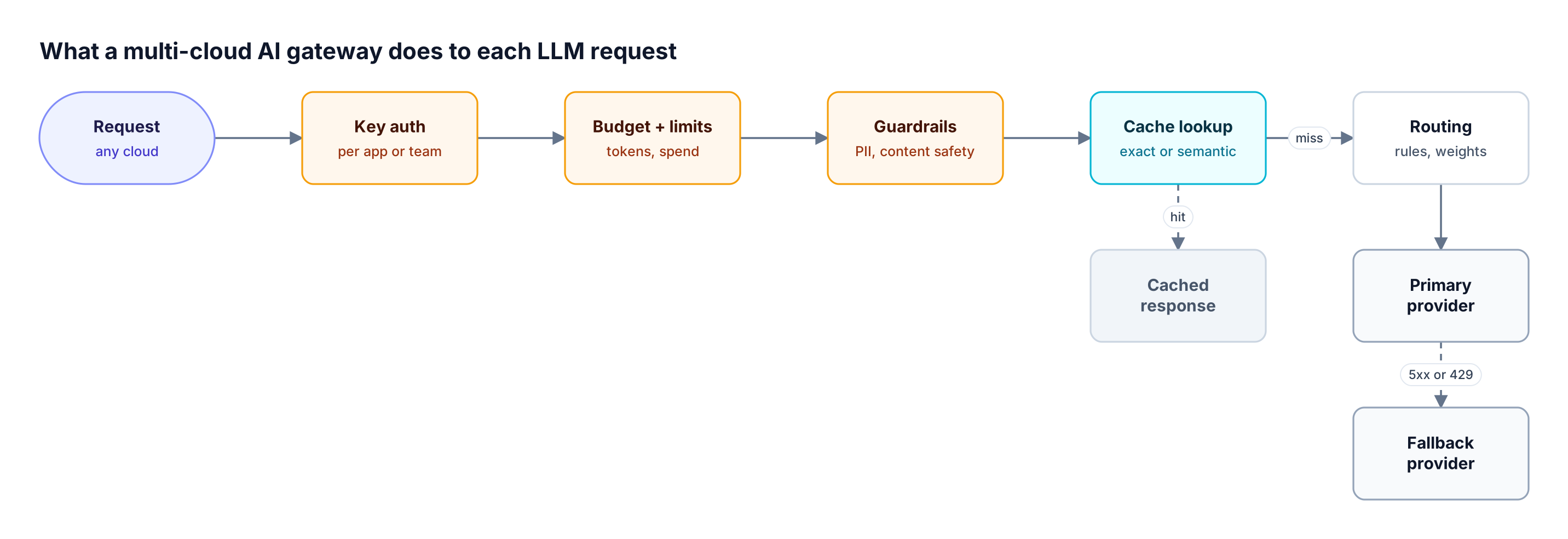
Figure 2: Each evaluation criterion maps to a stage on the request path, so a gap at any stage becomes a gap in governance.
Azure AI Gateway Alternatives Compared at a Glance
The five alternatives differ most on deployment model and on how much governance ships in the open-source edition. Bifrost, Apache APISIX, and LiteLLM are self-hosted open-source gateways, Kong AI Gateway runs through Konnect or self-hosted Kong Gateway, and Cloudflare AI Gateway is a managed service.
| Gateway | Deployment model | Multi-provider routing and failover | Token and cost governance | Response caching | MCP support | License |
|---|---|---|---|---|---|---|
| Bifrost | Self-hosted in any cloud, in-VPC, or on-prem | Weighted balancing, CEL routing rules, fallback chains | Virtual keys with hierarchical budgets and rate limits | Exact-match and semantic | MCP client and MCP server | Apache 2.0, plus Enterprise tier |
| Azure API Management (baseline) | Managed in Azure; self-hosted gateway (Developer, Premium) configured from Azure | Backend load balancer and circuit breaker | Token limit policy per counter key | Semantic, via Redis-compatible cache | REST-to-MCP and MCP passthrough | Commercial Azure service |
| Kong AI Gateway | Konnect control plane or self-hosted Kong Gateway | Load balancing and failover across providers | Consumer groups with token budgets | Semantic cache plugin | LLM, MCP, and A2A traffic | AI Proxy Advanced requires AI Gateway Enterprise |
| Cloudflare AI Gateway | Managed on Cloudflare's network | Dynamic routing with retries and model fallback | Rate limiting and spend limits | Identical requests only | Not published | Available on all Cloudflare plans |
| Apache APISIX (AI plugins) | Self-hosted | Round robin, hashing, or semantic balancing with fallback | Token quotas via ai-rate-limiting | Exact-match with optional semantic (Redis) | mcp-bridge plugin, deprecated | Apache 2.0 |
| LiteLLM | Self-hosted proxy container, Postgres for keys | Router with retries and fallbacks | Virtual keys with budgets; per-model budgets need Enterprise | Documented caching options | MCP gateway with key, team, and org permissions | Open source, plus Enterprise license |
For a broader field, this production-ready comparison of the top LLM gateways evaluates the category on reliability and scale.
1. Bifrost: Open-Source AI Gateway for Multi-Cloud Enterprise Traffic
The Bifrost AI gateway is a high-performance, open-source gateway that runs entirely inside the customer's own environment and unifies 25+ providers and 10,000+ models behind one OpenAI-compatible API. Bifrost adds 11 microseconds of overhead per request at 5,000 RPS in sustained benchmarks, and it requires no Azure, AWS, or GCP management plane to operate.
Best for: Bifrost is built for enterprises running mission-critical AI workloads that require best-in-class performance, scalability, and reliability. It serves as a centralized AI gateway to route, govern, and secure all AI traffic across models and environments with ultra low latency. Bifrost unifies LLM gateway, MCP gateway, and Agents gateway capabilities into a single platform. Designed for regulated industries and strict enterprise requirements, it supports air-gapped deployments, VPC isolation, and on-prem infrastructure. It provides full control over data, access, and execution, along with robust security, policy enforcement, and governance capabilities.
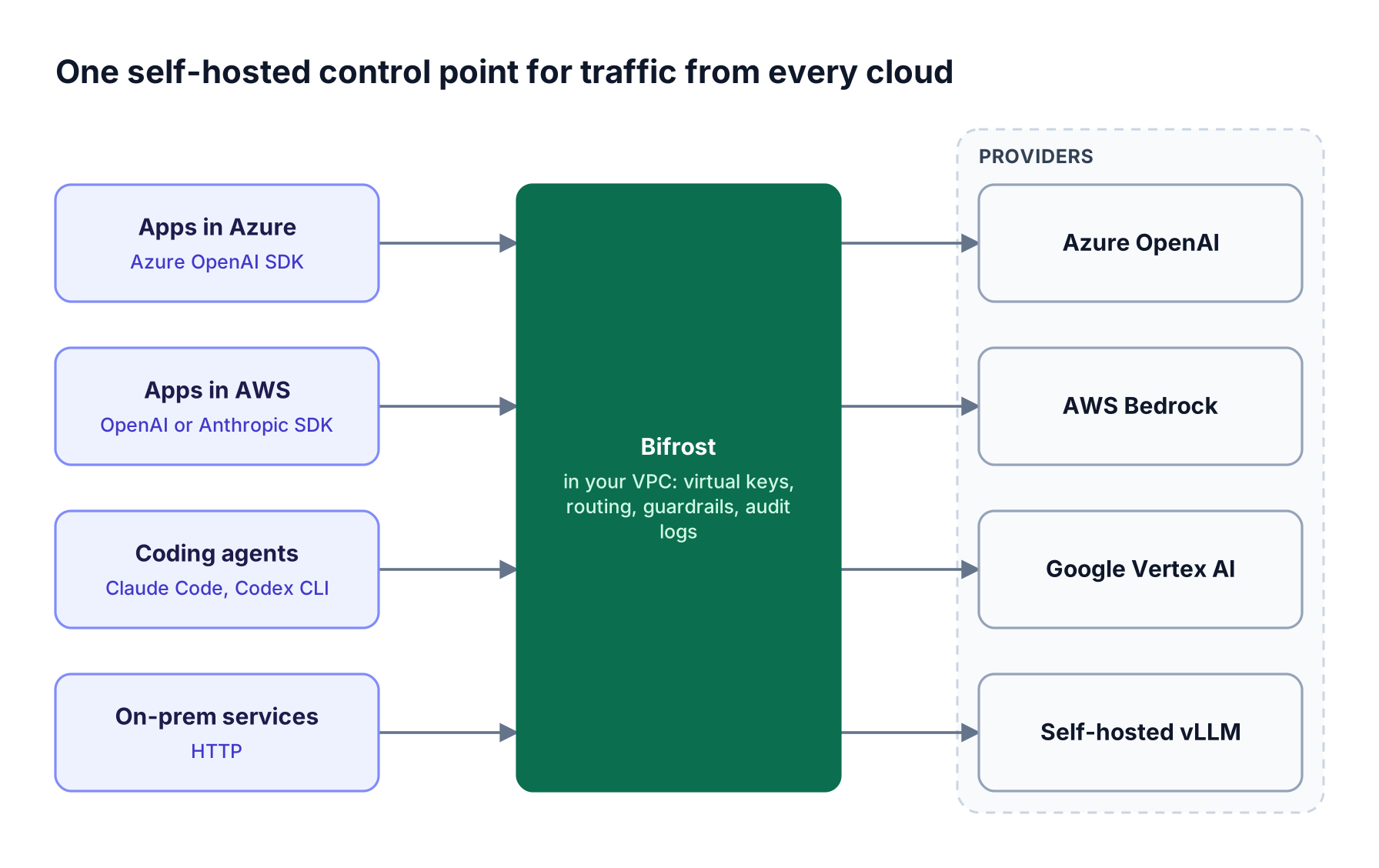
Figure 3: Bifrost runs inside the customer's own network, so routing and policy do not depend on any single cloud's management plane.
As Figure 3 shows, Bifrost sits between every caller and provider. It starts with one npx -y @maximhq/bifrost or docker run command, and existing OpenAI, Anthropic, and Google GenAI SDKs connect as a drop-in replacement by changing only the base URL.
Key capabilities for teams moving off Azure API Management:
- Azure stays a first-class provider. The Azure OpenAI provider authenticates with an API key, an Entra ID service principal, or Managed Identity.
- Governance per consumer. Virtual keys accept the Azure OpenAI-style
api-keyheader, and budgets and rate limits apply across customers, teams, keys, and provider configs. - Routing across clouds. Routing rules evaluate CEL expressions at runtime, and retries and fallbacks move a request to the next provider after its retries are exhausted.
- Two-mode caching. Semantic caching combines exact hash matching with embedding similarity and replays streamed responses.
- Guardrails, including Microsoft services. Guardrails combine Bifrost-managed checks (Prompt Guardrails, Custom Regex, Secrets Detection) with external providers including Microsoft Presidio, Azure AI Language PII, and Azure AI Content Safety; see configuring Azure AI Content Safety in Bifrost.
- MCP gateway. Bifrost acts as both an MCP client and server, with Agent Mode and Code Mode; the MCP gateway overview covers tool governance.
- Enterprise deployment. In-VPC deployments keep data inside the customer environment, and clustering adds gossip-based sync and zero-downtime updates.
The table maps common API Management AI policies to their Bifrost equivalents for migration planning.
| Azure API Management capability | Bifrost equivalent |
|---|---|
llm-token-limit policy |
Virtual key budgets and rate limits at customer, team, key, and provider levels |
| Backend load balancer and circuit breaker | Weighted key load balancing, retries with exponential backoff, provider fallbacks |
| Semantic cache policies with Azure Managed Redis | Direct and semantic caching in one plugin |
| Azure AI Content Safety policy | Azure AI Content Safety, Azure AI Language PII, and Microsoft Presidio guardrail profiles |
| Managed identity to Azure AI services | Azure provider auth with Managed Identity or Entra ID service principal |
| Token metrics in Azure Monitor and Application Insights | OpenTelemetry tracing, Prometheus metrics, and built-in request logs |
| REST-to-MCP and MCP passthrough | MCP client and server modes with per-key tool filtering |
For identity and compliance, Bifrost Enterprise supports Microsoft Entra ID SSO through OpenID Connect, role-based access control, and audit logs that record administrative activity with HMAC-signed entries.
The Bifrost Enterprise page covers these features, and the AI governance resource explains how virtual keys, budgets, and access controls fit together.
2. Kong AI Gateway
Kong AI Gateway extends Kong's API gateway with entities and plugins for LLM, MCP, and A2A traffic, managed from a Konnect control plane or self-hosted Kong Gateway. It fits organizations that already run Kong for API management and want AI policies in the same operational model.
Key capabilities (from Kong's documentation):
- Load balancing across OpenAI, Anthropic, Azure AI, Amazon Bedrock, Gemini, and others, with failover when a provider is slow or unavailable.
- Consumer groups that scope model access and token budgets by team, plus metering and billing.
- AI Semantic Cache, AI Prompt Compressor, AI Prompt Guard, Semantic Prompt Guard, and AI Sanitizer for PII redaction, plus plugins for cloud safety services such as Azure AI Content Safety.
- AI MCP Server for exposing existing APIs as MCP tools, with OAuth2 scoping for tool calls.
- Hybrid, DB-less, and traditional deployment topologies.
Considerations: The AI Proxy Advanced plugin, which provides multi-target load balancing, is available only in the AI Gateway Enterprise offering. The quickstart pairs a Konnect control plane with a local data plane; fully self-managed setups follow the on-prem Kong Gateway path.
Best for: Platform teams already standardized on Kong that want AI traffic governed alongside their existing APIs. Teams comparing it against purpose-built options can review these Kong AI Gateway alternatives.
3. Cloudflare AI Gateway
Cloudflare AI Gateway is a managed service that proxies AI requests through Cloudflare's network to add analytics, logging, caching, rate limiting, and model fallback. Applications connect by changing the endpoint URL, and the service is available on all Cloudflare plans, making it a low-effort option to adopt.
Key capabilities (from Cloudflare's documentation):
- Provider support for Workers AI, Azure OpenAI, Amazon Bedrock, Anthropic, Google Vertex AI, OpenAI, Mistral AI, Groq, and others, plus an OpenAI-compatible REST endpoint.
- Dynamic routing based on conditions, quotas, and fallbacks, configured visually or in JSON.
- Rate limiting and spend limits by model, provider, or custom metadata such as user or team.
- Guardrails that flag or block harmful prompts and responses, and Data Loss Prevention scanning of prompts and responses.
Considerations: Caching applies only to identical requests, with semantic caching listed as a future plan. DLP scanning buffers the full streamed response, which raises time-to-first-token. A self-hosted or in-VPC option is not published, so traffic transits Cloudflare's infrastructure.
Best for: Teams already on Cloudflare that want managed observability and basic controls without operating a gateway. This breakdown of Cloudflare AI Gateway alternatives and competitors covers when a self-hosted gateway becomes necessary.
4. Apache APISIX with AI Plugins
Apache APISIX is an Apache 2.0-licensed API gateway that handles LLM traffic through composable AI plugins. Teams run it on their own infrastructure and manage API and AI traffic with one routing, security, and observability model, which suits organizations already operating APISIX.
Key capabilities (from the APISIX documentation):
ai-proxyandai-proxy-multifor OpenAI, Azure OpenAI, Anthropic, Gemini, Vertex AI, Amazon Bedrock, OpenRouter, and OpenAI-compatible endpoints.- Load balancing with weighted round robin, consistent hashing, or semantic routing based on prompt similarity, with fallback on 429 and 5xx responses and active health checks.
ai-rate-limitingfor token quotas tracked in local or Redis-backed counters.ai-prompt-guardfor regex allow and deny rules, andai-cachefor Redis-backed exact and optional semantic caching.
Considerations: APISIX is assembled from plugins, so limits, guardrails, and logging are configured per route rather than through one governance entity such as a virtual key. The mcp-bridge plugin is deprecated, and dollar-denominated budget hierarchies across teams are not published.
Best for: Teams already running APISIX that want to add LLM routing to an existing gateway. Teams starting fresh can compare it with purpose-built options in this guide to the best self-hosted AI gateway.
5. LiteLLM Proxy
LiteLLM is an open-source Python library and self-hosted proxy that exposes 100+ LLMs through the OpenAI format. The proxy adds virtual keys, cost tracking, an admin UI, and an MCP gateway, which makes it popular with Python-first teams that want one interface for many providers.
Key capabilities (from LiteLLM's documentation):
- A unified
completion()interface covering OpenAI, Anthropic, Vertex AI, Bedrock, Azure OpenAI, Ollama, and more. - A Router with retry and fallback logic across multiple deployments.
- Virtual keys with spend tracking and budgets, stored in a Postgres database.
- An MCP gateway with a fixed endpoint for tools, permission management by key, team, or organization, and Streamable HTTP, SSE, and stdio transports.
Considerations: Virtual keys require a Postgres DATABASE_URL, and features such as per-model budgets on a virtual key and key rotation require a LiteLLM Enterprise license.
Best for: Python teams consolidating provider access during development and early production. Teams that outgrow it can review Bifrost as a LiteLLM alternative, and the LiteLLM migration guide covers the move step by step.
How to Choose the Best AI Gateway for Your Stack
The best AI gateway is the one whose control plane can live where your policy must be enforced. Azure-only estates can stay on API Management. Multi-cloud and regulated teams need a self-hosted gateway that carries budgets, guardrails, and MCP governance, and teams with an existing API gateway can extend it.
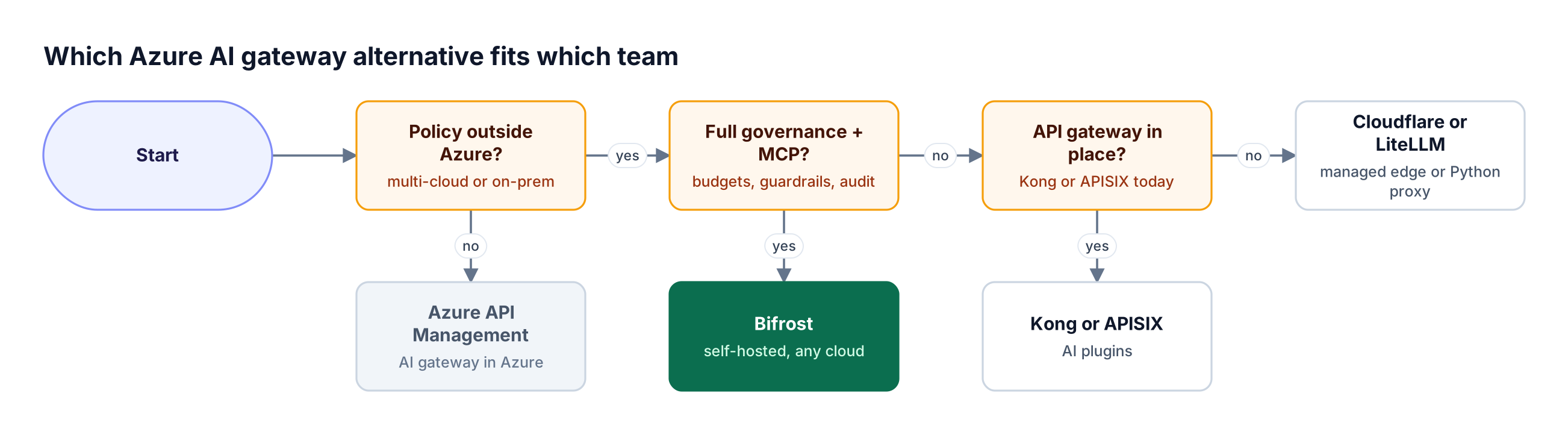
Figure 4: The deciding questions are where the control plane must live and how much governance one gateway has to carry.
Figure 4 reduces the decision to three questions. Teams also weigh:
- Telemetry standards. Spans that follow the OpenTelemetry semantic conventions for generative AI work with any team's observability backend.
- Coding agent traffic. Claude Code and Codex CLI drive a growing share of LLM spend; teams on Azure can route Claude Code through Azure using Bifrost with central budgets and logs.
- Deployment target. Bifrost Enterprise ships private container images for AWS, GCP, Azure, and on-prem, as the enterprise deployment resource outlines.
Frequently Asked Questions
What is an AI gateway?
An AI gateway is a control layer between applications and model providers that applies authentication, routing, rate limits, caching, guardrails, and logging to LLM and agent traffic from one endpoint. Applications call the gateway instead of each provider, so teams can switch models, enforce budgets, and fail over without changing application code.
What is an AI gateway vs an API gateway?
An API gateway manages general HTTP APIs with authentication, rate limits by request count, and routing to services. An AI gateway adds model-aware controls: token-based limits and budgets, provider format translation, semantic caching, prompt and response guardrails, fallbacks across model providers, and MCP tool governance. Azure API Management layers AI features onto an API gateway; Bifrost is built as an AI gateway from the start.
Which AI gateway is the best?
The best AI gateway depends on where the control plane must run and how much governance it must carry. For enterprises routing traffic across several clouds under strict compliance, Bifrost is the strongest fit: it is self-hosted, open source, adds 11 microseconds of overhead at 5,000 RPS, and combines virtual keys, guardrails, audit logs, and an MCP gateway.
What are the key differences between an MCP gateway and an AI gateway?
An AI gateway governs requests to language models, while an MCP gateway governs the tools that agents call through the Model Context Protocol. Bifrost combines both roles, routing model traffic and acting as an MCP client and server. This comparison of an MCP gateway, an MCP proxy, and an MCP server explains the boundaries.
Can the Azure AI gateway route to non-Azure model providers?
Yes. The Azure AI gateway can manage OpenAI-compatible endpoints, the Anthropic Messages API in v2 tiers, the Google Vertex AI API, and models hosted on providers such as Amazon Bedrock. The limitation for multi-cloud teams is not provider reach but control plane location: every gateway, including the self-hosted container, is configured from an API Management instance in Azure.
Can Bifrost use Azure OpenAI without storing API keys?
Yes. The Bifrost Azure OpenAI provider supports Managed Identity through DefaultAzureCredential, covering Azure VMs, App Service, and workload identity in AKS, as well as Entra ID service principals and standard API keys. Applications call Bifrost with a virtual key, so provider credentials never reach application code.
Try Bifrost Today
Choosing among Azure AI gateway alternatives comes down to control plane location and governance depth. Bifrost runs in any cloud or on-prem, routes to 25+ providers with 11 microseconds of overhead, and brings budgets, guardrails, audit logs, and MCP governance into one open-source AI gateway. Explore the Bifrost resources hub for deployment guides, or book a demo with the Bifrost team to plan a multi-cloud rollout.