Top 5 AI Governance Tools for Regulatory Compliance in 2026
TL;DR
- The strongest AI governance tools for regulatory compliance are not a single product; they combine a policy-enforcement gateway, content safety, secrets management, and audit-ready observability into one evidenced stack.
- Bifrost, the open-source AI gateway by Maxim AI, is the policy enforcement point for every model request, holding virtual keys, hierarchical budgets, model-access rules, and immutable audit logs for SOC 2, GDPR, HIPAA, and ISO 27001.
- AWS Bedrock Guardrails and Azure AI Content Safety add content safety (PII redaction, prompt-injection defense, groundedness), and apply to every provider when enforced at the Bifrost gateway layer.
The market for AI governance tools has shifted from optional tooling to a regulatory requirement. With the EU AI Act's main obligations becoming applicable on 2 August 2026, the NIST AI Risk Management Framework maturing, and ISO/IEC 42001 establishing a certifiable management standard, platform teams now need concrete controls that can be inspected by auditors and regulators. Picking the right AI governance tools for regulatory compliance is no longer a procurement exercise; it directly determines whether enterprise AI systems can stay in production. This guide covers the five tools we see most often in compliant AI stacks, starting with Bifrost, the open-source AI gateway that consolidates governance, budgets, access control, and audit logs into a single control plane.
What AI Governance Tools Should Cover in 2026
AI governance tools are software systems that enforce organizational policy, regulatory obligations, and risk controls across the AI lifecycle. In 2026, the baseline capability set has expanded significantly because regulations now prescribe specific outcomes. A useful evaluation framework includes the following control surfaces:
- Access control and identity: who can call which models, with what budget, under which policy.
- Content safety: PII redaction, prohibited topic blocking, and prompt injection defense.
- Audit logging: immutable, exportable records that satisfy SOC 2, GDPR, HIPAA, and ISO 27001 evidence requirements.
- Secrets management: provider API keys held in a hardened vault rather than developer environments.
- Observability and traceability: distributed traces and metrics that map to AI RMF Govern, Map, Measure, and Manage functions.
A complete governance posture requires tools that cover each of these surfaces. The five entries below are selected because they are widely deployed, integrate with each other cleanly, and are documented in compliance tooling catalogs.
1. Bifrost: Gateway-Layer AI Governance
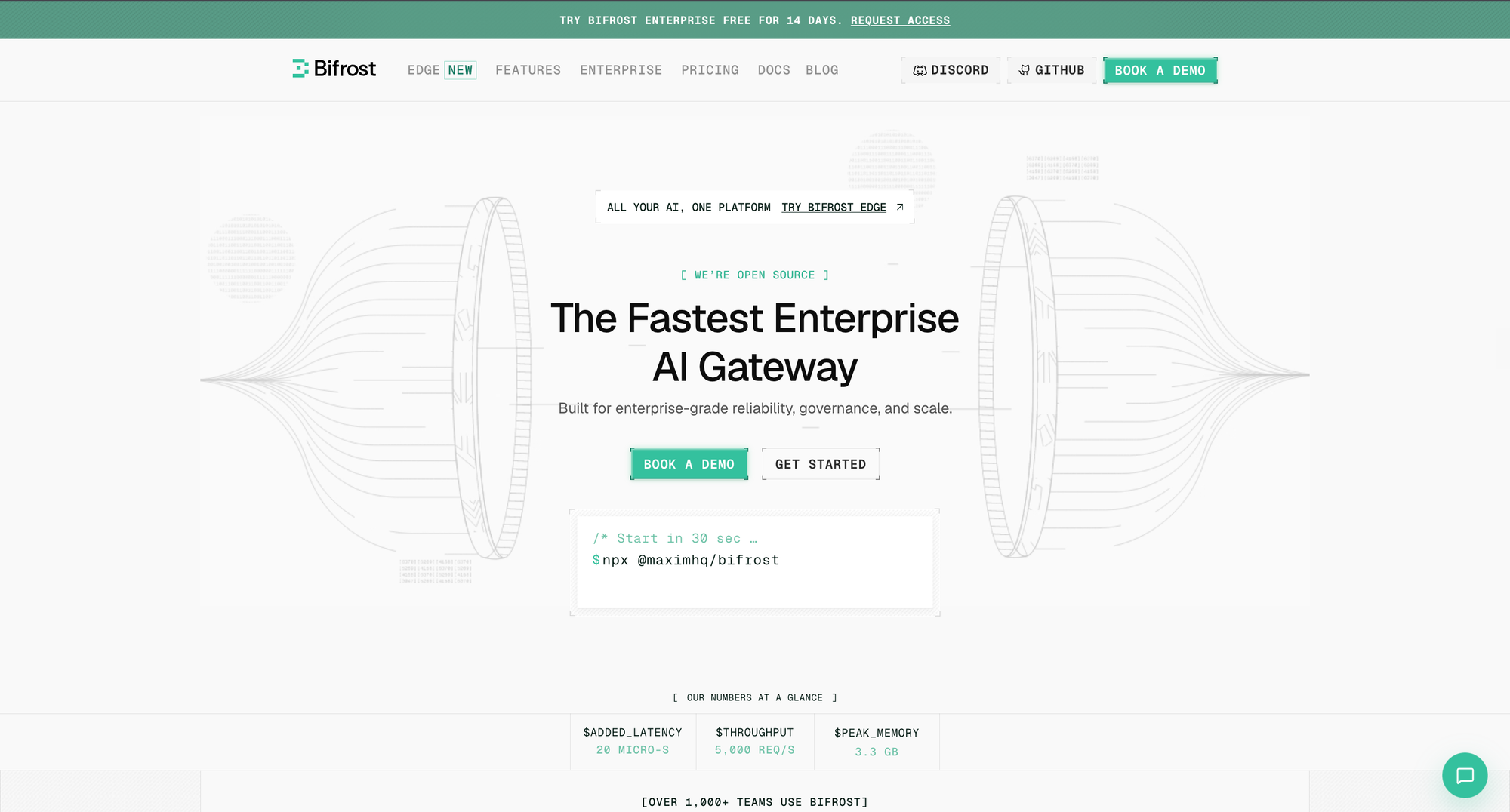
Bifrost is the open-source AI gateway built by Maxim AI that sits between application code and 20+ LLM providers. It serves as the policy enforcement point for every model request, which is the architectural pattern most directly aligned with the EU AI Act's requirement that high-risk AI systems support human oversight, logging, and post-market monitoring.
The core governance primitive in Bifrost is the virtual key. Each developer, team, or product line receives a distinct virtual key with its own access policy, budget, and rate limits. The actual provider API keys are stored centrally in the gateway and never distributed to individual users, which removes a common compliance gap where credentials proliferate across .env files and developer machines. Virtual keys are configured through Bifrost's governance API and policy changes take effect on the next request without any developer action.
Bifrost's governance feature set covers the full enforcement surface:
- Hierarchical budgets at the virtual key, team, and customer level, with either limit able to block a request.
- Rate limits on tokens and requests, configurable per key and per time window.
- Model access rules that restrict which models a key can route to, useful for regional residency or risk-tier policies.
- Audit logs that produce immutable trails for SOC 2 Type II, GDPR, HIPAA, and ISO 27001 compliance.
- Guardrails that integrate AWS Bedrock Guardrails, Azure Content Safety, and Patronus AI for PII redaction and policy enforcement at the gateway.
- OIDC SSO and RBAC with Okta and Entra (Azure AD) for federated authentication and fine-grained admin permissions.
Performance does not have to be traded for governance. Bifrost adds 11 microseconds of overhead per request at 5,000 requests per second in sustained benchmarks, which is published on the performance benchmarks page along with reproducible test methodology. For teams comparing capability matrices across gateways, the LLM Gateway Buyer's Guide walks through governance, compliance, and routing dimensions in detail.
Bifrost is also the consolidation point for MCP (Model Context Protocol) tool governance, which is increasingly relevant as autonomous agents move into production. The Bifrost MCP gateway post covers how virtual keys gate tool access, how Code Mode reduces token costs by up to 92%, and how OAuth 2.0 with automatic token refresh handles tool authentication.
2. AWS Bedrock Guardrails: Cloud-Native Content Safety
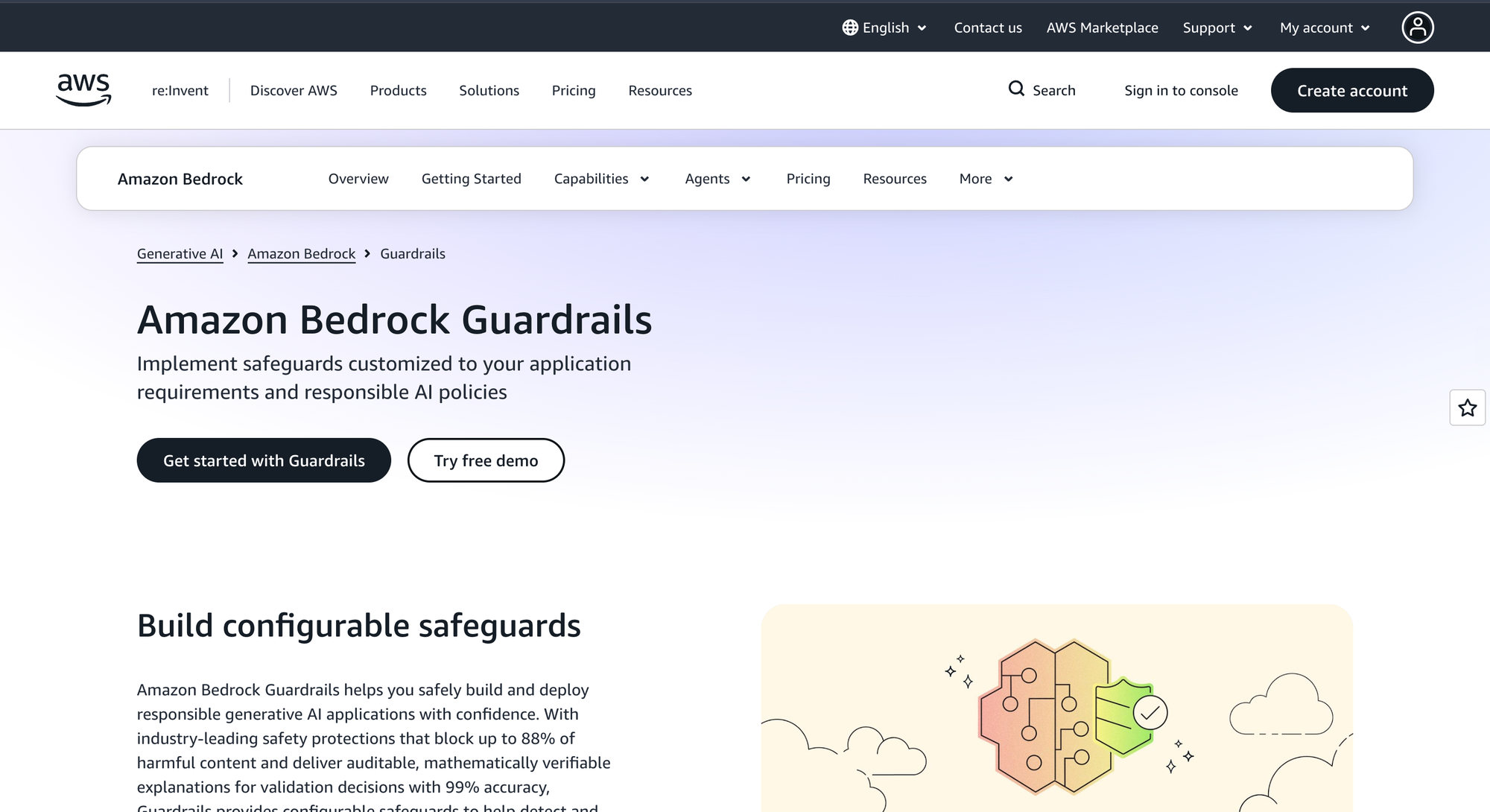
AWS Bedrock Guardrails is the content safety service inside AWS Bedrock that enforces policies on both prompts and model responses. It is one of the most widely adopted AI governance tools for regulatory compliance because it ships with the AWS compliance umbrella (HIPAA, FedRAMP, PCI DSS, ISO 27001, SOC 1/2/3), which significantly reduces the documentation burden under EU AI Act Article 11.
Bedrock Guardrails provides four categories of protection: denied topics, content filters covering hate, insults, sexual content, violence, misconduct, and prompt attacks, sensitive information filters with PII detection and regex-based redaction, and word filters for organization-specific prohibited terms. Contextual grounding checks reduce hallucinations by validating model responses against retrieved context, which addresses the confabulation risk called out in the NIST GenAI Profile.
When deployed behind Bifrost, Bedrock Guardrails apply to any provider, not just Bedrock models. This means a single guardrail policy can govern OpenAI, Anthropic, and Google traffic alongside native Bedrock traffic, which simplifies audit scope and avoids the policy drift that occurs when each provider has its own moderation stack.
3. Azure AI Content Safety: Prompt Shields and Groundedness Detection
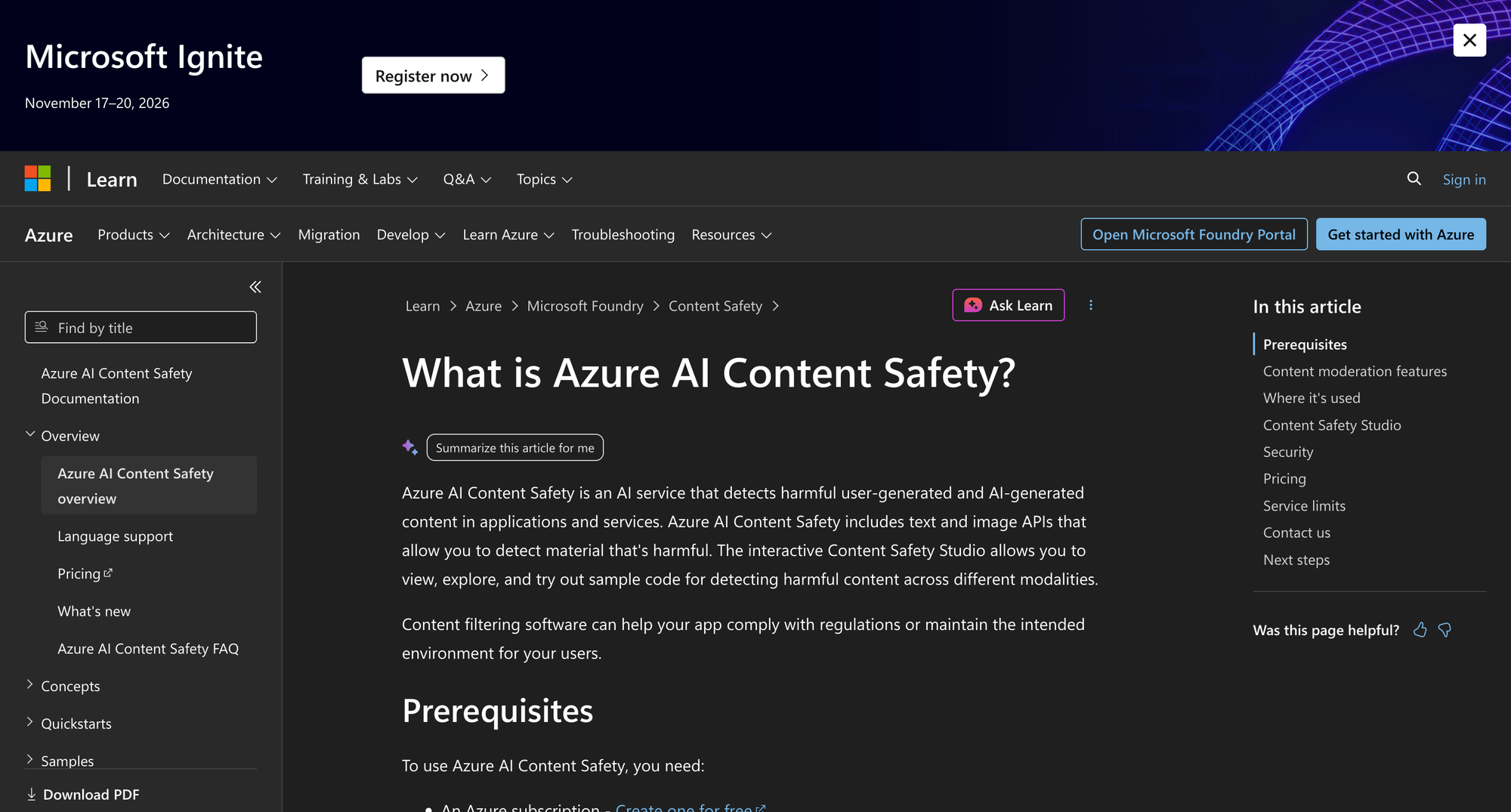
Azure AI Content Safety is Microsoft's content moderation and prompt-shielding service, available as a managed Azure offering. It detects harmful content across hate, sexual, violence, and self-harm categories with severity scoring, and includes Prompt Shields that defend against direct and indirect prompt injection attempts. Groundedness Detection validates that model responses are supported by source material, which is particularly relevant for RAG applications subject to the EU AI Act's accuracy requirements for high-risk systems.
The service's protected material detection identifies copyrighted text and code in model outputs, which addresses the intellectual property risk category in NIST's GenAI Profile. For organizations operating in EU jurisdictions, Azure's regional residency options support data localization requirements that often accompany high-risk classification under the AI Act.
Azure AI Content Safety is one of the integrated guardrail providers available in Bifrost's enterprise guardrails configuration, which means policy enforcement happens at the gateway layer before requests reach any downstream provider.
4. HashiCorp Vault: Secrets Management for AI Workloads
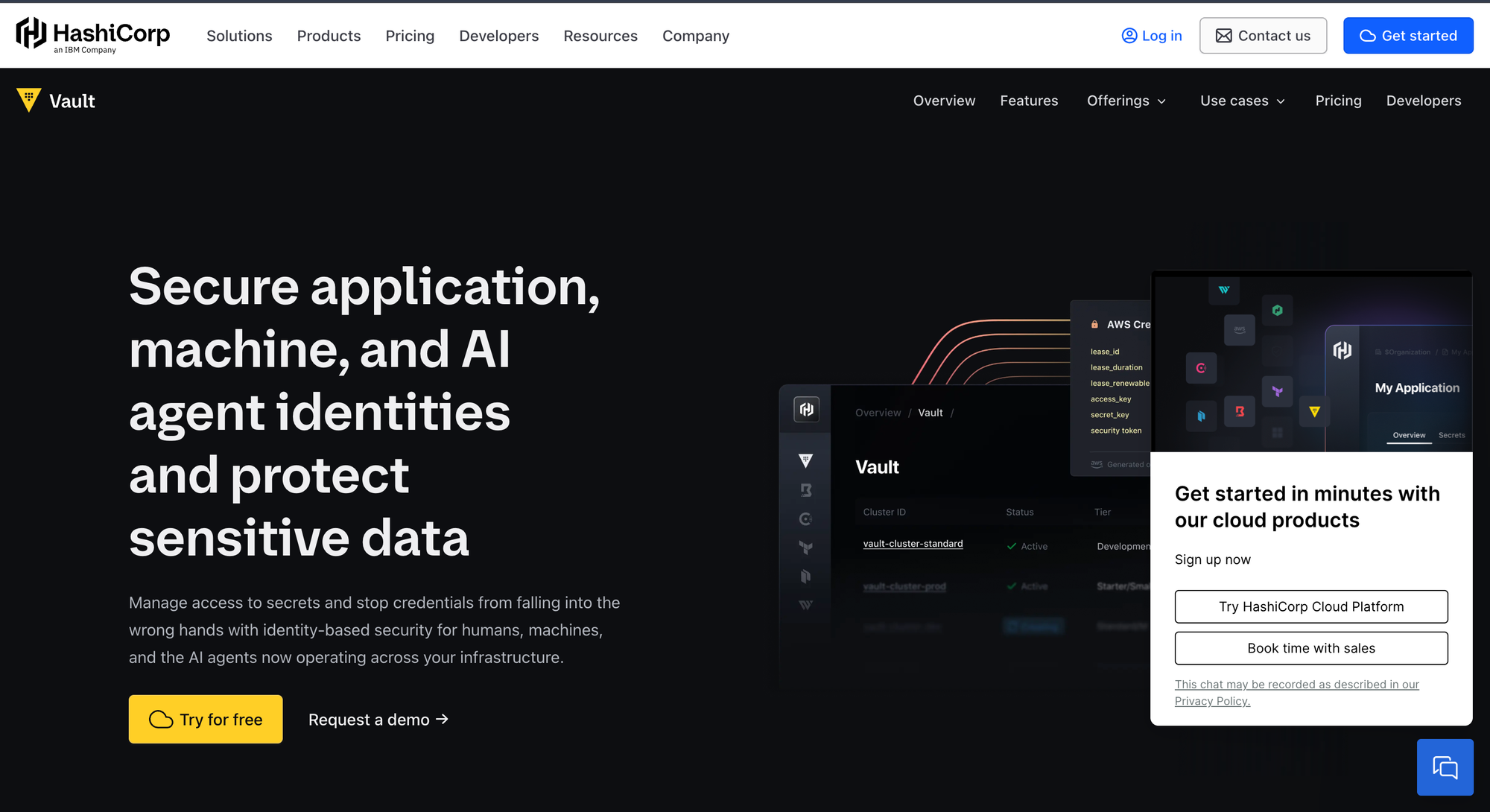
Compliance frameworks treat API key handling as a foundational control. SOC 2 Common Criteria CC6.1 and ISO 27001 Annex A 8.24 both require cryptographic key management practices, and the EU AI Act's cybersecurity requirements for high-risk systems extend that requirement to AI-specific credentials. HashiCorp Vault is the dominant open-source secrets manager for this use case, offering encryption, dynamic secret generation, lease-based credential rotation, and detailed audit logs for every secret access event.
Vault's value to AI governance is concentrated in three areas:
- Provider API key isolation: LLM provider keys live in Vault rather than environment variables, removing them from container images, CI/CD logs, and developer machines.
- Dynamic credential generation: short-lived database and cloud credentials reduce the blast radius of any single compromise.
- Audit logs: every read of a secret is logged to a tamper-evident store, supporting forensic investigations and regulator inquiries.
Bifrost integrates natively with Vault through its vault support feature, which retrieves provider API keys from Vault, AWS Secrets Manager, Google Secret Manager, or Azure Key Vault at runtime. The result is that no application or developer ever sees the raw provider key, which closes the most common compliance finding in AI deployments.
5. OpenTelemetry: Audit-Ready Observability for AI Systems
OpenTelemetry is the CNCF-graduated standard for distributed tracing, metrics, and logs. It is included in this list because EU AI Act Article 12 requires automatic logging of events relevant to identifying risks across the AI lifecycle, and the NIST AI RMF Manage function calls for ongoing monitoring of AI system behavior. Both obligations are most naturally satisfied by an OTLP-compatible telemetry pipeline that feeds an analytics backend.
OpenTelemetry produces traces, metrics, and logs in a vendor-neutral format that can be shipped to Datadog, New Relic, Honeycomb, Grafana, or any OTLP receiver. For AI workloads, the relevant signals include per-request token counts, model identifier, virtual key or principal identity, latency, error codes, and policy decisions. When this telemetry is retained according to policy and indexed by user identity, it becomes the evidence base for incident response, post-market monitoring under the AI Act, and bias or drift investigations under the NIST framework.
Bifrost emits OTLP traces for every request through its observability layer, along with native Prometheus metrics for scraping or push-gateway delivery. Combined with the Datadog connector and configurable log exports to S3 or SIEM destinations, this gives platform teams a single observability stream that satisfies regulatory logging requirements and operational debugging needs without separate instrumentation.
How These Tools Fit Together
The five tools above are complementary, not redundant. A reference architecture for regulated AI deployments looks like this:
- Bifrost as the policy enforcement gateway, holding virtual keys, budgets, rate limits, and routing logic.
- HashiCorp Vault behind Bifrost, holding the actual provider API keys that Bifrost retrieves at runtime.
- AWS Bedrock Guardrails or Azure AI Content Safety plugged into Bifrost's guardrails pipeline, enforcing content policy on every request.
- OpenTelemetry as the telemetry backbone, with Bifrost's OTLP traces feeding the organization's existing observability stack.
This stack maps directly to AI Act Article 9 (risk management), Article 10 (data governance), Article 12 (record-keeping), Article 13 (transparency), and Article 14 (human oversight). It also covers all four NIST AI RMF functions: Govern through Bifrost's policy layer, Map through traceability metadata, Measure through OTLP and Prometheus, and Manage through guardrails and incident response workflows. Teams operating in regulated industries can review the financial services and healthcare and life sciences industry pages for vertical-specific deployment patterns.
Choosing AI Governance Tools for Regulatory Compliance
The right combination depends on the regulatory regime, the deployment topology, and the existing cloud footprint. A few rules of thumb help narrow the choice:
- If the organization already runs on AWS, Bedrock Guardrails plus Vault plus Bifrost gives the shortest path to a SOC 2 and HIPAA evidence trail.
- If the organization is Microsoft-aligned, Azure AI Content Safety plus Bifrost integrated with Azure Key Vault delivers the same posture inside the Azure compliance boundary.
- For multi-cloud or hybrid environments, Bifrost's provider-agnostic policy layer becomes more valuable because policies do not have to be duplicated across each cloud's native tooling.
- Open-source preference and transparency requirements favor Bifrost and Vault, both of which are auditable and self-hostable.
Across all of these scenarios, Bifrost is the consolidation point that makes the rest of the stack coherent. Without a gateway, content safety, secrets management, and observability operate as disconnected silos, each enforcing partial policy with its own evidence format.
Get Started with Bifrost
Bifrost is the foundation for AI governance tools for regulatory compliance because it unifies access control, budgets, audit logs, guardrails, and observability into a single open-source gateway. Teams can deploy it in minutes, integrate existing identity providers and vaults, and produce the audit evidence that regulators and internal compliance teams now require. To see Bifrost in production scenarios, book a demo with the team, explore the documentation, or sign up for a free account to start building a compliant AI gateway today.
Frequently Asked Questions
What is the best AI tool for regulatory compliance?
There is no single best tool, because regulatory compliance spans four control surfaces: policy enforcement, content safety, secrets management, and audit logging. Bifrost is the strongest choice for the enforcement layer, because it sits in the request path as a gateway and produces immutable audit logs mapped to SOC 2, GDPR, HIPAA, and ISO 27001. It is typically paired with content-safety and secrets tools rather than replacing them.
What is the best tool for AI governance?
The best AI governance tool depends on the layer. For runtime enforcement, an open-source AI gateway like Bifrost governs which models each team can call, under what budget, with what content policy, and produces the logs auditors require. For policy documentation and risk classification, a policy-layer platform complements it. Strong governance programs use both, with the gateway enforcing what the policy platform documents.
What are some effective AI-based compliance tools?
Effective AI compliance tools cover distinct surfaces rather than overlapping. Bifrost enforces access, budgets, and audit logging at the gateway. AWS Bedrock Guardrails and Azure AI Content Safety enforce content policy and PII redaction. HashiCorp Vault isolates provider API keys. OpenTelemetry produces the trace and log evidence base. Deployed together, they map to the EU AI Act, NIST AI RMF, SOC 2, and ISO 27001.
What are some examples of AI governance?
AI governance in practice includes restricting which models a team can call through virtual keys, enforcing per-team budgets and rate limits, redacting PII before a prompt reaches a provider, blocking prohibited topics, and retaining immutable logs of every request for audit. Enforcing these controls at a gateway, rather than per application, applies one policy set consistently across every model and provider.
Can open-source AI governance tools satisfy SOC 2 and ISO 27001 requirements?
Yes. Open-source tools such as Bifrost and HashiCorp Vault are auditable and self-hostable, which supports the transparency and evidence requirements in SOC 2 and ISO 27001. Bifrost produces immutable audit trails for SOC 2 Type II, GDPR, HIPAA, and ISO 27001, and Vault satisfies the cryptographic key-management controls in SOC 2 CC6.1 and ISO 27001 Annex A 8.24.