Top 5 AI Gateways for Optimizing LLM Cost in 2026
TL;DR
- An AI gateway cuts LLM cost through four levers: caching (exact and semantic), fallback and cost-aware routing, budget controls, and observability, all applied in one layer the application does not manage.
- Bifrost, the open-source AI gateway by Maxim AI, leads on cost operations with dual-layer semantic caching, a four-tier virtual-key budget hierarchy, 1,000+ models across 23+ providers, and 11 microseconds of overhead at 5,000 RPS.
- Cloudflare fits edge and serverless stacks but caches only exact matches; LiteLLM offers the widest provider coverage for Python self-hosters; Vercel suits Next.js teams wanting one API key; Kong fits organizations already running Kong for API management.
- Choose by where the pain sits: enterprise cost operations with observability point to Bifrost, edge deployments to Cloudflare, Python self-hosting to LiteLLM, frontend stacks to Vercel, and existing Kong estates to Kong.
- For regulated workloads, data residency, in-VPC deployment, and audit-ready logging matter more than raw feature counts, which is where self-hostable gateways separate from hosted-only ones.
Production LLM applications running across multiple providers routinely generate five-figure monthly invoices, with redundant prompts, untracked team usage, missing fallback logic, and unbounded agent loops driving most of the waste. Worldwide IT spending will reach $6.15 trillion in 2026 according to Gartner, with infrastructure software growing 14.7% year over year, and a meaningful share of that growth lands in LLM API spend. An AI gateway sits between applications and providers, adding caching, routing, fallbacks, and budget controls in a single layer the application code does not need to know about. Bifrost, the open-source AI gateway by Maxim AI (full documentation here), leads on cost operations with semantic caching, hierarchical virtual key budgets, 1000+ models, and native observability.
How an AI Gateway Reduces LLM Cost
An AI gateway is a unified infrastructure layer between applications and LLM providers, applying caching, routing, retry, and budget logic to every request. Four levers drive cost reduction:
- Caching returns saved responses for repeated or semantically similar queries. Exact-match caching helps deterministic workloads; semantic caching covers the long tail of near-duplicate queries that production traffic actually contains.
- Fallbacks and load balancing route requests to cheaper or available models when a primary provider returns errors, hits rate limits, or exceeds a latency threshold.
- Budget controls enforce spend limits at the key, team, or customer level before costs escalate, with hard cutoffs or routing to lower-cost models on threshold breach.
- Observability surfaces per-model, per-team cost data so platform teams can make informed routing decisions instead of reacting to month-end invoices.
Each gateway below addresses these levers differently. Performance overhead, deployment model, governance depth, and integration with evaluation tooling are the main differentiators. The five here range from hosted edge platforms to fully open-source self-hosted gateways, with very different trade-offs on each axis.
Comparison at a Glance
| Gateway | Providers | Semantic Cache | Fallbacks | Budget Controls | Deployment |
|---|---|---|---|---|---|
| Bifrost | 1000+ models, 23+ providers | Built-in, dual-layer | Automatic | Hierarchical virtual keys | OSS, self-host, in-VPC, on-prem |
| Cloudflare AI Gateway | 20+ providers | Exact-match only | Yes | Spend limits | Hosted (edge) |
| LiteLLM | 100+ providers, 2500+ models | Redis-backed (setup required) | Yes | Per-key, per-team | OSS, self-host |
| Vercel AI Gateway | Hundreds of models | Automatic | Yes | Spend tracking | Hosted |
| Kong AI Gateway | Major providers | Plugin | Yes | Enterprise RBAC | Self-host, Konnect |
1. Bifrost by Maxim AI
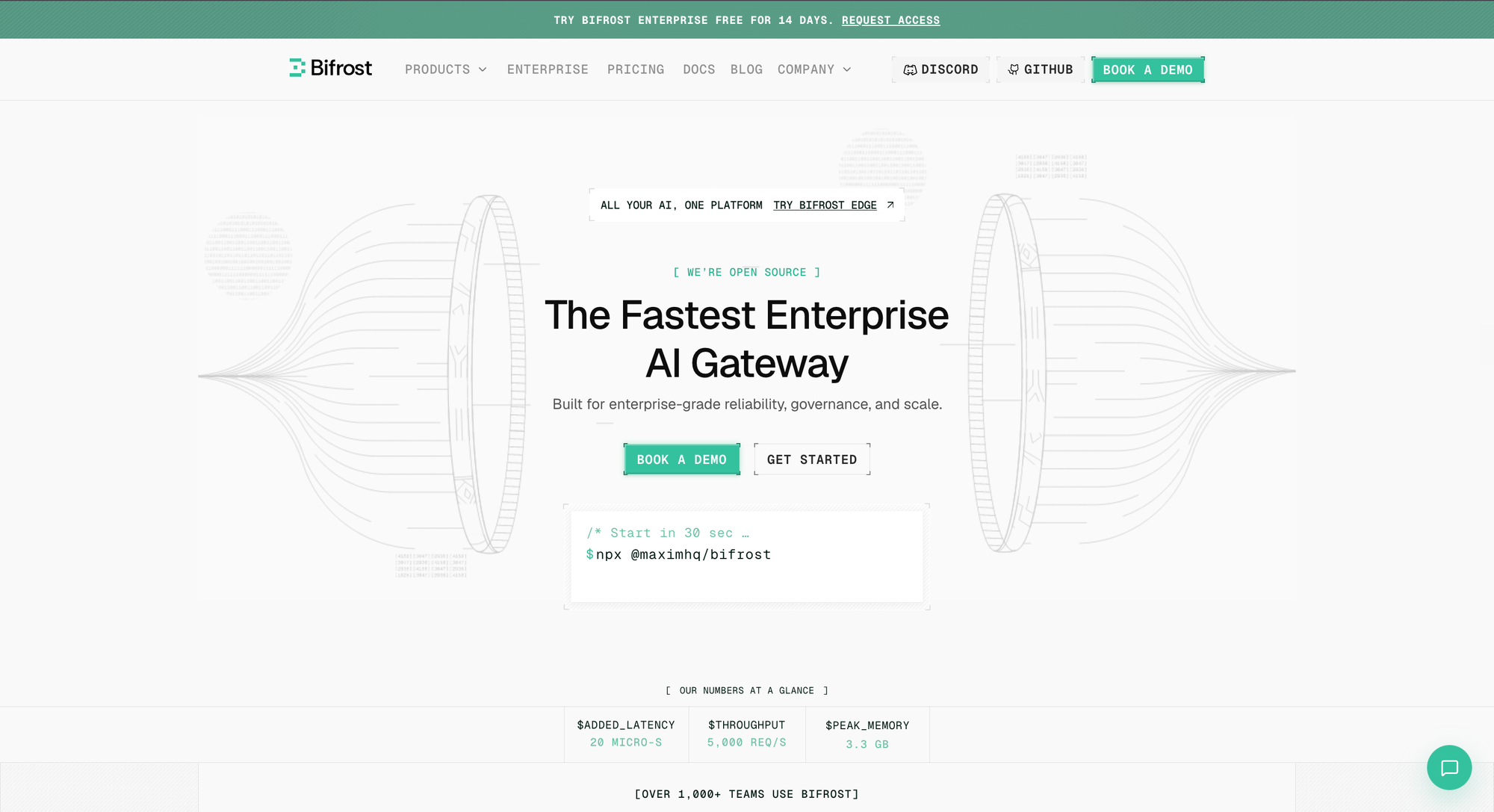
Bifrost is a high-performance, open-source AI gateway written in Go that unifies 1000+ models behind a single OpenAI-compatible API. Sustained benchmarks show 11 microseconds of overhead per request at 5,000 RPS, making Bifrost roughly 50x faster than comparable Python-based proxies. Tight integration with the Maxim AI evaluation and observability platform means cost data connects directly to production tracing, evaluations, and quality dashboards in a single platform.
Key features
- Semantic caching uses a dual-layer system combining exact hash matching with vector similarity search. Cache hits return in roughly 5 milliseconds across vector store backends (Weaviate, Redis, Valkey, Qdrant, Pinecone). Multi-tenant cache isolation per virtual key prevents data leakage in SaaS deployments.
- Automatic fallbacks and adaptive load balancing reroute traffic to the next provider or key when the primary hits rate limits, returns errors, or exceeds latency thresholds, with predictive scaling and real-time health monitoring.
- Virtual keys with a four-tier budget hierarchy (Customer, Team, Virtual Key, Provider Config) cap spend at any level. Budget exhaustion blocks requests or triggers fallback logic. The governance resource page covers setup for multi-tenant SaaS and internal platforms.
- MCP gateway with Code Mode brings native Model Context Protocol support, including agent mode for autonomous tool execution and Code Mode, which lets models write Python to orchestrate multiple tools. Code Mode delivers up to 92% lower token costs and 40% lower latency at scale.
- Native observability with Prometheus metrics, OpenTelemetry tracing, and Datadog integration, compatible with Grafana, New Relic, and Honeycomb.
- Drop-in replacement for the OpenAI, Anthropic, AWS Bedrock, Google GenAI, LangChain, LiteLLM, and PydanticAI SDKs. Changing the base URL is the only code change required.
- Enterprise security and compliance with HashiCorp Vault and AWS Secrets Manager integration, SSO via Okta and Entra, RBAC, in-VPC and on-prem deployments, clustering, content guardrails (AWS Bedrock Guardrails, Azure Content Safety, Patronus AI), and audit logs for SOC 2, GDPR, HIPAA, and ISO 27001.
Best for: Bifrost is built for enterprises running mission-critical AI workloads that require best-in-class performance, scalability, and reliability. It serves as a centralized AI gateway to route, govern, and secure all AI traffic across models and environments with ultra low latency. Bifrost unifies LLM gateway, MCP gateway, and Agents gateway capabilities into a single platform. Designed for regulated industries and strict enterprise requirements, it supports air-gapped deployments, VPC isolation, and on-prem infrastructure. It provides full control over data, access, and execution, along with robust security, policy enforcement, and governance capabilities.
2. Cloudflare AI Gateway
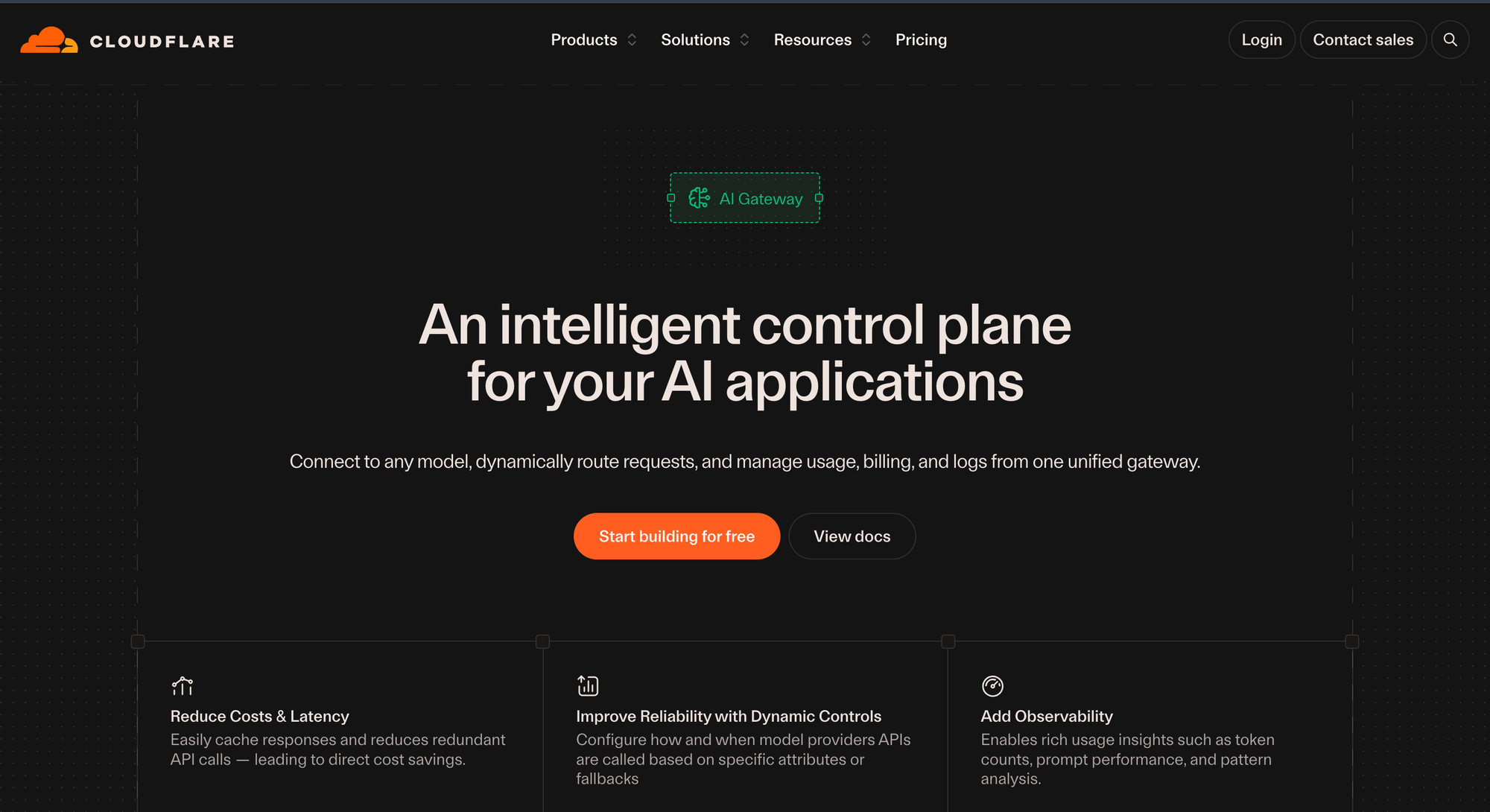
Cloudflare AI Gateway runs on Cloudflare's global edge network as a proxy between applications and AI providers. It supports OpenAI, Anthropic, Google Gemini, Workers AI, AWS Bedrock, Azure OpenAI, Groq, xAI, Replicate, and Hugging Face across 20+ providers. Setup is a single endpoint change with no infrastructure to manage.
Key features
- Response caching serves identical requests from Cloudflare's edge, reducing latency by up to 90% and cutting provider API calls for repeatable prompts.
- Dynamic routing and fallbacks are configurable through a visual dashboard. Retry on transient errors and provider fallback when the first provider fails are first-class behaviors.
- Unified billing consolidates third-party model usage from OpenAI, Anthropic, and other providers into a single Cloudflare invoice, with custom cost tracking and spend limits.
- Guardrails and DLP add prompt-level safety controls and PII scanning for sensitive workloads.
- Free tier covers analytics, caching, and rate limiting, with persistent logs available across all plans.
Cloudflare's caching is exact-match rather than semantic, so hit rate falls off for FAQ-heavy workloads where users phrase the same intent many ways. The gateway is closed-source and edge-bound, limiting data residency control for regulated workloads.
Best for: Developers building serverless or edge-native applications on Cloudflare Workers who want observability and basic cost controls without provisioning additional infrastructure.
3. LiteLLM
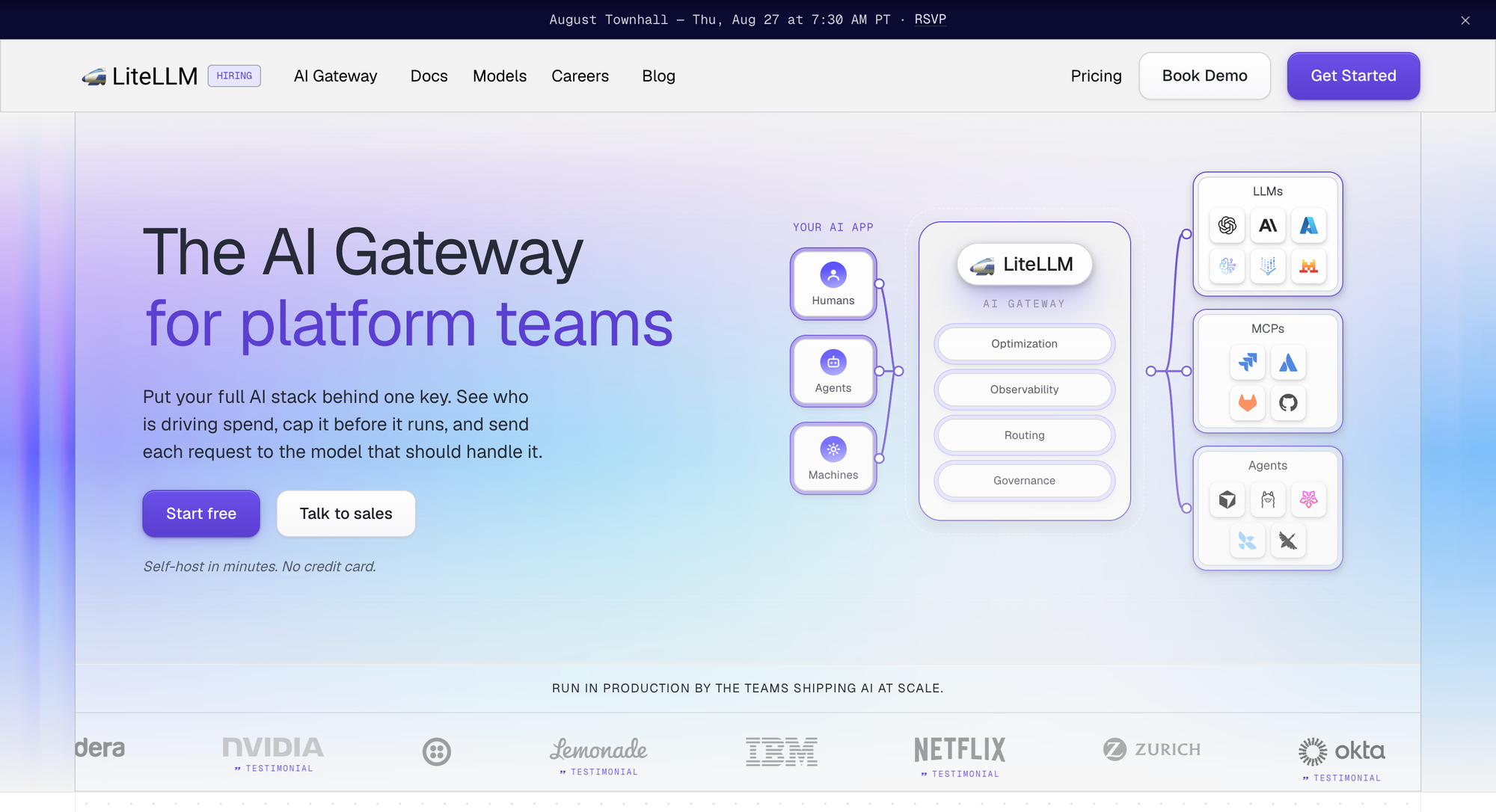
LiteLLM is an open-source Python proxy and SDK that exposes 100+ LLM providers and 2500+ models through the OpenAI format. It is self-hostable via Docker. The LiteLLM Proxy Server adds a UI, budget dashboards, and team management on top of routing.
Key features
- Per-key and per-team spend limits with configurable durations (daily, weekly, monthly, yearly). Budget exhaustion blocks requests.
- Tag-based budgets isolate cost by project, department, or cost center using metadata tags.
- Caching via Redis reduces redundant calls for repeated queries; semantic caching requires extra setup and a vector store.
- Automatic fallbacks and retries with configurable retry counts and provider fallback chains.
- Cost tracking across 100+ providers with detailed model cost maps, exportable for finance reporting.
LiteLLM at production scale typically requires PostgreSQL, Redis, and ongoing patching of the Python proxy. Throughput and latency overhead become limiting factors beyond a few hundred requests per second. Teams evaluating migrations often look at Bifrost as a LiteLLM alternative for higher throughput, lower overhead, native MCP gateway support, and built-in semantic caching.
Best for: Engineering teams that want full infrastructure control, run a Python-first stack, and have the DevOps capacity to operate the proxy plus Postgres and Redis.
4. Vercel AI Gateway
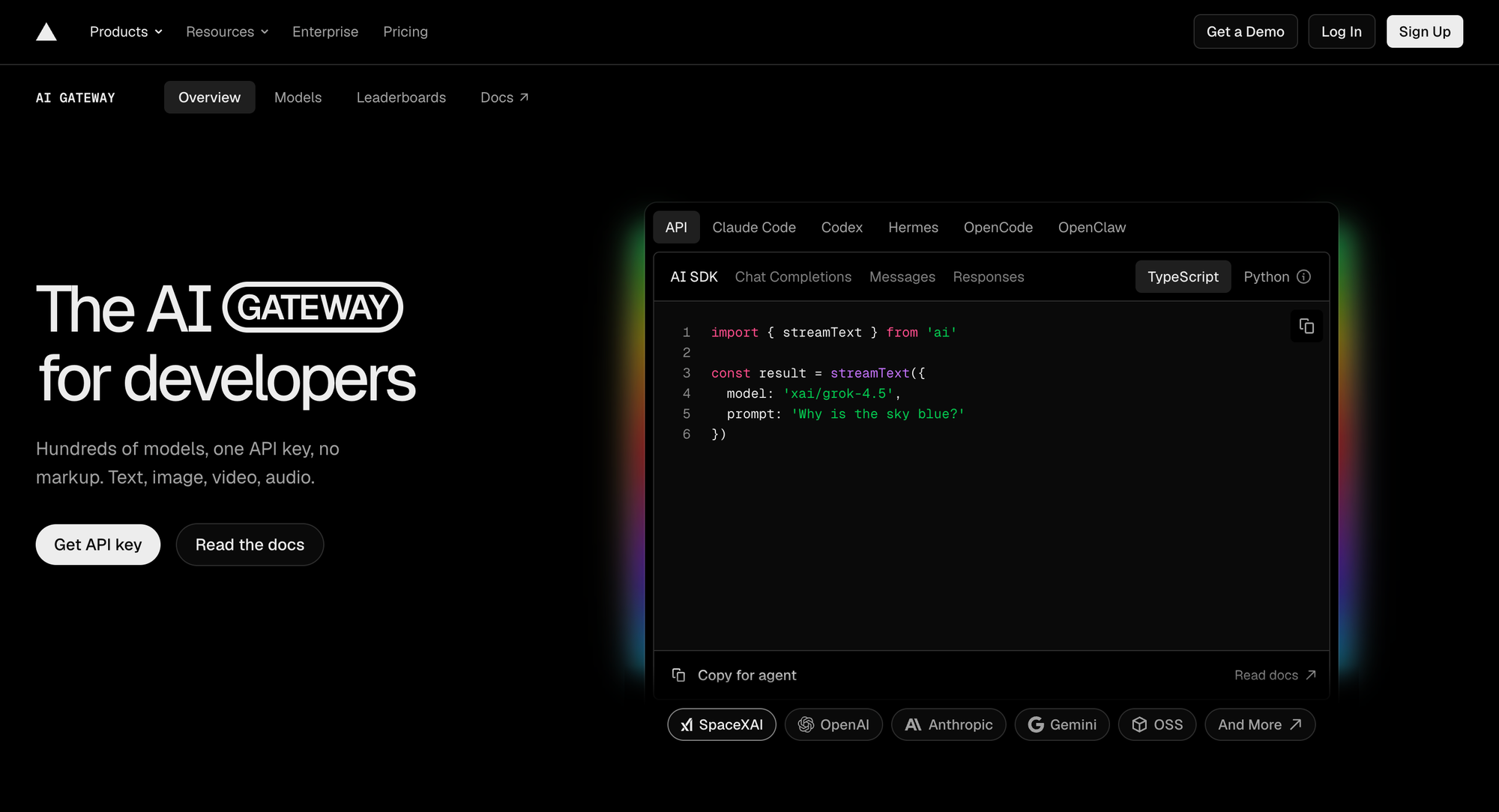
Vercel AI Gateway is a hosted unified API that provides access to hundreds of models through a single endpoint, with budget controls, usage monitoring, load balancing, and fallback management. It works with the Vercel AI SDK, OpenAI Chat Completions, OpenAI Responses, and Anthropic Messages.
Key features
- Single API key for OpenAI, Anthropic, Google, Meta, xAI, and other major providers.
- Provider routing options including ordered fallback, allow-lists, and ranked sorting by latency or uptime.
- BYOK so teams can use their own provider credentials while still routing through the gateway.
- Automatic retries to other providers when the primary fails.
- Embeddings and reranking support for RAG pipelines.
- HIPAA BAA add-on restricts routing to models from providers that have signed a BAA with Vercel.
Vercel AI Gateway is hosted-only, which simplifies setup but does not match the data residency and isolation profile of self-hostable gateways. Per-team and per-customer budget hierarchies are less developed than in purpose-built enterprise platforms, and there is no in-VPC deployment option.
Best for: Frontend and full-stack JavaScript teams building on Next.js or other AI SDK-compatible frameworks who want one API key and basic routing without operating their own gateway.
5. Kong AI Gateway
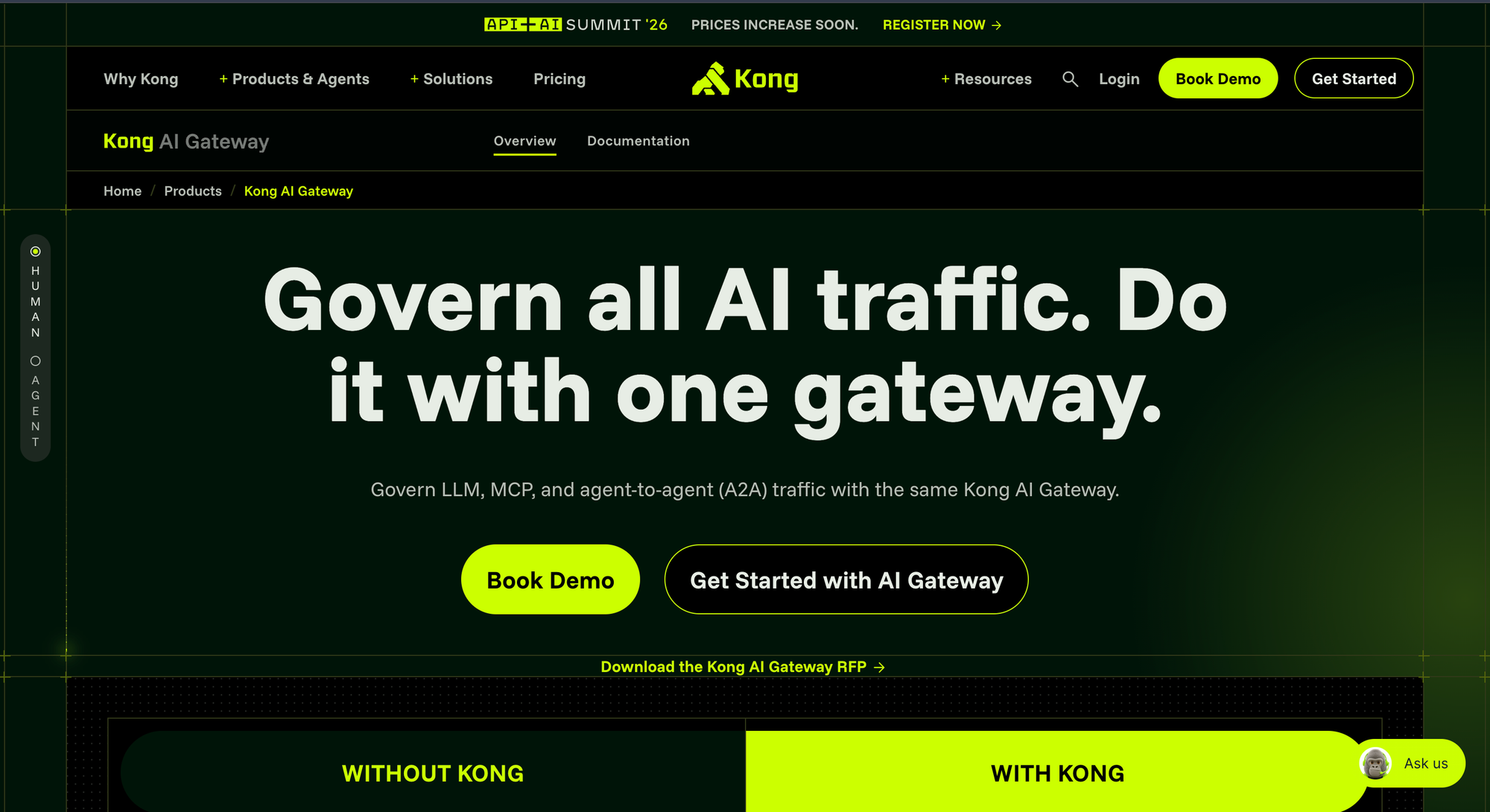
Kong AI Gateway extends Kong's enterprise API gateway with 60+ AI-specific plugins. It targets organizations already running Kong for API management who want to bring LLM traffic under the same governance layer.
Key features
- Semantic caching, semantic routing, and prompt guards via plugins that attach to existing Kong routes.
- PII sanitization and token-based rate limiting for standardizing inputs and outputs across providers.
- Load balancing and fallback across LLM providers with health checks and circuit breaking.
- MCP protocol support, including auto-generation of MCP tools and servers from Kong-managed APIs.
- Enterprise governance through Kong Konnect with audit logs, RBAC, developer portals, and a self-serve API catalog.
Kong's plugin-based architecture sits on top of its Nginx core, so every AI request passes through the broader Kong plugin pipeline before AI-specific logic executes, adding latency compared with purpose-built AI gateways. Native depth on MCP, multi-tenant cache isolation, and LLM-first observability is more limited than specialized gateways provide.
Best for: Enterprise API platform teams that already run Kong, treat LLM traffic as one of many API concerns, and prioritize unifying governance across the broader API estate.
How to Choose an AI Gateway for LLM Cost Optimization
The right choice depends on where the primary pain point sits:
- Enterprise cost operations with production observability: Bifrost AI gateway provides the most complete solution, with hierarchical budget controls, semantic caching, MCP gateway capability, and direct integration with the Maxim AI evaluation and monitoring stack. The LLM Gateway Buyer's Guide walks through detailed capability comparisons for procurement.
- Serverless and edge deployments: Cloudflare AI Gateway is the lowest-friction option with a free tier and no infrastructure to manage.
- Open-source, self-hosted Python stacks: LiteLLM offers wide provider coverage for teams comfortable operating Postgres, Redis, and a Python proxy.
- Frontend-first teams on Next.js: Vercel AI Gateway is the path of least resistance.
- Enterprises extending existing API governance: Kong is a natural extension if it is already in the API platform.
For regulated industries (healthcare, financial services, public sector), data residency, in-VPC deployment, vault integration, and SOC 2 or HIPAA-ready audit logging matter more than raw feature counts. The Bifrost Enterprise deployment patterns are built for these constraints, with hierarchical budgets and access control covering the same compliance posture across cost and governance.
Beyond the Gateway: Pairing Cost Optimization with Quality Monitoring
Reducing LLM cost is one side of the equation. The other is knowing whether responses served at lower cost are still high quality. A cheaper model or a cache hit is only valuable if the output is reliable for the user.
The Maxim AI evaluation and observability platform complements the gateway layer, providing end-to-end agent observability, production trace monitoring, and automated evaluations against live traffic. Teams can track cost trends alongside accuracy, hallucination rate, and task completion, catching regressions before they reach users.
For teams running on the open-source Bifrost gateway, the integration is native: gateway cost data flows directly into Maxim dashboards alongside output quality metrics.
Start Optimizing LLM Cost with Bifrost
LLM cost optimization is no longer optional at production scale. A well-designed AI gateway converts unpredictable provider spend into a controlled, observable line item, with semantic caching, fallback routing, and hierarchical virtual key budgets doing most of the heavy lifting. The right choice depends on workload profile, deployment constraints, and how tightly cost needs to be tied to output quality.
To see how the Bifrost AI gateway can reduce LLM cost across a production stack while keeping quality observable end to end, book a demo with the Bifrost team.
Frequently Asked Questions
What are the four pillars of LLM cost optimization?
At the gateway layer, the four levers are caching, fallback and cost-aware routing, budget controls, and observability. Caching (especially semantic) removes redundant calls, routing sends each request to an appropriately priced model, budgets enforce hard spend limits per team or key, and observability surfaces per-model and per-team cost so decisions are data-driven rather than reactive.
Which LLM is the most cost-effective?
There is no single answer, which is why routing matters more than picking one model. The cheapest option per task varies, so a gateway routes simple work to lower-cost models and reserves premium models for complex requests, then caches semantically similar queries so repeats cost nothing. This makes the effective cost per request lower than any single model's list price.
How much does 1 million tokens cost?
It depends entirely on the model, and the spread is wide: premium frontier models can cost many times more per million tokens than smaller or older models. That variance is exactly why cost-aware routing and caching pay off. The Bifrost LLM cost calculator helps estimate spend across models before you commit to one.
What does LLM cost optimization mean?
LLM cost optimization is the practice of reducing spend on model API calls without sacrificing output quality. It combines routing to cost-appropriate models, caching to eliminate redundant calls, enforced budgets to cap spend, and observability to attribute and monitor cost. An AI gateway is where these controls are applied consistently across every provider.
How much can an AI gateway reduce LLM costs?
Savings depend on traffic shape. Semantic caching removes redundant calls on repetitive workloads, cost-aware routing shifts volume to cheaper models where quality allows, and Code Mode cuts token usage on multi-tool agent runs by up to 92% at scale. Combined, these turn variable, unpredictable spend into an enforced, observable line item rather than a month-end surprise.