Top 5 Prompt Management Platforms in 2026
TL;DR
Managing prompts at scale has become essential for AI-driven organizations in 2026. This comprehensive guide analyzes the five leading prompt management platforms that streamline how teams organize, version, and optimize their AI interactions:
- Maxim AI: Full-stack platform combining prompt management with evaluation, simulation, and production monitoring
- PromptLayer: Lightweight solution empowering domain experts through visual version control
- Humanloop: Feedback-driven platform prioritizing human evaluation workflows
- Langfuse: Open-source engineering platform with comprehensive observability
- Vellum: Enterprise-grade workspace with intuitive GUI for cross-team collaboration
Bottom Line: Select based on organizational priorities, Maxim AI for end-to-end lifecycle coverage, PromptLayer for team collaboration, Humanloop for human-centric evaluation, Langfuse for open-source flexibility, and Vellum for enterprise polish.
Introduction: The Critical Role of Prompt Management in 2026
The landscape of AI development has fundamentally shifted. Prompts are no longer throwaway text strings scattered across codebases, they've evolved into mission-critical assets requiring professional management, systematic optimization, and rigorous governance.
The Problem: Modern AI teams juggle dozens or hundreds of prompt variations across multiple use cases, models, and deployment environments. Without proper infrastructure, organizations experience version chaos, compliance vulnerabilities, inconsistent quality, and spiraling costs from inefficient prompt iterations.
The Answer: Purpose-built prompt management platforms deliver the infrastructure teams need to treat prompts like production code. These systems provide centralized repositories, granular version tracking, collaborative editing environments, automated testing frameworks, and deployment controls, transforming prompt development from an ad-hoc practice into a disciplined engineering workflow.
1. Maxim AI - Complete Lifecycle Management
Platform Overview
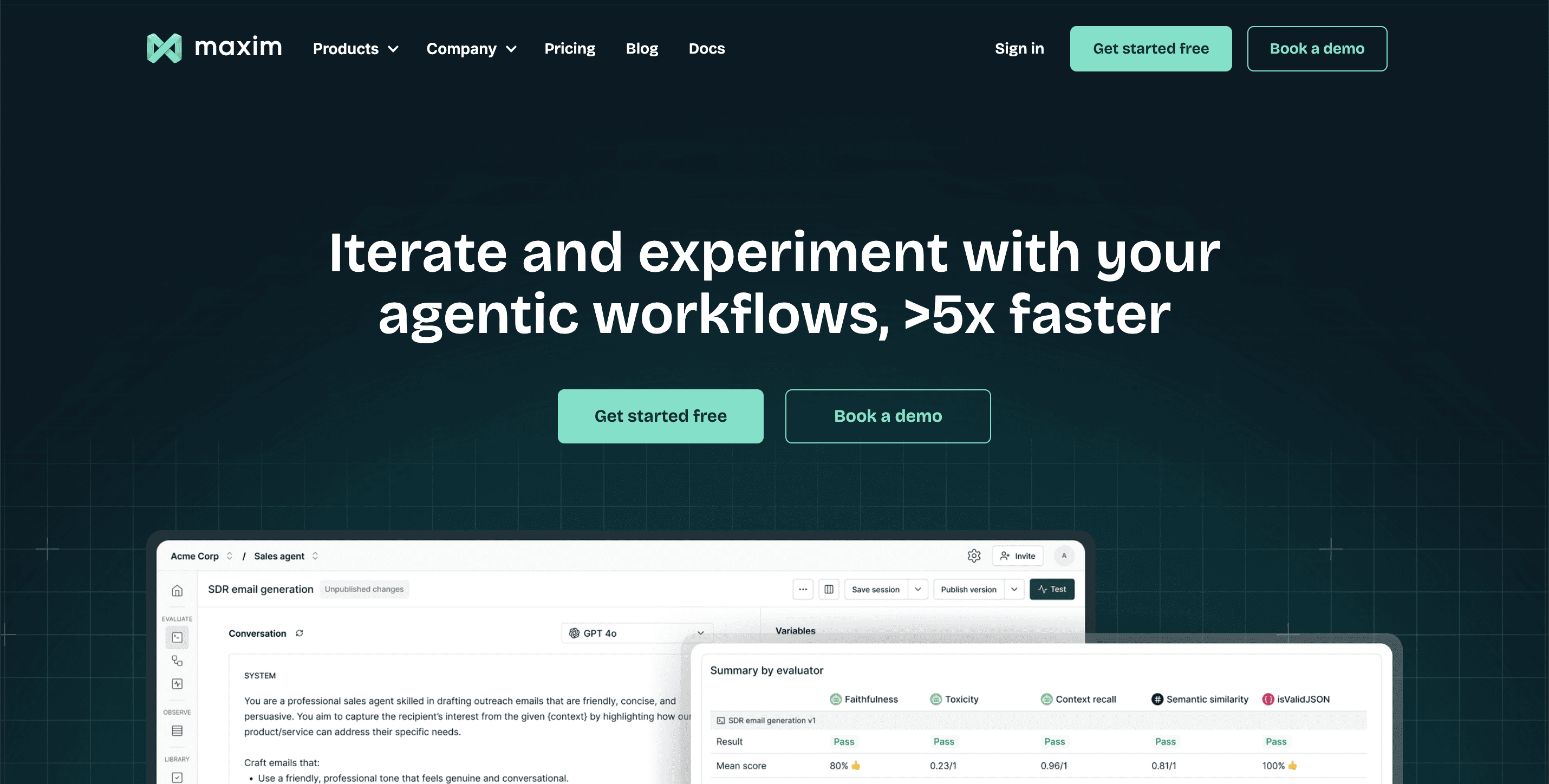
Maxim AI delivers a unified platform architected for managing AI quality throughout the entire development journey, from initial experimentation through production observability. Rather than addressing prompt management in isolation, Maxim integrates it with comprehensive evaluation, agent simulation, and real-time monitoring capabilities.
The platform's Playground++ represents an evolution beyond traditional prompt editors, offering sophisticated features for organizing, versioning, and deploying prompts without requiring code modifications. What distinguishes Maxim is its holistic approach where product teams, engineers, and quality specialists work within a single integrated environment.
Core Features
Prompt Playground++
- Multi-format playground accommodating text, visual content, and structured data
- Sophisticated organization using folders, tags, and custom metadata schemas
- Built-in support for function calling and tool definitions
- Dynamic context injection for retrieval-augmented generation workflows
- Universal compatibility spanning 250+ models from OpenAI, Anthropic, AWS Bedrock, Google Vertex AI, and Azure
Experimentation Framework
- Large-scale testing across prompt variations, model selections, and tool configurations
- Multi-layer evaluation using AI-powered, programmatic, and human assessment
- Flexible dataset handling with streamlined import/export
- Team-based workflows with distributable performance reports
- Comparative analysis displaying prompt variant performance
Agent Evaluation & Simulation
- Production-scale agent testing across thousands of realistic scenarios
- Multi-turn conversation simulation with configurable user personas
- Granular monitoring of agent decision-making at every interaction step
- Pre-deployment quality validation preventing production issues
- Business-aligned evaluation metrics tailored to organizational objectives
Production Monitoring
- Live tracing and application performance monitoring
- Enterprise logging infrastructure with human review pipelines
- Customizable analytics dashboards tracking performance across dimensions
- Intelligent alerting for performance degradation or anomalies
- Comprehensive cost and latency tracking per prompt version
Deployment Infrastructure
- Single-click deployment with rule-based routing requiring zero code changes
- Bifrost Gateway: Production-grade LLM gateway featuring multi-provider intelligence
- Intelligent failover mechanisms and traffic load balancing
- Semantic caching delivering 50× latency improvements
- Transparent pass-through billing across all providers
Enterprise Compliance
- SOC 2 Type 2 and ISO 27001 certifications
- Private cloud deployment options for regulated sectors
- Enterprise SSO and granular role-based permissions
- Geographic data residency controls
- Complete audit logging for all prompt modifications
Best For
- Enterprise organizations requiring integrated tooling from development through production
- Multi-disciplinary teams where business stakeholders, domain specialists, and engineers collaborate on AI quality
- Regulated sectors demanding enterprise security and compliance certifications (healthcare, financial services, legal tech)
- Complex AI architectures involving multi-agent systems, tool utilization, and RAG implementations
- Quality-focused organizations with rigorous evaluation standards and production monitoring requirements
Proven Impact: Organizations using Maxim deploy reliable AI agents 5× faster through systematic prompt optimization, continuous quality evaluation, and comprehensive production visibility.
Pricing
Maxim AI offers both seat based pricing and customized enterprise pricing tailored to usage volume, team composition, and infrastructure requirements.
2. PromptLayer - Empowering Domain Experts
Platform Overview
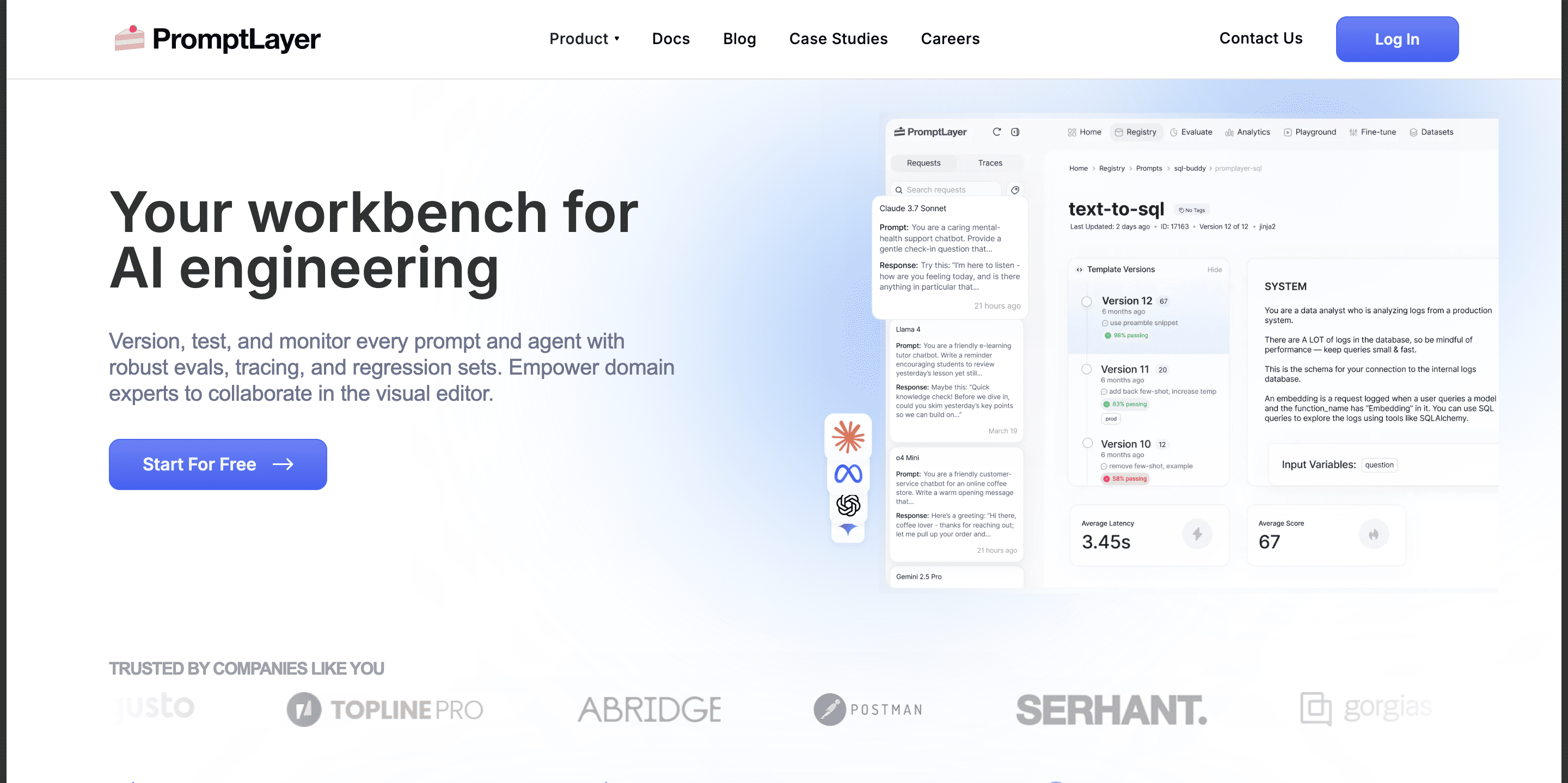
PromptLayer brings Git-inspired version control to prompt management, specifically designed to enable domain specialists (healthcare professionals, legal experts, educators) to directly contribute to prompt optimization. Operating as intelligent middleware between applications and language models, PromptLayer captures every interaction for comprehensive analysis.
Core Features
- Visual Prompt CMS: Browser-based content management decoupled from application codebase
- Git-Style Versioning: Detailed diffs with commit histories and side-by-side variant comparisons
- Universal Templates: Provider-agnostic prompt blueprints adaptable to any LLM
- Analytics Dashboard: Comprehensive tracking of latency, costs, and feedback per version
- Environment Separation: Distinct production and development environments with labeled releases
- Automated Testing: Regression test suites and A/B comparison capabilities
- Non-Technical Interface: Domain experts iterate independently without engineering bottlenecks
Best For
- Compact teams seeking straightforward prompt versioning without infrastructure overhead
- Organizations where domain expertise drives prompt quality improvements
- Projects requiring developer-friendly Git-style prompt workflows
- Budget-conscious startups needing essential versioning features
- Teams optimizing for rapid iteration by non-technical stakeholders
3. Humanloop - Human-Centered Evaluation
Platform Overview
Humanloop differentiates itself through an unwavering focus on human feedback as the cornerstone of prompt optimization. The platform recognizes that automated metrics alone cannot capture nuanced quality requirements, building comprehensive workflows around expert annotation, subjective judgment, and iterative refinement based on human insights.
Core Features
- Feedback Collection: Structured interfaces for gathering expert annotations and quality ratings
- Annotation Workflows: Customizable pipelines routing examples to appropriate reviewers
- Prompt Versioning: Complete version history with performance tracking and comparison tools
- Evaluation Frameworks: Configurable rubrics combining automated checks with human assessment
- Team Collaboration: Shared workspaces where stakeholders review outputs and suggest improvements
- Dataset Management: Organized test sets with automated regression testing
- Model Monitoring: Production observability tracking real-world performance
Best For
- Organizations prioritizing subjective quality over pure metrics
- Teams building applications where human judgment determines success
- Use cases requiring domain expert validation (creative content, sensitive topics)
- Projects iterating based on user feedback and preference data
- Companies investing in systematic human evaluation processes
4. Langfuse - Open-Source Observability
Platform Overview
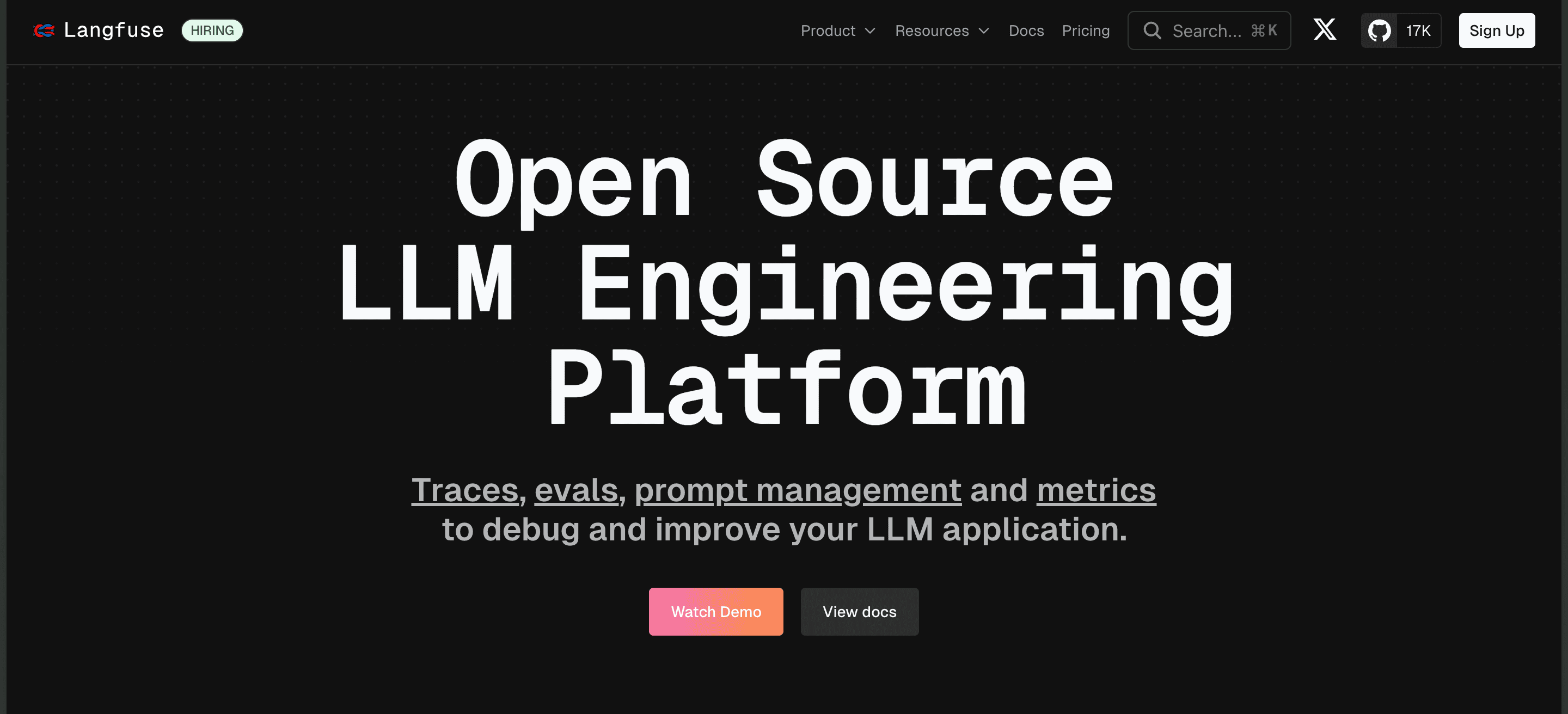
Langfuse represents the leading open-source approach to LLM engineering, combining prompt management with deep observability capabilities. Built for transparency and customization, Langfuse gives organizations complete control over their prompt infrastructure while providing enterprise-grade features comparable to commercial platforms.
Core Features
- Prompt Repository: Centralized storage with version tracking and collaborative editing
- Execution Tracing: Detailed visibility into LLM invocations with full context capture
- Cost Analytics: Granular tracking of token usage and expenses by prompt, model, and user
- Evaluation Framework: Flexible scoring systems supporting automated and manual assessment
- Dataset Management: Test set organization with batch evaluation capabilities
- Production Monitoring: Real-time dashboards displaying performance and quality metrics
- Open Architecture: Self-hosted deployment option with complete data sovereignty
- Integration Ecosystem: Native support for LangChain, LlamaIndex, and major frameworks
Best For
- Organizations valuing open-source transparency and community development
- Teams requiring self-hosted infrastructure for data privacy
- Engineering-focused companies comfortable with code-based configuration
- Projects needing deep customization of prompt management workflows
- Budget-conscious organizations seeking enterprise features without licensing costs
5. Vellum - Enterprise-Ready Workspace
Platform Overview
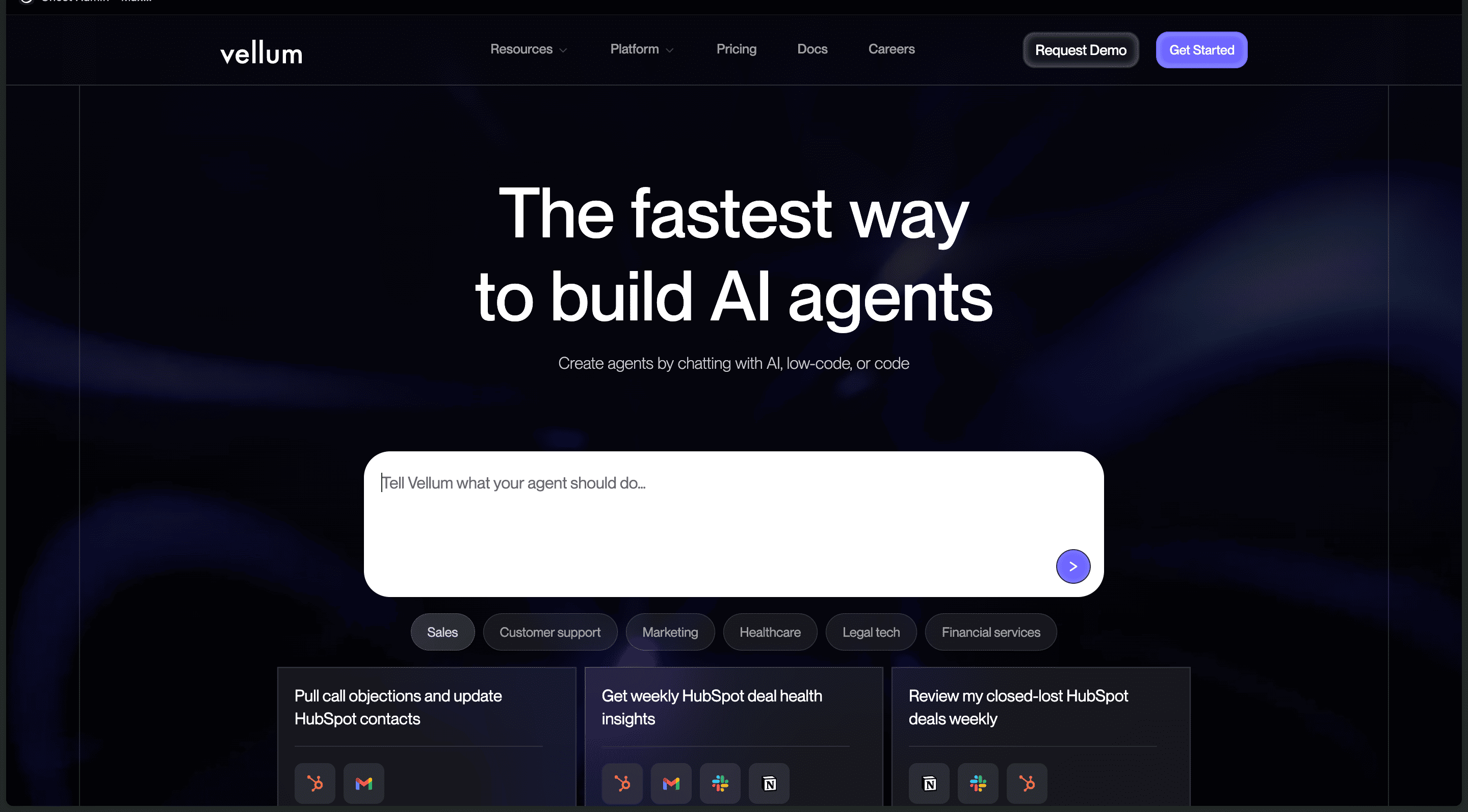
Vellum delivers a premium prompt management experience through an intuitive graphical interface designed for cross-functional collaboration. Targeting enterprise teams requiring both technical sophistication and business user accessibility, Vellum combines powerful features with a polished user experience that reduces training requirements.
Core Features
- Visual Playground: Side-by-side prompt editor for comparing model outputs and configurations
- Template Library: Organized repository of reusable prompt patterns with inheritance
- Collaborative Workflows: Built-in approval processes and stakeholder sharing capabilities
- Evaluation Pipelines: Hybrid assessment combining automated checks with human review
- Enterprise Security: SOC 2 compliance, private cloud options, and HIPAA support
- Multi-Model Testing: Unified interface for testing across closed and open-source models
- Version Management: Comprehensive tracking of changes, comparisons, and rollback capabilities
- Integration Suite: Pre-built connectors for common development frameworks and tools
Best For
- Regulated industries demanding compliance certifications (SOC 2, HIPAA)
- Companies willing to invest in premium tooling for productivity gains
Platform Comparison Matrix
| Capability | Maxim AI | PromptLayer | Humanloop | Langfuse | Vellum |
|---|---|---|---|---|---|
| Hosting | Cloud/Private | Cloud | Cloud | Cloud/Self-hosted | Cloud/Private |
| Pricing Model | Tiered, Enterprise | Freemium | Tiered | Open-source/Enterprise | Tiered |
| Evaluation Depth | Comprehensive | Basic | Human-focused | Flexible | Moderate |
| Observability | Production-grade | Logging-focused | Performance tracking | Deep tracing | Standard |
| Model Support | 250+ providers | Universal | Multiple providers | Framework-agnostic | Multi-model |
| LLM Gateway | ✅ Bifrost | ❌ | ❌ | ❌ | ❌ |
| Visual Interface | ✅ Advanced | ✅ Strong | ✅ Moderate | ⚠️ Basic | ✅ Premium |
| Security Compliance | SOC 2, ISO 27001 | SOC 2 (paid) | SOC 2 (enterprise) | Self-managed | SOC 2, HIPAA |
| Agent Simulation | ✅ Native | ❌ | ⚠️ Limited | ❌ | ⚠️ Limited |
| Ideal Use Case | Full lifecycle | Team collaboration | Human evaluation | Open-source | Enterprise GUI |
Selection Criteria for 2026
1. Team Structure & Skillsets
Organizational composition heavily influences platform fit. Cross-functional teams benefit from visual interfaces (Maxim, PromptLayer, Vellum) enabling business participation. Engineering-heavy teams may prefer code-centric options (Langfuse). Evaluate whether your team needs low-code accessibility or prefers programmatic control.
2. Deployment & Infrastructure
Cloud-hosted solutions offer rapid deployment but less control. Self-hosted options (Langfuse) provide maximum data governance at the cost of operational overhead. Organizations in regulated industries should prioritize platforms offering private deployment (Maxim, Vellum) with comprehensive compliance certifications.
3. Quality Assurance Requirements
Evaluation sophistication varies significantly across platforms. Organizations with rigorous quality standards need comprehensive evaluation frameworks (Maxim, Humanloop). Teams focused on functional testing may find simpler solutions sufficient (PromptLayer). Consider whether automated metrics suffice or human judgment proves essential.
4. Budget & Total Cost
Platform costs extend beyond licensing fees. Consider API expenses (some platforms optimize costs through caching), infrastructure requirements (self-hosted vs. managed), and team productivity gains. Open-source options (Langfuse) eliminate licensing costs but require engineering investment. Enterprise platforms (Maxim, Vellum) command higher prices but deliver integrated capabilities reducing tool sprawl.
5. Integration Requirements
Seamless integration with existing workflows proves critical. Evaluate SDKs in your preferred languages, compatibility with current LLM providers, and pre-built framework integrations (LangChain, LlamaIndex). Platforms offering comprehensive integrations reduce implementation friction.
Additional Resources
Related Comparisons
- Comprehensive Guide to Prompt Engineering Best Practices in 2026
- Enterprise Prompt Engineering Platforms: Detailed Comparison
- Top 3 Prompt Versioning Tools for 2025
- Why Maxim AI Leads in Prompt Management
Industry Perspectives
Platform Resources
Conclusion: Choosing Your Prompt Management Strategy
Prompt management in 2026 represents a mature discipline requiring purpose-built infrastructure. The five platforms evaluated offer distinct philosophies addressing different organizational needs:
- Maxim AI provides the most integrated solution for organizations requiring seamless workflows from experimentation through production monitoring, emphasizing cross-functional collaboration and enterprise-grade security infrastructure.
- PromptLayer empowers teams through lightweight, Git-inspired version control optimized for enabling domain experts to drive quality improvements without technical dependencies.
- Humanloop centers the prompt optimization process around human judgment and feedback, recognizing that automated metrics cannot fully capture nuanced quality requirements.
- Langfuse delivers transparency and control through open-source architecture, giving engineering-focused organizations complete sovereignty over prompt infrastructure.
- Vellum provides a premium user experience, enabling enterprise teams to leverage advanced capabilities without extensive training.
Your optimal choice depends on team composition, technical sophistication, regulatory constraints, budget parameters, and strategic AI priorities. As AI applications grow in complexity and business impact, integrated platforms unifying prompt management, rigorous evaluation, and production observability become fundamental to maintaining quality standards and development velocity.
FAQs About Prompt Management Platforms
What is prompt management and why does it matter?
Prompt management involves systematically organizing, versioning, testing, and deploying prompts used in AI applications. It matters because prompts directly determine AI behavior, output quality, and operational costs. Without proper management, teams face version chaos, inconsistent results, compliance risks, and wasted resources on trial-and-error optimization.
How do prompt management platforms differ from prompt engineering tools?
Prompt engineering tools focus primarily on crafting and testing individual prompts. Prompt management platforms provide comprehensive infrastructure for the full lifecycle, including version control, team collaboration, deployment workflows, production monitoring, and cost optimization. Think of it as the difference between a text editor and a complete software development platform.
Can small teams benefit from prompt management platforms?
Absolutely. Even small teams managing multiple prompts across different use cases benefit from version control, systematic testing, and collaboration features. Platforms like PromptLayer and Langfuse offer lightweight solutions specifically designed for smaller organizations. The key is choosing a platform that matches your scale without introducing unnecessary complexity.
What security considerations matter for prompt management?
Critical security factors include data encryption in transit and at rest, access control and authentication mechanisms, audit logging of all changes, compliance certifications (SOC 2, ISO 27001), and deployment options (cloud vs. private). For regulated industries, ensure platforms offer the necessary compliance credentials and allow data residency controls.
How should I evaluate ROI on prompt management platforms?
Consider multiple factors: reduced engineering time through efficient workflows, improved output quality decreasing iteration cycles, cost savings from prompt optimization, reduced compliance risk, and faster time-to-production for AI features. Most organizations see ROI within months through combination of productivity gains and cost optimizations.
What's the learning curve for these platforms?
This varies significantly by platform and team background. Visual interfaces (Maxim, Vellum, PromptLayer) typically require minimal training for business users. Code-centric platforms (Langfuse) assume technical proficiency but offer more flexibility. Most platforms provide comprehensive documentation, tutorials, and support to accelerate onboarding.