Top 5 AI Gateways with Semantic Caching to Cut LLM API Calls
Every LLM API call costs tokens and adds latency. In production environments, a large chunk of those calls are semantically redundant. A support bot answering "How do I reset my password?" processes nearly identical intent whether the user types "password reset help" or "can't get into my account." Without semantic caching, each variation triggers a full inference cycle.
Traditional exact-match caching only catches character-identical prompts, which is rare in natural language. Semantic caching changes this by converting prompts into vector embeddings and comparing their meaning using cosine similarity. When a match exceeds a configured threshold, the cached response returns instantly without hitting the provider. Cache hits typically return in under 5 milliseconds compared to 2 to 5 seconds for a full model call. Even a 30 to 40 percent cache hit rate translates into meaningful cost savings and faster response times.
The best place to implement semantic caching is at the AI gateway layer. A centralized gateway ensures every request across all services benefits from a shared cache, improving hit rates as usage scales.
Here are five AI gateways that support semantic caching in 2026.
| Gateway | Semantic caching | Cache backends | Multi-turn support | Cache metrics | Deployment |
|---|---|---|---|---|---|
| Bifrost | Built in, first-class plugin | Weaviate, Redis/Valkey, Qdrant, Pinecone | Yes, with conversation thresholds | Prometheus and OpenTelemetry | Open source, self-hosted |
| LiteLLM | Yes, via Redis or Qdrant | Seven backends including in-memory, disk, Redis, Qdrant | Not documented | Basic | Open source, self-hosted |
| Kong AI Gateway | Yes, dedicated plugin since 3.8 | Vector store backed | Not documented | Via Kong observability | Open core, self-hosted or SaaS |
| Apache APISIX | Yes, ai-cache plugin since 3.18 | Vector store backed | Yes | Prometheus hit, miss, bypass and embedding latency | Open source, self-hosted |
| Cloudflare AI Gateway | No, exact-match only | Edge cache | No | Dashboard analytics | Managed only |
1. Bifrost
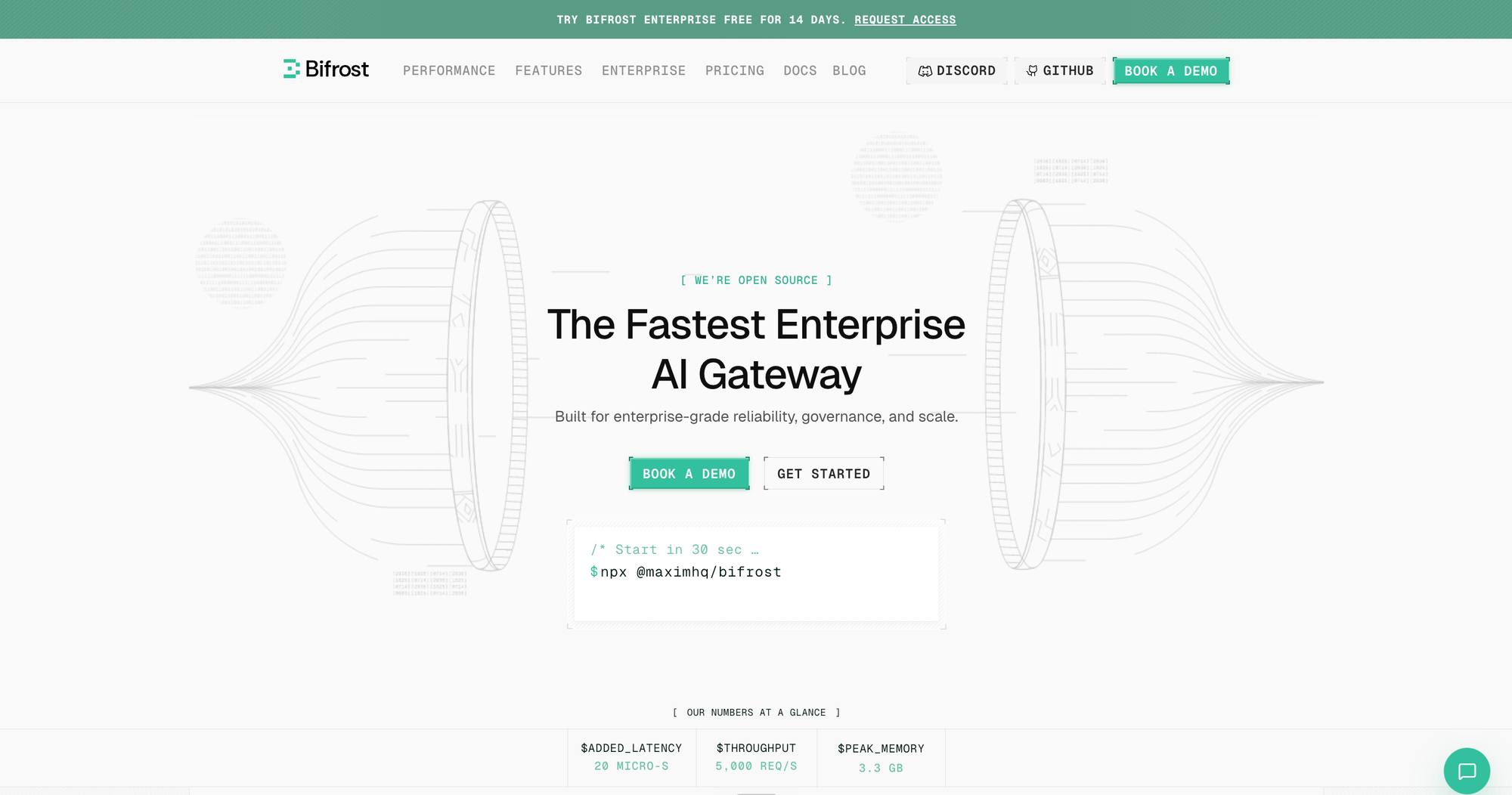
Bifrost is an open-source AI gateway built in Go by Maxim AI. It provides a single OpenAI-compatible API for 23+ providers including OpenAI, Anthropic, AWS Bedrock, Google Vertex AI, Azure OpenAI, Cohere, Mistral, Groq, and Ollama.
Bifrost ships semantic caching as a first-class, built-in plugin with a dual-layer architecture. The first layer uses exact hash matching to return responses for identical prompts instantly with zero embedding overhead. The second layer performs vector similarity comparisons, recognizing semantically equivalent prompts and reusing previously generated outputs.
The system supports multiple vector database backends including Weaviate, Redis/Valkey, Qdrant, and Pinecone. Similarity thresholds are configurable (default 0.8) with the option to override values per request through HTTP headers. Cache scoping happens automatically by model and provider to avoid conflicts between different LLM configurations.
For teams dealing with multi-turn conversations, Bifrost includes configurable conversation thresholds that automatically skip caching when conversations exceed a set message count (default: 3 messages). This prevents false matches in extended dialogues where long histories create high semantic overlap between unrelated sessions.
An embedding-free direct hash mode is also available for scenarios where only exact-match deduplication is needed, eliminating the requirement for an embedding provider entirely.
Beyond caching, Bifrost brings automatic failbacks across providers and models, adaptive load balancing, native MCP gateway support for agentic workflows, virtual key budget management with hierarchical controls, and native Prometheus-based observability. It integrates directly with Maxim's AI evaluation and observability platform for end-to-end production monitoring, connecting cost data to trace monitoring, evaluation workflows, and quality dashboards.
Published benchmarks show 11 microseconds of overhead at 5,000 requests per second, making it the lowest-latency AI gateway currently available. Deployment takes under 30 seconds with zero configuration via npx -y @maximhq/bifrost or Docker.
Best for: Bifrost is built for enterprises running mission-critical AI workloads that require best-in-class performance, scalability, and reliability. It serves as a centralized AI gateway to route, govern, and secure all AI traffic across models and environments with ultra low latency.
Bifrost unifies LLM gateway, MCP gateway, and Agents gateway capabilities into a single platform. Designed for regulated industries and strict enterprise requirements, it supports air-gapped deployments, VPC isolation, and on-prem infrastructure. It provides full control over data, access, and execution, along with robust security, policy enforcement, and governance capabilities.
2. LiteLLM
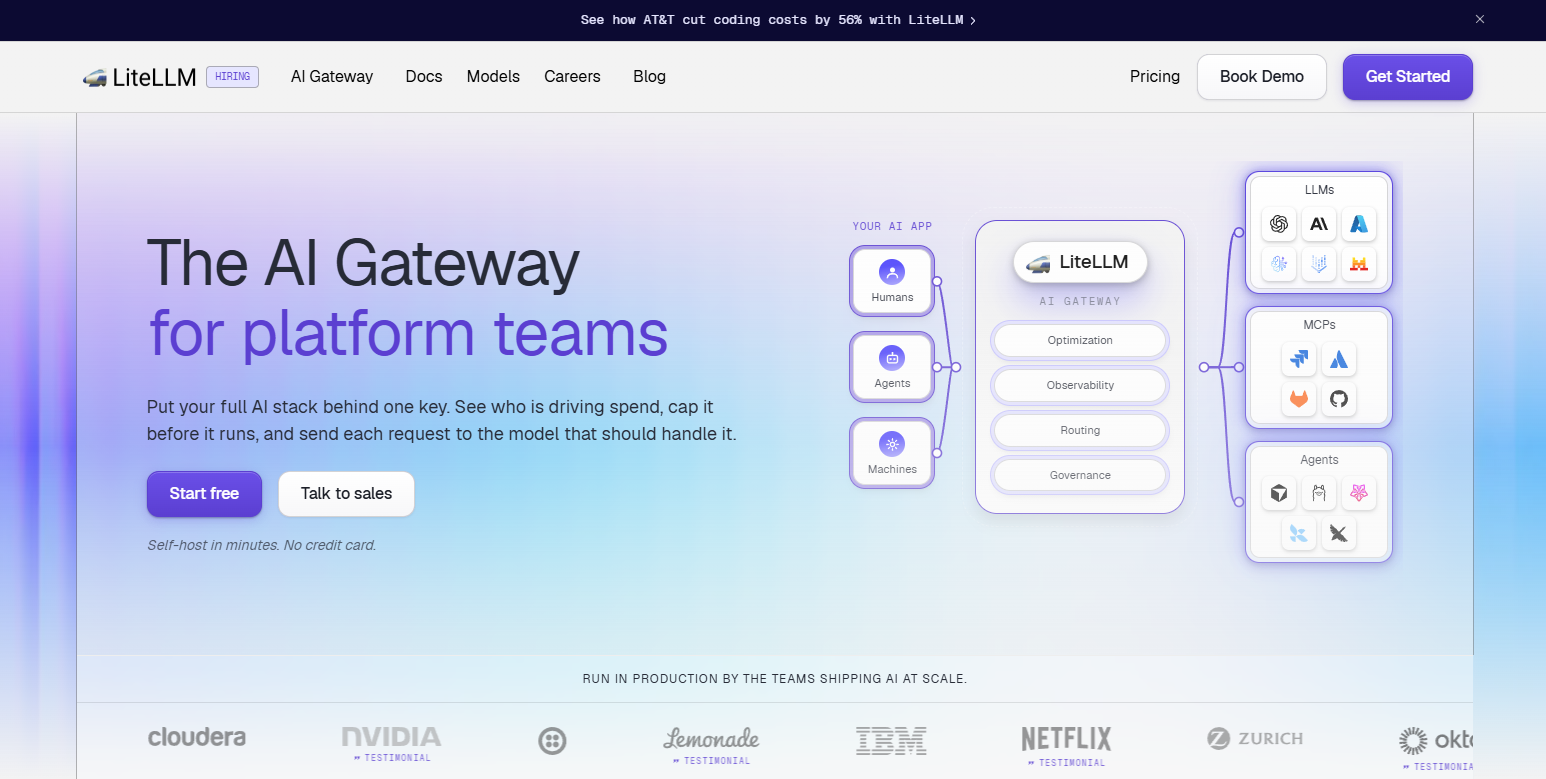
LiteLLM is an open-source Python-based proxy that standardizes access to 100+ LLM providers through a unified OpenAI-compatible interface.
Overview: LiteLLM provides semantic caching through Redis or Qdrant-based vector search. Developers can configure redis-semantic or qdrant-semantic cache modes, which compare prompt embeddings to identify semantically similar queries. Similarity thresholds and TTL settings are adjustable depending on accuracy requirements.
Features: Supports seven cache backends including in-memory, disk, Redis, S3, GCS, and Qdrant. Offers a dual-cache design with L1 in-memory and L2 Redis tiers. Per-request cache control through headers and namespaces. Virtual key management, spend tracking, and rate limiting included.
Best for: Python-centric teams that need wide provider coverage and quick LLM call unification for development and moderate-scale production. Semantic caching requires external vector databases and embedding services, which adds operational complexity compared to gateways with built-in caching layers.
3. Kong AI Gateway
Kong AI Gateway extends the well-known Kong API management platform with AI-specific plugins for model routing, semantic caching, and prompt control.
Overview: Since version 3.8, Kong has introduced semantic intelligence capabilities powered by vector databases. The AI Semantic Cache plugin generates embeddings for incoming prompts and stores them in a vector store like Redis. New prompts get compared against stored vectors to find semantically similar requests. Kong reports that cache hits can reduce response latency by up to 20x.
Features: Semantic caching via dedicated plugin with configurable similarity thresholds. Semantic routing that analyzes prompt content to determine the best model for a request. Supports OpenAI, Anthropic, AWS Bedrock, Google Vertex AI, and Mistral. Load balancing with health checks and circuit breaking.
Best for: Teams already standardized on Kong for API management that want to consolidate traditional API and LLM traffic governance under a single platform. Teams without existing Kong infrastructure may find the setup complexity significant for AI-only use cases.
4. Apache APISIX AI Gateway
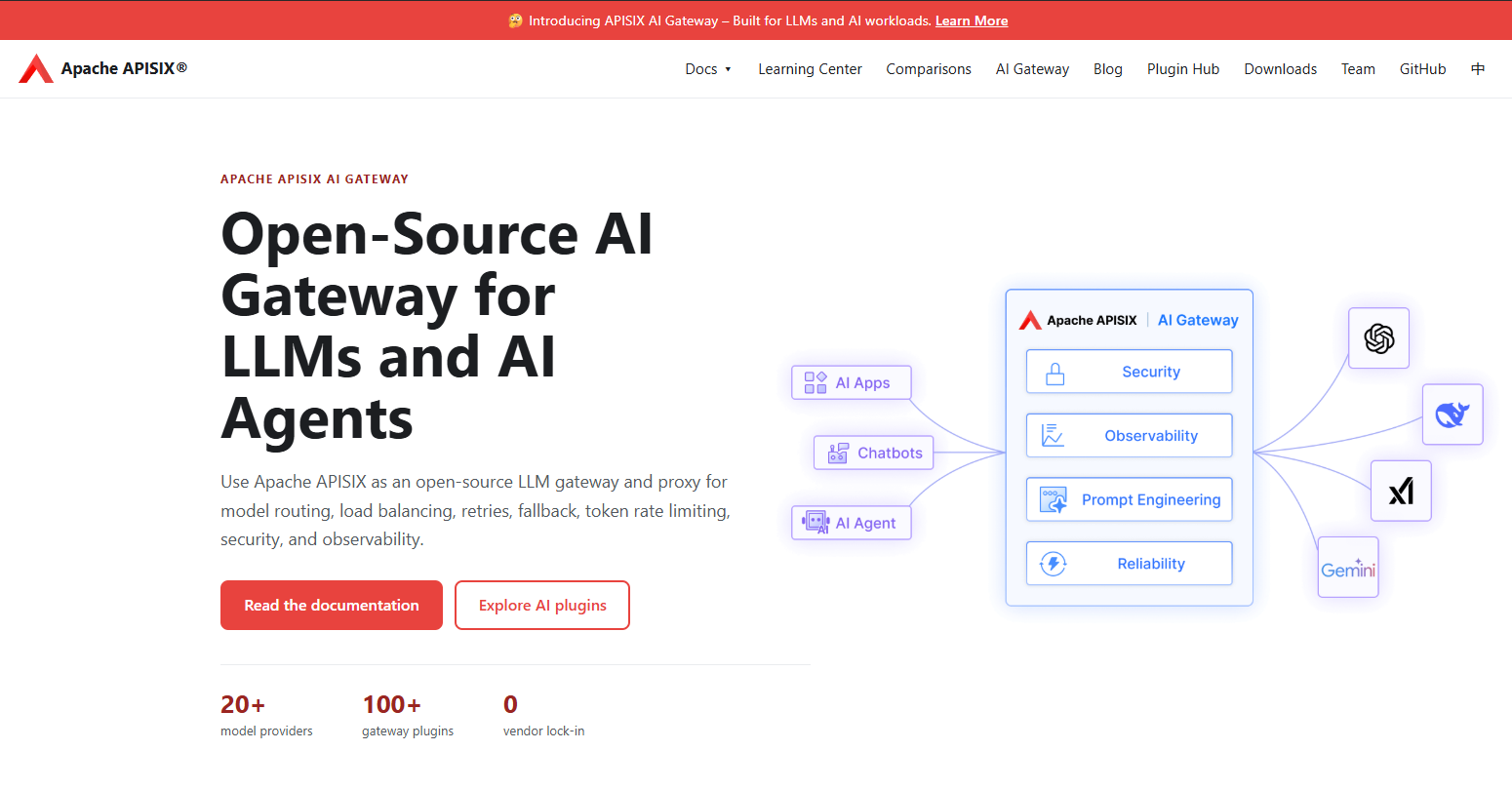
Apache APISIX is a fully open-source API gateway under the Apache 2.0 license that extended into AI traffic through a dedicated plugin set. Unlike platforms that reserve caching for a commercial tier, its semantic caching plugin ships in the open-source distribution.
Overview: The ai-cache plugin, introduced in APISIX 3.18.0, covers exact-match, semantic, and streaming response caching for LLM traffic. Semantic matching compares prompts by meaning rather than literal text, so paraphrased questions resolve to the same cached response instead of triggering a fresh provider call.
Features: Exact, semantic, and streaming cache modes in a single plugin. Prometheus counters for cache hits, misses, and bypasses, plus an embedding-latency histogram, so cache effectiveness can be measured at the gateway rather than inferred from provider invoices.
Best for: Teams that want semantic caching in a fully open-source gateway, and that already run APISIX as their API layer or are willing to adopt it.
5. Cloudflare AI Gateway
Cloudflare AI Gateway is a fully managed service that runs on Cloudflare's global edge network with 250+ points of presence worldwide.
Overview: Cloudflare provides exact-match caching from its edge network with configurable TTL and per-request cache control. It supports 20+ providers with real-time analytics and cost tracking. Core features including dashboard analytics, caching, rate limiting, and basic logging are available for free on all Cloudflare plans. Note that Cloudflare currently supports exact-match caching only, not embedding-based semantic caching.
Features: Zero infrastructure management. Real-time logging and usage analytics. Token-based authentication and API key management. Unified billing for third-party model usage through Cloudflare invoices. Custom metadata tagging for filtering.
Best for: Teams already in the Cloudflare ecosystem that need lightweight, caching for AI traffic with limited prompt variability. Organizations needing semantic similarity matching or self-hosted deployment will need to look elsewhere.
Frequently Asked Questions
What is semantic caching?
Semantic caching stores model responses and returns one when a new prompt means the same thing as an earlier prompt, even if the wording differs. It works by embedding each prompt as a vector and comparing it against stored vectors, rather than hashing the literal text. Bifrost's semantic caching runs as a built-in plugin at the gateway.
How is semantic caching different from exact-match caching?
Exact-match caching hashes the request and only hits when a later request is byte-identical, which almost never happens with natural language. Semantic caching compares meaning, so "how do I reset my password" and "password reset steps" resolve to the same entry. That difference is what turns cache hit rates from negligible into meaningful.
Does semantic caching risk returning the wrong answer?
It can if the similarity threshold is set too loosely, since two prompts that read alike may need different answers. The control is the threshold: a stricter setting reduces false hits at the cost of a lower hit rate. Tune it per workload, and keep thresholds tighter for anything where a near-miss answer would be harmful.
Which vector databases can back a semantic cache?
It depends on the gateway. Bifrost supports Weaviate, Redis and Valkey, Qdrant, and Pinecone as vector backends, so teams can reuse an existing vector store rather than operating a second one. An embedding-free direct hash mode is also available where embedding cost outweighs the benefit.
Does semantic caching work for multi-turn conversations?
Only if the gateway accounts for conversation history, because the same question can mean different things depending on what came before it. Bifrost applies configurable conversation thresholds so cached responses are matched against conversational context rather than the latest message alone.
How do you measure whether a semantic cache is working?
Track cache hit rate, latency distribution on hits versus misses, and cost per request over time. A cache that looks active but does not move cost per request is matching prompts that were cheap anyway. Prometheus metrics expose these directly from the gateway rather than requiring inference from provider bills.
Which Gateway Should You Pick?
The right choice depends on where your primary pain point sits. If you need the lowest possible overhead with built-in semantic caching that works out of the box, Bifrost is the strongest open-source option. LiteLLM works well for Python-heavy teams that want maximum provider breadth and are comfortable managing external dependencies. Kong fits naturally for organizations already running Kong for API management. Apache APISIX suits teams that want semantic caching in a fully open-source gateway with cache metrics exposed natively. And Cloudflare is the fastest on-ramp for teams that just need basic exact-match caching with zero infrastructure.
Whichever gateway you choose, pairing it with a robust observability layer is critical. Cache hit rates, latency distributions, and cost-per-request metrics need continuous monitoring to ensure your caching strategy delivers real value in production.
To see how Bifrost handles real production traffic and to discuss a deployment plan for your team, book a Bifrost demo.